
Trump’s new Iran strike threats show how fast a limited clash can turn into a wider crisis that hits markets, families, and American credibility.
Quick Take
- President Donald Trump said the United States would strike Iran again after a helicopter incident.[4]
- Broadcast reports say the response was framed as retaliation, not a full war plan.[3][7]
- Other coverage warns that Trump’s own language also pushed into harsher threats against Iranian infrastructure.[2][8]
- Market coverage tied the conflict to oil prices, gasoline pressure, and broader inflation fears.[6]
Trump Signals More Strikes After Helicopter Incident
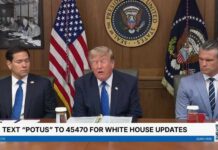
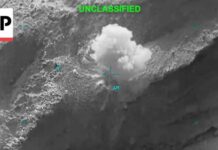
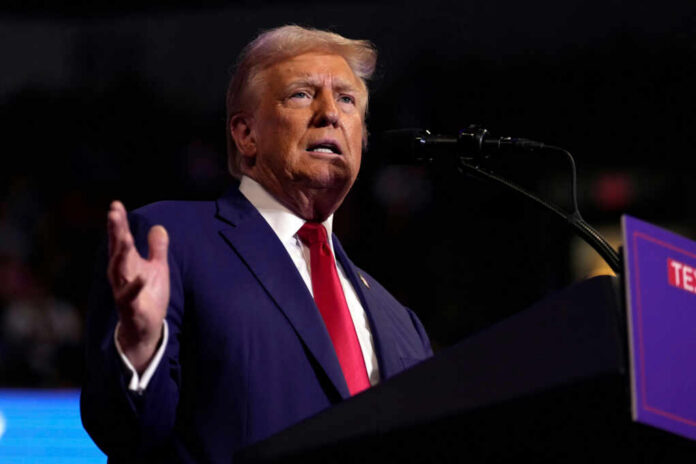
President Donald Trump said on Wednesday that the United States would hit Iran again after a helicopter collided with an Iranian drone.[4] PBS NewsHour reported that Trump told reporters, “We’re going to strike them hard again today,” while CBS News said he vowed Iran would “pay the price” after the downing of an Apache helicopter.[4][5] Fox News also reported that Trump cast the strikes as retaliation after Iran hit a U.S. helicopter.[3]
The public record in the provided material is still thin on hard proof beyond the president’s own statements and broadcast clips. Fox News said the U.S. response was described as proportional retaliatory strikes, and BBC News reported that U.S. forces hit Iranian radar and air defense sites after the helicopter loss.[3][8] But the sources here do not include a full incident packet, a damage report, or a legal memo that explains the exact authority for the strikes.[3][4][8]
Rhetoric Goes Beyond Narrow Deterrence
Amnesty International said Trump’s threats went far beyond a limited military response and reached into civilian infrastructure.[2] Its reporting quoted him as threatening to bomb Iran “back to the Stone Age” and to destroy power plants and bridges.[2] BBC News also reported that Trump said Iran would have to “pay the price” after taking too long to negotiate, while Iran’s foreign minister said his country would “leave no attack or threat unanswered.”[8]
That mix of threats matters because it blurs the line between deterrence and escalation. The provided reporting shows a president using strong language, then moving quickly into more strikes, while Iran answered with more attacks of its own.[4][8] PBS later reported that Trump shifted from talk of “annihilation” to a ceasefire within the same day, which raises questions about how steady the policy was and whether the public got a clear strategy.[5]
Markets React as Inflation Fears Return
Fox Business coverage in the research package tied the conflict directly to oil prices, gasoline supplies, and stock volatility.[6] That matters because higher energy costs can feed inflation fast, especially when traders fear attacks on the Strait of Hormuz or other shipping routes.[6][8] For many Americans, that means the fallout from foreign conflict shows up at the pump and in the grocery bill long before any official briefing reaches the public.
President Trump said the U.S. would resume attacks on Iran later Wednesday after a drone fired by Tehran hit a U.S. Apache helicopter, prompting several waves of American strikes in retaliation https://t.co/NKjQwpCAhT via @WSJ
— judy gitlin (@heyjudenyc) June 10, 2026
The bigger issue is trust. The material you provided shows a fast-moving story built mostly from televised reports, social clips, and short public remarks.[3][4][5][7][8] It does not show a full White House explanation, a formal war powers notice, or a transparent damage assessment. That leaves voters with a familiar Washington problem: the country is asked to accept escalation first and get the facts later.
Sources:
[2] Web – WATCH: ‘We’re going to be attacking’ Iran after U.S. helicopter shot …
[3] Web – Iran: President Trump’s apocalyptic threats of large-scale civilian …
[4] YouTube – Iran Military’s First Response To Trump’s Attack Threat
[5] YouTube – Trump and Iran trade new threats after strikes exchanged | BBC News
[6] Web – How Iran is reacting as Trump pulls back from threat to wipe out …
[7] YouTube – The market reacts to President Trump’s Iran threats
[8] YouTube – Trump threatens more attacks on Iran as military confrontations …