
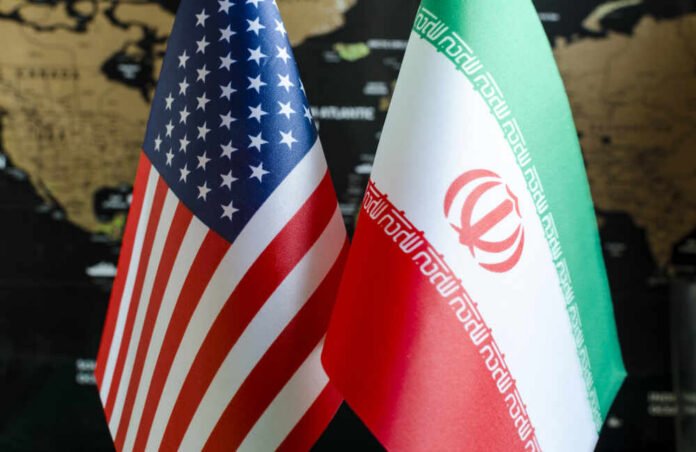
President Trump signals a potential naval blockade of Iran after 21 hours of ceasefire negotiations in Pakistan collapsed, leaving Americans wondering if diplomacy with Tehran is even possible anymore.
Story Snapshot
- US-Iran ceasefire talks in Islamabad collapsed after Iran rejected what Vice President JD Vance called America’s “final and best offer”
- Trump amplified reports on Truth Social suggesting a Venezuela-style naval blockade targeting Iran’s refusal to reopen the Strait of Hormuz
- The Strait of Hormuz carries 20-30% of global oil transit, making any blockade a potential catalyst for energy market chaos
- Failed negotiations occurred amid an ongoing US-Israel air war with Iran that began in March 2026
Negotiations Fail After Marathon Session
Vice President JD Vance confirmed the collapse of intensive negotiations in Islamabad, Pakistan, where US and Iranian representatives met for over 21 hours attempting to broker a ceasefire. The talks addressed nuclear weapons development, sanctions relief, reparations, and access to the Strait of Hormuz. Pakistan’s government hosted the indirect discussions, with Vance thanking Pakistani officials for their mediation efforts. Despite what Vance described as US flexibility, Iran’s Foreign Ministry characterized the diplomatic effort as a “continuation of war,” rejecting American terms as excessive and unlawful.
Trump Floats Blockade as Strategic Response
Within hours of the negotiation breakdown, President Trump shared a news article on Truth Social highlighting a potential naval blockade of Iran, drawing parallels to previous US actions against Venezuela. The blockade concept targets Iran’s continued closure of the Strait of Hormuz, a critical shipping chokepoint for global energy markets. Trump’s amplification of this strategy signals a willingness to escalate pressure beyond military strikes, leveraging America’s naval superiority to strangle Iran’s economy. The approach reflects Trump’s pattern of alternating between diplomatic overtures and hardline threats, a strategy that frustrates both supporters seeking decisive action and critics warning of broader Middle East conflict.
Roots in Maximum Pressure Campaign
The current standoff stems from Trump’s February 2025 reinstatement of his “maximum pressure” strategy against Iran. In March 2025, Trump sent a letter to Ayatollah Ali Khamenei demanding nuclear dismantlement, a halt to uranium enrichment, and an end to support for regional proxies within 60 days, offering sanctions relief in exchange. Khamenei rejected the uranium enrichment demands as “outrageous” in May 2025. By March 2026, after the deadline passed without Iranian compliance, the US and Israel launched air strikes against Iranian targets, initiating the current military conflict that set the stage for the failed Islamabad ceasefire talks.
Economic and Geopolitical Stakes
The Strait of Hormuz remains the fulcrum of this confrontation, with Iran maintaining its closure despite Trump’s disputed claims of having reopened it militarily. Any US naval blockade would compound existing energy market disruptions, potentially spiking oil prices and rippling through the global economy. Iran’s Defense Minister previously warned of strikes on US bases if negotiations collapsed, underscoring the risk of widening conflict. Americans watching this unfold face a familiar frustration: Washington’s cycle of empty threats and half-measures that achieve neither peace nor decisive victory, leaving taxpayers funding endless military operations while energy costs climb and the threat of broader war looms over markets and families alike.
With the Collapse of the Iran Talks, Trump Hints at One Card He Could Play in Response https://t.co/P5Ry3VWOWP The US could blockade the Strait of Hormuz.
Underwater drones have already begun de-mining the Strait.
Trump could blockade the Strait next.
And he should. #MAGA— Christopher Van-Lane (@cvanlane) April 12, 2026
Trump’s public suggestion of a blockade represents a calculated signal to Tehran that military options remain on the table despite the negotiation failure. Whether this pressure tactic yields results or pushes both nations closer to expanded conflict will depend on decisions made in Washington and Tehran in the coming weeks, decisions that ordinary Americans will feel at the gas pump and in their retirement accounts, regardless of which outcome unfolds.