

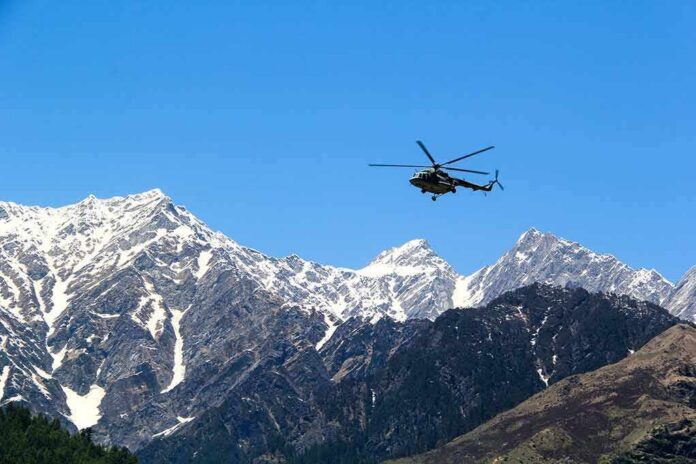
New science shows Himalayan glaciers are shrinking fast, raising flood and landslide danger for millions across Asia.
Story Highlights
- Regional glacier area fell about 12% from 1990 to 2020, shrinking water and raising hazards.
- Experts report glacier ice loss has doubled since 2000, speeding risk growth in steep valleys.
- Studies link warming to more heavy rain, landslides, and glacial lake outburst floods.
- Single disasters have many triggers, but warming is priming the terrain for more failures.
Glaciers Are Retreating, Hazards Are Rising
International researchers report that glaciers across the Hindu Kush Himalaya lost roughly 12% of their area between 1990 and 2020, a clear sign of long-term warming in the region. The same body of work finds sharp declines in ice reserves, which changes how water moves downhill year-round. As ice pulls back, steep slopes loosen and lakes behind natural dams grow. That mix increases the odds of floods, rockfall, and deadly debris flows in narrow valleys.
The International Centre for Integrated Mountain Development says ice loss has doubled since the year 2000, confirming faster melt in the twenty-first century. Faster melt means more unstable ice cliffs, more meltwater pooling, and more sudden releases when moraine dams fail. Scientists warn that these compound risks extend from the high peaks into towns, farms, and hydropower sites far below. That puts families, roads, and power lines in the path of fast-moving water and mud.
How Warming Primes Disasters in High Mountains
Glacier retreat exposes bare rock and weak soils that once sat frozen. Warmer air also brings shifts in rain and snow. Peer-reviewed work finds human-caused warming has raised the odds of extreme heat and heavy rainfall events in Nepal and the wider region. These shifts load slopes with water, weaken natural dams, and increase avalanche and landslide risk. A Nature study catalogs hundreds of past glacial lake floods across the region and projects more as glaciers continue to shrink.
Reporters and scientists covering recent Himalayan floods explain a basic pattern: climate change does not “cause” every single event, but it raises the background risk that turns a trigger into a disaster. Steep terrain has always failed at times. Now, warmer temperatures, changing storms, and thawing ice make failures more likely and more severe. That means more cascading hazards, where a slope collapse hits a lake, then sends flood waves downstream.
Why This Matters for America’s Security and Economy
Himalayan rivers feed major Asian economies. When floods take out roads, farms, and power, supply chains feel it. America buys goods from factories that depend on those roads and dams. Disruptions can raise prices here at home. Instability abroad also strains our military partners and humanitarian efforts. Planning for these shocks is common sense. Strong borders, reliable energy at home, and secure supply lines mean our families are less exposed when faraway systems break.
Conservatives care about stewardship, readiness, and truth. The data show a clear hazard trend in the Himalayas: less ice, more unstable ground, and higher flood risk. That calls for practical steps, not globalist schemes that kill American jobs. Build resilient supply chains. Protect U.S. energy independence to keep costs low. Back targeted, results-based aid that hardens real infrastructure, like early warning systems and safe dams, rather than bloated bureaucracies.
Policy Grounded in Facts, Not Buzzwords
Officials should act on what the evidence supports. Mountain hazards rise when glaciers retreat and rainfall extremes climb. That means allies in South Asia will seek better mapping, drainage, and monitoring. The United States can share proven tools without signing on to vague “climate reparations.” Accountability matters. Every dollar should reduce risk on the ground, not feed waste. Smart engagement can lower disaster fallout, protect trade, and keep our troops out of crisis zones.
🇳🇵 Nepal’s Disaster Is a Warning for India Too 🇮🇳
The recent flash floods in Nepal are not just Nepal’s tragedy. They are a serious warning for India and the entire Himalayan region.India shares the same fragile Himalayan ecosystem. States such as Uttarakhand, Himachal… pic.twitter.com/T8RYr3qQ6i
— Godavari Yetakaram (@GodariYetakaram) September 2, 2026
At home, the lesson is similar. Use real data to prepare, secure critical infrastructure, and defend affordability for families. President Trump’s administration can press agencies to focus on risk reduction that works, measure results, and cut red tape that slows life-saving projects. That approach honors taxpayers, safeguards communities, and keeps America strong in a world where foreign disasters can still hit our shelves and our wallets.
Sources:
youtube.com, lib.icimod.org, icimod.org, hindustantimes.com, timesofindia.indiatimes.com