

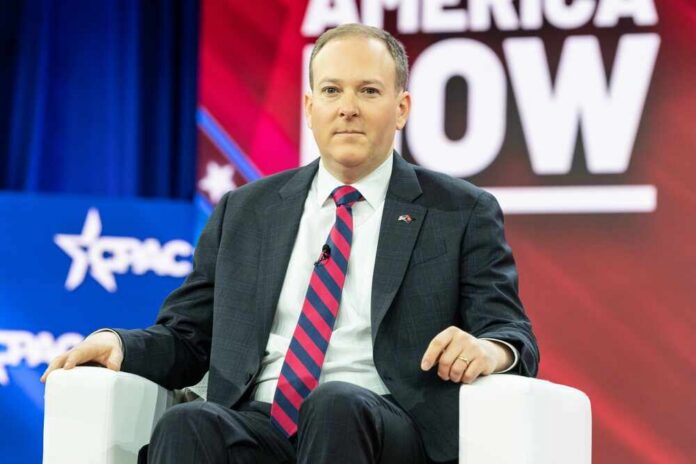
Trump’s EPA chief fired back at a Democratic senator’s criticism by refusing to accept “morality lessons from people who join all-White country clubs,” exposing the hypocrisy of political elites who preach inclusivity while maintaining memberships in racially exclusive institutions.
Story Snapshot
- EPA Administrator Lee Zeldin challenged Senator Sheldon Whitehouse’s moral authority during a heated environmental policy debate
- Zeldin referenced Whitehouse’s family membership at Bailey’s Beach Club, an exclusive Rhode Island establishment with no minority members
- The senator admitted in 2017 his club was “working on” diversity but defended membership as a “long tradition in Rhode Island”
- The confrontation highlights how Washington’s political class maintains elite social circles while lecturing Americans about equality
EPA Chief Confronts Democratic Senator’s Exclusivity
Lee Zeldin delivered a pointed rebuke to Democratic critics during recent policy discussions, declaring he would not accept moral guidance from individuals belonging to racially exclusive social clubs. The EPA administrator specifically targeted Senator Sheldon Whitehouse of Rhode Island, whose family maintains membership at Bailey’s Beach Club, formerly known as Spouting Rock Beach Association. Zeldin framed his comments as a defense against what he characterized as attempts to vilify administration officials over scientific disagreements on environmental policy. The exchange demonstrates how personal conduct increasingly undermines political figures’ credibility when lecturing others about values they fail to uphold themselves.
Senator’s Long-Standing Association With Exclusive Institution
Whitehouse acknowledged his family’s membership at the exclusive beach club in 2017, expressing hope that club leadership was addressing the lack of minority members. The senator described such arrangements as part of Rhode Island’s established social traditions, suggesting multiple similar institutions exist throughout the state. His justification rings hollow for Americans who watch wealthy politicians maintain associations with segregated establishments while championing diversity initiatives for everyone else. This pattern of elite hypocrisy fuels public frustration with a political class that appears more interested in preserving their privileged status than practicing the principles they preach. The disconnect between rhetoric and reality erodes trust in institutions when leaders exempt themselves from standards they impose on ordinary citizens.
Historical Context of Discriminatory Club Practices
All-white country clubs represent enduring symbols of social segregation throughout American history, bringing together business, professional and political elites while excluding minorities. These institutions have historically claimed they do not actively bar membership based on race, instead asserting that minorities simply choose not to apply. Such justifications collapse under scrutiny, as exclusion from prominent community institutions based on skin color perpetuates patterns of unequal opportunity. The PGA Tour eventually addressed discriminatory practices after public pressure forced venues like Shoal Creek to admit Black members, though often only as honorary participants. Veteran golfer Tom Watson resigned from Kansas City Country Club in 1990 after it rejected a Jewish executive for membership, demonstrating that some individuals prioritize principle over privilege.
Political Implications for Government Credibility
The confrontation between Zeldin and Whitehouse exposes deeper problems with Washington’s governing class, where politicians leverage moral authority they have not earned through consistent personal conduct. Democrats frequently position themselves as champions of civil rights and racial justice, yet some maintain memberships in institutions that exclude the very communities they claim to represent. This hypocrisy extends beyond individual senators to reflect broader elite insularity, where powerful figures inhabit social circles disconnected from average Americans’ experiences. Federal courts have ruled that such memberships do not constitute ethics violations for judges, a legal determination that fails to address the fundamental credibility problem. When government officials participate in racially exclusive institutions while implementing policies affecting all citizens, they reveal priorities that serve elite interests rather than public welfare.
Zeldin’s willingness to confront this double standard resonates with Americans tired of being lectured by politicians who exempt themselves from the values they enforce on others. The EPA chief’s defense centered on sticking to scientific evidence rather than ideological positions, arguing that disagreement on environmental policy should not devolve into personal attacks. His counterattack shifted focus to his critic’s moral inconsistency, a tactic that effectively neutralizes accusations by exposing the accuser’s credibility gap. This exchange illustrates how political discourse increasingly hinges on authenticity and consistency rather than abstract policy debates. Citizens across the political spectrum recognize that government fails them when leaders prioritize maintaining their elite status over addressing real problems facing working families struggling to achieve economic security and opportunity.
Sources:
Trump EPA chief vows he won’t take ‘morality lessons’ from Dem senator after heated clash
Trump EPA chief vows he won’t take ‘morality lessons’ from Dem senator after heated clash
Federal judge’s membership in all-white male country club not an ethics violation