

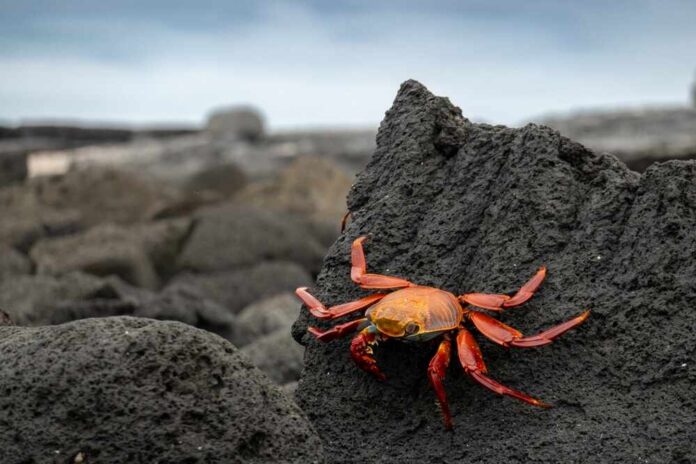
A study tracing crabs’ sideways walk back 200 million years is a reminder that “follow the science” only works when science actually follows the evidence.
Story Snapshot
- Researchers analyzing 50 crab species argue that sideways walking in “true crabs” likely evolved once from a forward-walking ancestor about 200 million years ago.
- The timing appears to line up with the ecological reshuffling after the Triassic–Jurassic extinction, when new marine niches opened up.
- The sideways gait may have helped crabs escape predators quickly and unpredictably, contributing to their long-term ecological success.
- Not all crabs move sideways today; the study suggests multiple later “reversals” back to forward walking in some lineages.
A 2026 dataset challenges the “it’s just anatomy” explanation
Researchers led by Yuuki Kawabata at Nagasaki University compiled what they describe as the largest locomotion dataset for crabs, comparing movement in 50 species. The team reports 35 species that primarily move sideways and 15 that move forward, then maps those behaviors onto a genetic family tree. The result: sideways locomotion in “true crabs” is presented as a single evolutionary origin, not a repeated coincidence.
Earlier explanations often stopped at biomechanics: crab legs attach to the body in ways that limit comfortable forward strides while enabling strong lateral movement. That’s still part of the picture, and it helps explain why sideways travel can be fast for wide-bodied crabs. The new claim is bigger than anatomy alone: the behavior appears historically “locked in” across most true crabs, suggesting one early shift that later shaped a major branch of marine life.
Why timing matters: mass extinction, open niches, and rapid payoff
The study’s proposed timeline places the origin of sideways walking in the early Jurassic, soon after the Triassic–Jurassic extinction around 201 million years ago. That extinction and the broader breakup of Pangaea changed coastlines and shallow-water habitats, expanding ecological opportunities. In evolutionary terms, a useful trait doesn’t just need to exist; it needs room to pay off. The researchers connect this “open niche” period to the rise and spread of sideways-walking true crabs.
The practical advantage described in the reporting is straightforward: sideways motion can make predator escape faster and less predictable, especially along shorelines, rocks, crevices, sand, and mud. For a low-to-the-ground animal trying to vanish into a crack or bolt along uneven terrain, lateral movement may offer clean, efficient body positioning. The claim is not that every crab is always faster sideways, but that the gait can be a strong survival tool in common crab environments.
Not every crab got the memo: reversals and exceptions
The findings also highlight an important caveat: evolution is not a one-way street. Although sideways locomotion is described as highly conserved among true crabs, the analysis suggests it was lost multiple times—at least six—among lineages that now walk forward more often. Reports point to examples such as spider crabs, soldier crabs, and pea crabs as groups where forward walking is common, implying later lifestyle changes can “undo” an earlier advantage.
That matters because it keeps the story from turning into a simplistic “sideways equals better” slogan. Evolution typically rewards what works in a specific niche, at a specific time, under specific pressures. A crab living in different habitat conditions, facing different predators, or specializing in a different feeding strategy could benefit from a different movement style. The research narrative leaves room for future work to test exactly when and why those reversals happened.
What this tells us about institutions—and why skepticism still matters
In today’s political climate, many Americans—right and left—hear “science” invoked as a blunt instrument in policy fights, often by bureaucracies that want compliance rather than debate. This crab study is a healthier example of how knowledge should move: assemble a dataset, test competing explanations, and admit what isn’t settled. Even here, the researchers emphasize limits, calling for more fossil timelines, performance tests, and trait-based diversification analysis to separate innovation from environment.
George McInerney finds this interesting 👍 Why do crabs walk sideways? Scientists trace it back 200 million years https://t.co/57MMUr01N7
— George McInerney (@gmcinerney) May 2, 2026
For readers tired of top-down narratives, the significance is less about crabs and more about method. The new work doesn’t erase anatomy-based explanations; it builds on them with genetics, behavioral mapping, and additional lines of evidence. That’s a model worth defending in any era: claims should rise or fall on transparent data, not authority. And when the data is incomplete, the honest move is to say so—then go get better data.
Sources:
Why do crabs walk sideways? Scientists finally have an answer
Study suggests crabs’ iconic sideways walk evolved from common ancestor
You’ve always wanted to know: Why do crabs walk sideways