

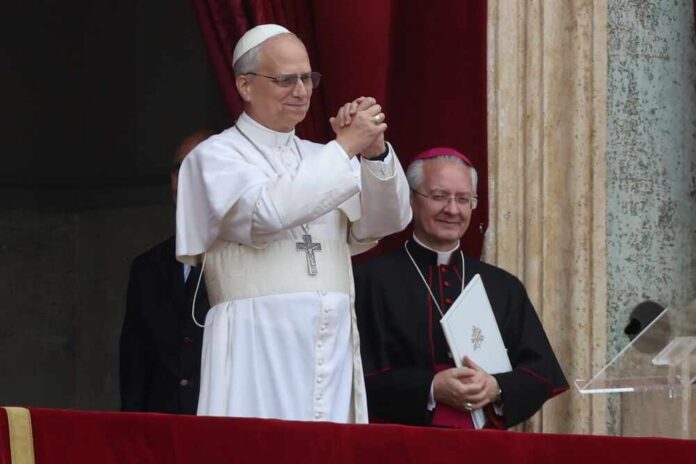
A new papal encyclical on artificial intelligence is putting Silicon Valley and world leaders on notice about technology that threatens human dignity if it escapes moral control.
Story Snapshot
- Pope Leo XIV’s first encyclical, Magnifica humanitas, focuses on safeguarding the human person in the age of artificial intelligence.[5]
- The Vatican is breaking precedent by having the Pope personally unveil the document alongside Anthropic co-founder Christopher Olah.[1][5][7]
- The encyclical is framed as a response to a new “industrial revolution” and warns that technology must never replace human responsibility, creativity, or labor.[1][2][5]
- The Trump administration will now have to decide how seriously to take a rare moral challenge to Big Tech power and the weaponization of AI.[3][5]
Pope Puts Human Dignity at the Center of the AI Debate
Vatican officials confirm that Pope Leo XIV has signed his first encyclical, Magnifica humanitas, explicitly described as a document on “safeguarding the human person in the time of artificial intelligence.”[5] The text, signed May 15 and released May 25, squarely links the fast‑moving AI revolution to the Church’s longstanding concern for human dignity, labor, and justice.[1][5] The Vatican frames the letter as a major social teaching, not a niche tech memo, aimed at governments, corporations, and ordinary families alike.[5]
The Pope has already warned that artificial intelligence now shapes war, work, and culture in ways that can dehumanize people if moral limits are ignored.[1][3] At Rome’s La Sapienza University, he cautioned that AI in both military and civilian settings must never absolve human beings of responsibility, citing the brutal conflicts in Ukraine, Gaza, the Palestinian territories, Lebanon, and Iran as examples of how new technologies can feed a “spiral of annihilation.”[1] That language signals a direct challenge to high‑tech remote warfare and unaccountable decision systems.
A “New Industrial Revolution” and the Future of Work and Family
Pope Leo deliberately tied Magnifica humanitas to the 135th anniversary of Rerum Novarum, Pope Leo XIII’s famous encyclical on labor and capital during the first industrial revolution.[1][4][5] Commentators note that he chose the name “Leo XIV” partly to signal continuity with that earlier defense of workers and families in the face of disruptive technology.[2][4] Today, he describes artificial intelligence and robotics as a change on par with industrialization, even a “Copernican revolution,” insisting that the Church must again speak for dignity, justice, and labor in a time of upheaval.[2][4]
That framing will resonate with many American conservatives who watched globalist trade deals and offshoring hollow out manufacturing towns while elites insisted it was inevitable. The Vatican’s own previews stress concern that AI is already displacing human creativity and work, as machines generate texts, music, and video and risk turning people into “passive consumers of unthought thoughts and anonymous products without ownership or love.”[1] For readers worried about Big Tech automating away livelihoods while concentrating money and power, the Pope is essentially saying: your concerns are morally serious and not merely economic.[1][4]
Children, Culture, and the Battle for the Human Person
Pope Leo has repeatedly warned that artificial intelligence can damage children’s “intellectual and neurological development” if parents and educators treat it as a substitute for real learning and relationships.[1] He has cautioned young people to use AI “in such a way that if it disappeared tomorrow, you would still know how to think,” pushing back against the idea that constant digital assistance is normal or healthy.[1] He has also told priests not to use chatbots to write homilies, an implicit rebuke to spiritual laziness and the impersonality of machine‑generated preaching.[1]
https://twitter.com/gracemcamara/status/2058854715794837524
Other papal messages emphasize how AI simulations of faces and voices can “encroach upon the deepest level of communication, that of human relationships,” threatening the uniqueness of each person’s identity.[1] He warns that the explosion of synthetic media risks dismantling much of the human creative industry, flooding society with content labeled “Powered by AI” and leaving fewer works rooted in real craftsmanship and love.[1] For families trying to protect children from hyper‑sexualized, manipulative feeds, these concerns about ownership, truth, and authentic presence line up with longstanding worries about screen addiction and cultural decay.
Why the Vatican Invited an AI Company to the Stage
One of the most unusual aspects of this encyclical is how it is being presented. The Vatican chose to break precedent and have Pope Leo personally attend the press conference, address participants, and offer a final blessing, signaling that the Church sees AI as a top‑tier global issue.[1][5] Even more striking, the Pope is sharing the stage with Christopher Olah, co‑founder of Anthropic, one of the world’s fastest‑growing artificial intelligence companies.[1][5][7]
Supporters say this shows the Vatican wants a serious, technical conversation with those actually building the systems that shape speech, commerce, and even warfare.[5][7] Others worry that inviting an industry insider to such a prominent moral event risks blurring the line between prophetic critique and corporate public relations.[7] Commentators close to the process expect the encyclical to speak not only about doctrine but about concrete “opportunities, risks, and moral, spiritual, and social impacts” of AI, stressing that the technology must be ordered toward the common good.[2][3][6] Whether tech firms actually listen is another question.
What It Means for American Policy Under Trump’s Second Term
The release of Magnifica humanitas lands as the Trump administration faces increasing pressure to balance national security, economic growth, and civil liberties in its own approach to AI. Vatican analysts say the encyclical will insist that artificial intelligence remain a tool that serves human beings instead of subordinating them, and that real accountability, discipline, and moral restraint are needed in its development.[3][5] Those themes parallel conservative concerns about unaccountable bureaucracy, runaway surveillance, and corporate censorship.
At the same time, the Pope has repeatedly emphasized that AI can be an “incredible tool” when used wisely and placed under human control.[2][3] That stance cuts against both naive techno‑utopianism and panic. For American conservatives, the encyclical will likely underscore two key points: families, churches, and local communities cannot outsource their responsibilities to algorithms; and governments must not hand over war‑fighting, speech policing, or economic planning to black‑box systems owned by a handful of global corporations. How Washington responds will reveal whether leaders are serious about putting people first, or content to let Big Tech and big government quietly rewrite the rules of human life in the digital age.
Sources:
[1] Web – Pope Leo will publish first encyclical, ‘Magnifica Humanitas,’ on …
[2] YouTube – What to Expect from Pope Leo XIV’s First Encyclical on AI
[3] YouTube – Pope Leo Focusing on AI in First Encyclical
[4] Web – Pope Leo XIV Encyclical: Magnifica Humanitas – Ascension Press
[5] Web – Pope Leo XIV’s first encyclical Magnifica humanitas to be published …
[6] YouTube – How the Tech World Is Responding to Pope Leo XIV’s Encyclical on AI
[7] Web – Pope Leo to present his encyclical on AI alongside Anthropic co …