
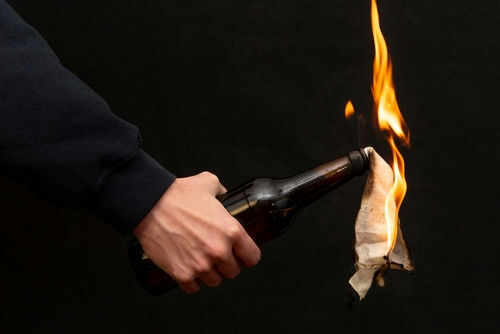
A shocking Molotov cocktail attack on a man in a wheelchair outside Oklahoma City police headquarters is raising hard questions about growing violent extremism and how our justice system protects vulnerable Americans.
Story Snapshot
- Traffic video shows a man firebombing a wheelchair user and shoving him into the flames outside police HQ.
- Police arrested suspect Alexander Emery immediately and say he faces multiple serious felony charges.
- The victim suffered burns but is expected to recover thanks to fast action from bystanders and detectives.
- The attack fits a wider rise in ideology‑driven Molotov cocktail violence across the United States.
Brutal attack on a vulnerable victim caught on camera
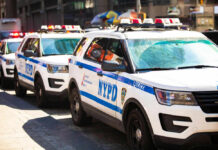
Oklahoma City police say the attack happened on July 2, just across the street from their headquarters at West Main and North Lee Avenue. Surveillance and traffic camera video shows a man calmly walking up to a person sitting in a wheelchair on the sidewalk. He then throws what police call a Molotov cocktail, setting the area around the wheelchair on fire. As the flames spread, video shows the attacker pushing the wheelchair over, forcing the victim into the burning pool of liquid.
Local media and national outlets like NBC and CBS have shared the disturbing clip, warning viewers about its graphic nature. Reporters say the video has no sound, so the public cannot hear any words exchanged or know what was said before the attack. Police and media describe the device as a “Molotov cocktail,” which is a glass container filled with flammable liquid and lit with a rag fuse. The footage leaves little doubt about the sudden, violent nature of the assault on a defenseless man.
Rapid response, injuries, and serious felony charges
Police say detectives and bystanders near headquarters rushed toward the scene as soon as they saw the flames and chaos. Oklahoma City officers credit that quick response with pulling the victim away from the fire and getting medical help on the spot. According to Fox reports, the man in the wheelchair suffered burns described as minor, was treated at a hospital, and is expected to recover. For many viewers, the fact that he survived at all after being shoved into fire feels like a small miracle.
Officers arrested the suspect at or near the scene and identified him as 38‑year‑old Alexander Emery in court records and local coverage. Police and media say he now faces a stack of felony charges, including first‑degree arson, assault and battery with a deadly weapon, injuring another person by use of an explosive, manufacturing an explosive device, and assault with intent to kill. A report from Law&Crime notes that investigators found a second Molotov cocktail on Emery when they detained him, suggesting planning beyond a single impulsive act. Court records cited in that report say Emery is being held on a $200,000 bond, showing how seriously the system views the case.
Hints of ideology and a wider wave of Molotov violence
National coverage has focused not only on the brutality of the video but also on possible motive. One NBC segment reported that police say Emery used a Nazi‑linked German phrase during the attack. However, the exact words have not been released, and there is no public audio of the encounter, so outside observers cannot check that claim for themselves. Local station KOCO, cited by Law&Crime, says investigators claim Emery admitted he chose the victim at random. Again, that detail comes through reporters, not from a released affidavit or recording.
This attack does not stand alone. A Wall Street Journal analysis described 2026 as a “year of the Molotov cocktail,” with antigovernment and ideology‑driven firebomb attacks reaching a 30‑year high. That report says extreme‑left incidents recently outnumber extreme‑right ones for the first time in about twenty years, driven in part by immigration and globalism fights. The Los Angeles Times has also documented a Molotov attack in Boulder, Colorado, where a man hurled bottles of burning fuel at a Jewish crowd, injuring twelve older Americans while shouting “Free Palestine,” and the Federal Bureau of Investigation treated that as suspected terrorism. Taken together, these cases show a harsh new reality: random people, including disabled and elderly citizens, can become targets for someone’s twisted ideology.
Justice, public perception, and the need to defend basic safety
For many conservatives, this Oklahoma City case hits several deep nerves. A man in a wheelchair, simply sitting outside a police station, was nearly burned alive in broad daylight. The suspect reportedly used rhetoric tied to one of history’s worst regimes, while media and some officials talk more about narratives than about why such hatred is growing again. The justice system has responded with heavy charges and a high bond, which signals strength but also shapes public opinion before trial and can raise questions about how fairly risk is measured.
https://twitter.com/ChaosLensX/status/2075074911735828826
So far, there is no public statement from Emery or a defense lawyer challenging the video or the police account, and no released forensic report on the firebomb itself. That silence leaves the official story largely untested in public, even as national outlets replay the shocking footage again and again. At the same time, ordinary Americans see yet another example of a vulnerable person attacked in the street and wonder whether their own families are truly safe. Defending the Constitution and basic order today means not only backing police when they stop obvious evil, but also insisting on transparent facts, equal justice, and a system that takes violent extremism seriously no matter which “side” claims the attacker.
Sources:
facebook.com, lawandcrime.com, instagram.com, yahoo.com, justice.gov