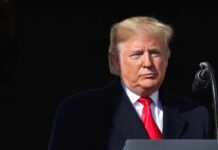


Steve Bannon’s War Room AM Edition has become a daily command center for America First voters who want hard-hitting coverage the corporate media will not touch.
Story Snapshot
- War Room AM Edition is openly branded as Steve Bannon’s populist, pro-Trump political show, not a neutral newscast.
- The program focuses on issues like election integrity, border security, China, and budget fights through a nationalist, America First lens.
- Supporters see it as a grassroots “operations room” for Trump’s movement, while establishment media attack it as dangerous or extreme.
- Critics in legacy outlets use labels like “misinformation” to discredit the show’s influence on Republican policy debates.
War Room AM Edition: What the Show Really Is
Steve Bannon’s War Room AM Edition is not presented as neutral “both sides” news; it is billed as “Stephen K Bannon’s War Room” and sold to viewers as a political command center for the Trump movement. The show’s own home page and clip roundups describe a program that covers President Trump, Congress, foreign policy, and budget fights from a clear America First point of view. A YouTube description for War Room with Steve Bannon AM Edition tells viewers they will get “the most important news from around the world,” live on Real America’s Voice twice a day. Put simply, the branding tells you upfront: this is populist, pro-Trump political commentary aimed at patriots who are tired of filtered talking points.
Episode descriptions from 2025 show how the AM Edition leans in on Trump’s leadership and contrasts it with progressive failure at every turn. One January clip roundup explains that Bannon opened his Saturday show by praising President Trump’s response to disaster zones and ripping into legacy media for downplaying his efforts. Other writeups highlight themes like rebuilding American industry, “Fortress America” national security, and punishing tariffs to protect workers and factories. Across these episodes, the through-line is the same: Trump’s America First agenda is the yardstick, and every policy fight is judged by whether it helps or hurts working-class citizens who feel left behind.
Populist, Nationalist Lens on Today’s Fights
War Room AM Edition consistently frames its topics through an anti-establishment, nationalist lens that many conservative viewers share. The show’s own materials stress the threat from the Chinese Communist Party, the damage done by globalist groups like the World Economic Forum and the United Nations, and the need to stand up a strong “MAGA populist movement” to stop them. Bannon and his guests talk about “Fortress America,” maritime choke points, and heavy tariffs as tools to protect American sovereignty and jobs, instead of sending wealth and power overseas. For an audience frustrated by decades of bad trade deals, open borders, and endless foreign wars, this focus on national interest first is not extreme—it is overdue common sense.
Beyond economics and foreign policy, War Room frequently returns to election integrity, border chaos, and deep state power as core themes. Outside reporting and long-form profiles describe the show as a place where Bannon pushes strict border enforcement, mass deportations, and an aggressive rollback of the permanent bureaucracy. The program’s own MAGA Nation content stream highlights fights over election laws, challenges to Democratic narratives, and sharp criticism of Republican leaders who, in Bannon’s view, refuse to fight for their voters. For many conservatives, this is exactly the kind of sustained pressure they want on a party establishment that too often caves in Washington while talking tough back home.
Why the Establishment Fears the War Room
Legacy outlets and liberal think tanks have not ignored War Room’s reach; they have tried to contain it. A major study highlighted by the New York Times claimed Bannon’s show was the top source of false or unproven claims among political podcasts, saying about one in five episodes in the sample included such statements. Other pieces in establishment media call the show a “fantasyland” or a threat to democracy, focusing heavily on past election disputes and heated rhetoric. These attacks rarely dispute that the show is influential; instead, they aim to brand it as beyond the pale so that ordinary Americans will tune it out before hearing the arguments.
For those interested. FULL CLIP between STEVE BANNON and WAYNE ALLYN ROOT from BANNONS WAR ROOM on RUMBLE WEDNESDAY 7/29/26 EVENING EDITIONhttps://t.co/7GBz51yVsO
— Jennifer Geoffroy (@jennifergee79) July 30, 2026
At the same time, even critical profiles admit War Room has become a powerful organizing hub inside Republican politics. The Guardian reports that Bannon broadcasts near the Supreme Court and sees the show as a platform for grassroots populist nationalists rather than a standard party outlet. The Wall Street Journal has described War Room as “the hottest ticket in D.C.” and noted that Bannon uses it to press key budget and policy players in real time. For viewers who feel silenced by big tech, ignored by Congress, and mocked by coastal media, this is not dangerous—it is a rare sign that their voice still matters.
What It Means for Conservative Voters Today
For conservatives living through years of open-border chaos, inflation, and cultural radicalism, War Room AM Edition functions as both information source and rally point. The show does not pretend to be neutral, and its critics do not pretend to be friendly; both sides agree it is a place where the America First base hears sharp takes on elections, the border, China, and deep state overreach. In President Trump’s second term, that makes the War Room a key window into how populist activists are thinking about the next fights over spending, immigration, and the administrative state. Viewers still must weigh claims carefully, but for many, the larger value is simple: someone is finally talking about the issues that polite Washington would rather bury.
Sources:
youtube.com, nytimes.com, facebook.com, theguardian.com, podcasts.apple.com, wsj.com, pod.wave.co