
Beijing’s new “countermeasures” throttle drone exports and target U.S. entities, raising supply-chain risks for American security and industry.
Story Snapshot
- China tightened drone export controls and announced actions against U.S. entities.
- Beijing says moves answer recent U.S. trade and security steps on Chinese tech.
- Controls cover high-performance parts with military or surveillance uses.
- U.S.–China tech friction risks higher costs and delays for American buyers.
China Rolls Out New Drone Export Controls Citing Security and Retaliation
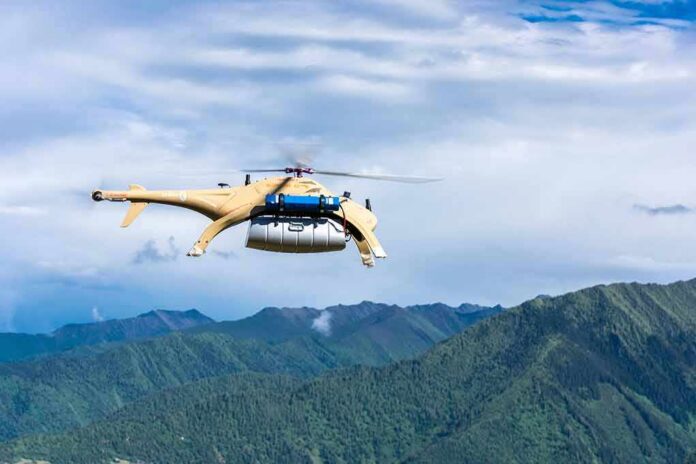
China announced stricter export controls on drones and key parts, and said the steps respond to recent U.S. actions on Chinese telecom and technology items. Beijing’s Ministry of Commerce described expanded rules that restrict engines, infrared sensors, lasers, and precision navigation components tied to potential military use. Officials framed the measures as necessary to protect national security and stop misuse for warfare or terrorism. The policy builds on earlier Chinese controls and extends checks through detailed part lists and end-use rules.
Beijing paired the new rules with actions against U.S. entities, including limits on the sale of dual-use goods. Chinese statements linked these steps to Washington’s recent moves that tightened restrictions on Chinese equipment and services. The measures underscore a cycle of tit-for-tat actions between the world’s two largest economies. Reuters reported that China characterized its response as countermeasures to U.S. restrictions involving drones and other technologies, and to sanctions tied to human rights concerns.
What the Controls Cover and Why It Matters to U.S. Buyers
The updated Chinese rules target high-performance parts that can boost range, payload, targeting, and sensing. Items include engines above set power levels, infrared thermal cameras, targeting lasers, precision inertial systems, and select radio and navigation gear. These parts can be used in mapping, powerline checks, and farming, but also in battlefield scouting and strikes. That dual-use risk is the government’s stated reason for licensing and bans, with rules that block exports for military, terror, or weapons programs.
American companies and public agencies that still source components from China could see delays and higher costs. Fewer suppliers and longer checks often mean longer lead times. Reuters noted prior Chinese revisions added high-precision measurement devices to control lists and tightened standards around critical components. These measures come as the United States also screens sensitive imports and export flows, aiming to protect national security and prevent risky tech transfers. The pressure on both sides now pinches buyers caught in the middle.
How This Fits the Long U.S.–China Tech Standoff
This move fits a pattern: each side cites national security and dual-use risk, then ratchets controls to signal leverage and shape supply chains. China has tightened drone controls step by step since earlier rounds, focusing on engines, optics, lasers, radios, and navigation equipment. Analysts describe a rules-based path that can widen or narrow with the political moment. The curve points to longer-term friction, not a one-week flare-up, with compliance checks that reach deeper into part catalogs and end-user vetting.
China’s latest countermeasures follow U.S. actions on Chinese tech gear and human rights. Beijing’s framing emphasizes reciprocity. At the same time, Washington already imposes export controls to guard security and foreign policy interests under federal regulations. Both countries now use similar toolkits, even while they blame the other for escalation. The shared logic means more items can be pulled into licensing, and more buyers must prove safe use and end-users on every order.
What Conservatives Should Watch: Security, Self-Reliance, and Cost
America depends on secure supply chains. When Beijing restricts core drone parts, U.S. buyers face price spikes and delays. That hits small businesses, local police, firefighters, and farmers who use drones to cut costs, save time, and protect lives. The answer is not surrender. The answer is to rebuild domestic production, reshore key parts, and diversify friendly sources. That reduces leverage from foreign regimes and keeps our communities safe and supplied at fair prices.
China announces restrictions on drone exports to the US and blacklists six companies in response to trade sanctions imposed by Washington over forced labour and national security concernshttps://t.co/J0UGZSE9mY
— TRT World (@trtworld) August 5, 2026
President Trump’s administration has pushed to protect national security and cut dependence on hostile powers. These new Chinese measures are a reminder that critical tools, from sensors to engines, must be made at home or sourced from trusted allies. Congress and states can help by simplifying permits, speeding factory build-outs, and backing apprenticeships to grow a skilled workforce. Stronger American capacity means fewer shocks when Beijing turns the dial on exports.
Bottom Line: Prepare for Disruptions, Double Down on American Strength
China’s countermeasures tighten the drone parts spigot and target U.S. entities. Beijing says it is answering Washington’s restrictions and security steps. The effect will be real for American buyers who still rely on Chinese components. Plan for tighter supply, longer waits, and higher costs. The durable fix is clear: secure supply chains, trusted partners, and more production on U.S. soil. That path protects our security, our police and first responders, and our economic freedom.
Sources:
insiderpaper.com, english.www.gov.cn, reuters.com, mayerbrown.com, reddit.com