

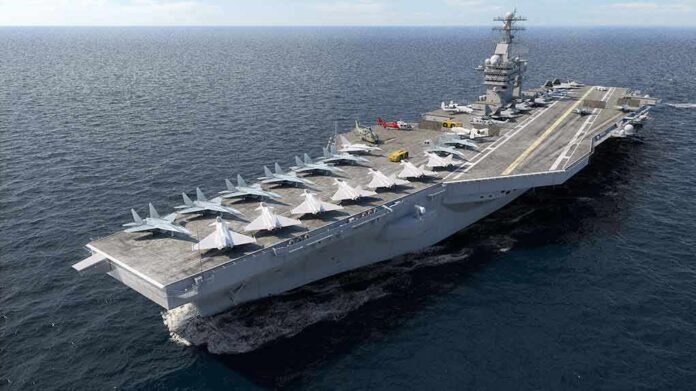
After 265 straight days at sea, the USS Abraham Lincoln sailed into San Diego to end one of the longest, hardest carrier deployments since the Cold War.
Story Highlights
- The carrier returned after about 321-322 days deployed, with thousands reunited with families.
- The crew set a modern record with 265 consecutive days at sea without a port visit.
- The mission supported U.S. operations tied to the war with Iran in the Middle East.
- Defense leaders acknowledged strain on the force, including eight suicide attempts in the strike group.
Homecoming Caps Nearly Year-Long Mission
Reporters in San Diego watched the USS Abraham Lincoln glide into the bay as families waved signs and cried with relief. The Associated Press and National Public Radio counted more than 10 months away, placing the tour at about 321 to 322 total days, among the longest since the Cold War ended. The core fact stood out: this was a massive, grinding deployment, and the crew finally stepped onto the pier to hug spouses, meet newborns, and reclaim everyday life.
News crews documented sailors pouring off the carrier and reuniting with children who had only seen mom or dad over video calls. Local and national outlets described a visible mix of joy and exhaustion as the ship moored at Naval Air Station North Island. The scale spoke for itself: thousands of service members, months of missed milestones, and a hard mission far from home. Leaders framed the return as a well-earned victory lap for a crew that held the line.
Record Streak At Sea Without A Port Call
Coverage across outlets agreed the ship notched 265 consecutive days at sea, a modern record for a U.S. carrier without a port visit. That streak shows what sustained operations demand from our sailors. It also highlights how hot spots stretch the fleet. Analysts have warned that deployments have been getting longer since 2023, with many now past the Navy’s seven-month norm, which puts the Lincoln’s grueling run in a wider trend of high operational tempo.
Officials and reporters placed the total deployment near 321 to 322 days, ranking it among the longest in the post–Cold War era. The exact day count varied slightly by outlet, but not the bottom line: this was a near year-long push that tested crews, families, and gear. That duration, paired with the at-sea streak, underlines what it takes to keep air power on station when global threats spike and ports are not an option.
Mission Linked To Iran War And Middle East Security
The Lincoln strike group supported U.S. operations tied to the war with Iran and regional security in the Middle East, according to multiple reports. The carrier’s presence provided air power, deterrence, and flexibility during a volatile period. Commanders called the mission one of the most operationally intense of the modern era, underscoring why the ship stayed on station for so long and skipped liberty ports to keep aircraft and crews ready on the front edge.
The USS Abraham Lincoln returns to San Diego after a 321-day deployment, one of the longest U.S. aircraft carrier deployments since the Vietnam War, setting the stage for heartfelt reunions between sailors and their waiting families. pic.twitter.com/qIcnoPYlvZ
— QThestorm RV🦅🇺🇲 (@17QStorm6RV) October 9, 2026
Defense Secretary Pete Hegseth addressed sailors near the end of the tour and acknowledged he had twice signed orders extending the deployment, then welcomed them home in San Diego. Leadership also recognized the toll. Reports noted eight suicide attempts within the strike group, and outlets raised concerns about stress and conditions aboard during the lengthy stretch at sea. These realities show why steady resources, mental health support, and clear missions matter for warfighters and families alike.
What It Means For Readiness, Families, And Policy
The Lincoln’s return tells a larger story about American sea power under strain. Since 2023, carriers have sailed longer and more often, while crews shoulder unpredictable schedules that complicate training cycles and family life. For readers who value a strong defense and stable homes, the lesson is simple: when the mission expands, the fleet and its support must keep pace. That means shipbuilding, maintenance, and quality-of-life efforts that match the demands put on those who serve.
Sources:
zerohedge.com, apnews.com, ocregister.com, fox35orlando.com, irishnews.com, crow.house.gov