
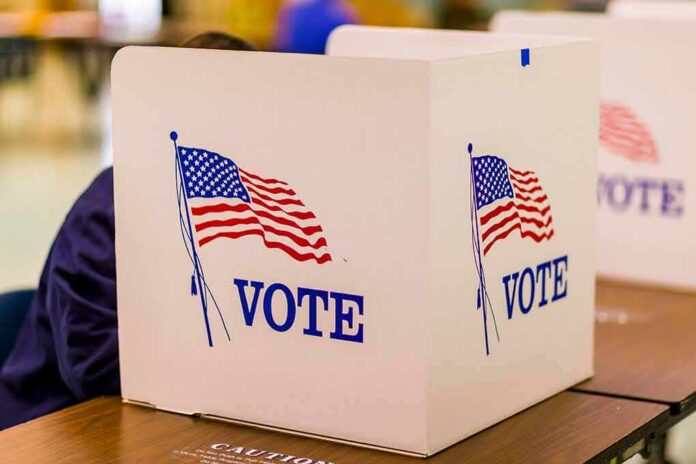
President Trump’s blunt warning that “voting in America is corrupt” reopens a hard fight over election integrity that courts and officials have already tested and disputed.
Story Highlights
- Trump’s allies filed more than 60 post-2020 election lawsuits raising detailed disputes over ballots and procedures.
- Courts reviewed claims on absentee rules, poll-watcher access, and curing, but rejected most for lack of proof.
- A federal judge said election “unfairness” claims need evidence, not assertions, and dismissed a key challenge.
- Election officials and legal summaries say investigations found no outcome-changing fraud in 2020.
What Trump Said And Why It Resonates With Many Voters
President Trump stated that voting in America is corrupt. That line lands with voters who watched years of messy rules, rushed changes, and ballot disputes. After 2020, Trump-aligned plaintiffs took their concerns to court in many states. They raised issues with absentee ballot checks, drop boxes, and poll-watcher limits. That push reflected a belief that rules must be clear and enforced the same way everywhere. It also showed conservatives want open records and tough audits before trust can be rebuilt.
The sheer number of cases signaled deep concern. Litigation trackers count more than 60 election challenges in state and federal courts. Those filings pressed for better signature verification, tighter absentee eligibility, and access for observers. Several suits described alleged irregular votes or weak chain-of-custody practices. Even critics agree that these were not only speeches. They were formal legal claims that spelled out specific theories and remedies in sworn documents across multiple jurisdictions.
What The Courts Actually Decided
Judges heard many of these challenges and rejected most of them on evidentiary grounds. A federal appellate decision in Pennsylvania captured the standard. The judge wrote that claims of unfairness are serious, but saying an election is unfair does not make it so. Courts asked for concrete, admissible proof that could alter certified totals. Across contested states, rulings said the evidence fell short. Some suits were dismissed on procedure. Others lost after hearings on the merits.
Legal summaries and nonpartisan reports say the same. They note that nearly all post-2020 cases failed. They cite a lack of specific, credible proof that would change outcomes. Officials also reported that big headline claims, like noncitizen voting in Nevada, collapsed under review. Those findings shaped public opinion. For many institutions, the record now reads as tested and closed. That perception is a major hurdle for anyone calling the whole system corrupt today.
What Was Contested, And What Remains Unsettled
The disputes were real, even if they did not prevail. Courts weighed claims about absentee ballot acceptance, ballot curing, and observer access. Plaintiffs argued that uneven rule changes and emergency measures bent statutes. They said that made voting less secure, and left too much room for error or abuse. The courts disagreed in outcome, but the record confirms these questions were argued in detail. That matters for future reforms on verification, transparency, and uniform statewide standards.
Some litigation summaries mention isolated issues, like votes by ineligible persons or handling mistakes. None were found large enough to reverse results. Still, many conservatives view those small cracks as signs of a system that needs stronger guardrails. They want full chain-of-custody logs, longer retention of surveillance at drop boxes, and public reports on ballot curing. They want faster audits that reconcile ballots and voter rolls before certification deadlines lock in tallies.
Where Election Integrity Goes From Here
Serious reform needs serious records. Freedom of Information Act requests can pull internal emails, custody logs, and curing reports. States can direct bipartisan audit teams to publish methods and raw data. Lawmakers can standardize observer access and signature checks. These steps match common sense: trust grows when the public can see the data. If agencies claim the system worked, open books and consistent rules should prove it to every honest critic.
President Trump’s charge is sweeping, while the court record is narrow and technical. Both truths can exist in tension. Many Americans saw chaos and felt shut out. Many judges saw thin proof and closed the cases. The path forward is not name-calling. It is sunlight, strong procedures, and equal enforcement in every county. That is how we protect the vote, defend the Constitution, and end the doubts that fuel anger on the right and denial on the left.
Sources:
mediaite.com, brennancenter.org, americanbar.org, dw.com, static1.squarespace.com, brookings.edu, washingtonpost.com