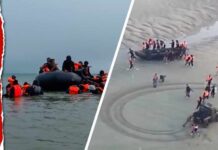

A shocking beach video from Spain’s Ceuta enclave shows a protected baby dolphin handled and allegedly beaten by a group of migrants, triggering a formal criminal complaint and a hunt for suspects.
Story Highlights
- A Spanish environmental group filed a complaint over the dolphin’s violent death and asked police to identify suspects.
- Footage shows migrants carrying the calf on Ceuta’s Trampolín Beach as onlookers react in anger.
- Some reports say the video alone cannot prove how the dolphin died, though the complaint alleges a beating.
- Investigators are urged to send the case to environmental prosecutors under Spain’s animal-protection laws.
Formal Complaint Presses Spanish Police to Act
Local environmental association DAUBMA filed a formal complaint with the Spanish Civil Guard on September 4. The group asked officers to open proceedings, identify the individuals seen in the video, and send the matter to Spain’s environmental prosecutors. The filing claims the calf reached shore alive, was pulled from the water, and was struck in the head by members of the group. The association says it submitted visual material with the complaint to aid the investigation.
Reports describe the incident unfolding on Ceuta’s Trampolín Beach, a small shore on Spain’s North African frontier. Video circulating online shows men and boys carrying a dolphin calf near the breakwater while people shout from the beach. Outrage spread quickly across social media in Spain and beyond. Several outlets framed the group as migrants, matching what viewers see in the recording and what local coverage reported about the beach crowd that day.
What the Video Shows — and What It Does Not
Multiple reports stress that the viral clip, by itself, does not establish the exact cause of death. One outlet notes the footage confirms people handled and moved the animal, but it does not prove whether the dolphin was alive when lifted or how it died. In the video, some in the group reportedly answer that “it was dead” when asked who killed it. These points do not clear anyone of wrongdoing; they explain that the clip alone cannot serve as a full forensic answer.
DAUBMA’s complaint, however, alleges a violent killing and asks authorities to treat the case as an environmental crime. Their filing cites a blow to the head and urges prosecutors to step in. That claim, if proved, would point to deliberate cruelty against a protected marine mammal. The group argues that the conduct shown in the images warrants criminal accountability under Spanish law. The complaint pushes investigators to move fast to preserve evidence and identify those seen in the footage.
How Investigators Could Prove Cause of Death
Marine-mammal experts say only a proper necropsy can confirm how a dolphin died. Standard protocols call for a veterinary exam, tissue sampling, and a clear chain of custody. Examiners look for trauma, disease, malnutrition, or drowning, and they distinguish injuries that happened before death from damage after death. These steps matter here because the public only has a short, heated video. A full post-mortem would show if a head strike caused death or if the calf died earlier from another cause.
JUSTICE FOR THE $DOLPHIN
This is going GIGA viral. A group of migrants pulled a RARE, PROTECTED baby dolphin out of the ocean and PUNCHED IT TO DEATH.
Footage from Playa del Trampolín in Ceuta shows the bottlenose dolphin calf being carried around the beach after it came ashore… pic.twitter.com/Aj9mRAX9MQ
— Jesse (@jesse_0466) September 4, 2026
Guides used by marine programs lay out checklists to flag suspected human-caused trauma and to rule out other factors. Investigators document wounds, internal bleeding, fractures, and signs of stress. If authorities in Ceuta secure the carcass and follow these steps, they can reach a trusted finding. That would either confirm the complaint’s claim of a killing or show a different cause. Either way, a science-based answer would replace guesswork and remove any doubt about the next legal step.
Why This Strikes a Nerve on Borders, Law, and Respect
This case hits several core concerns for our readers. First, it shows a shocking lack of respect for life and for a protected species. Second, it highlights the law-and-order gap at crowded border zones, where public safety and cultural norms can clash. Spanish law has tools to punish animal cruelty. The question is whether authorities will use them with speed and clarity. DAUBMA’s filing seeks exactly that: names, evidence, and referral to environmental prosecutors.
Americans know this pattern. Viral clips light a fire, facts lag behind, and trust sinks. The fair path is simple: secure the body, do the necropsy, identify the people in the video, and apply the law. If the dolphin was beaten to death, charge them. If not, say so with evidence. Either way, order matters. Borders matter. Respect for wildlife and the rule of law matters. That is how a free society holds the line — without fear, and without favoritism.
Sources:
ground.news, mdzol.com, x.com, youtube.com