

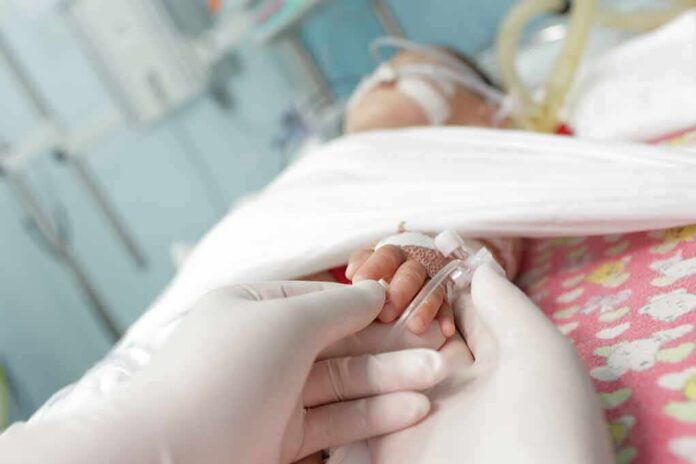
A little boy’s sudden refusal to eat or drink turned out to be not “teething,” but a rare, aggressive cancer that most parents have never even heard of.
Story Snapshot
- A toddler’s everyday symptoms were first treated as minor issues, then linked to deadly neuroblastoma.
- Neuroblastoma is a rare childhood cancer that often spreads before doctors finally catch it.
- Families face long, brutal treatment plans while charities step in to fill gaps in support.
- The story exposes how stressed health systems can miss serious warning signs in our kids.
When “teething” signs hide a deadly cancer
Parents in Britain watched their young son, Teddy, grow weak, stop eating and drinking, vomit, and sleep far more than normal, only to be told at first that he was dealing with common childhood issues like teething and constipation. These simple labels gave false comfort while his body was fighting something far worse. After symptoms dragged on, doctors finally ordered a chest scan and ultrasound, which revealed neuroblastoma, a rare and aggressive cancer that starts in early nerve cells.
Reporters and charities now say Teddy was diagnosed with high-risk, stage 4 neuroblastoma, meaning the cancer had already spread through his body by the time it was found. This form of neuroblastoma often begins in the adrenal glands or nerves along the spine and is usually discovered only after serious symptoms or scans force doctors to look deeper. Many children with this disease already have widespread cancer when diagnosed, which makes survival much harder.
What neuroblastoma is and why doctors miss it
Neuroblastoma is the most common cancer in infants, but it is still rare, with only hundreds of cases a year in larger countries. It arises from immature nerve cells in the sympathetic nervous system, often deep in the belly or near the spine, where no parent can see or feel it early on. Because the tumors grow in these hidden areas, early signs can look like normal childhood problems, such as stomach pain, fatigue, loss of appetite, or odd aches and pains.
Doctors diagnose neuroblastoma using a mix of physical exams, imaging tests, and lab work, and then confirm it with a biopsy or bone marrow samples. International standards say that a clear tissue diagnosis or a bone marrow sample plus high levels of certain urine chemicals are required to officially call it neuroblastoma. This careful process matters because the cancer can resemble other childhood tumors under a microscope, and getting the diagnosis right guides the entire treatment plan.
High-risk disease and the long road of treatment
Charity accounts of Teddy’s case describe a high-risk, stage 4 diagnosis, which is the toughest category for this disease. For high-risk patients, the cancer has usually spread to distant parts of the body, and doctors expect a long and intense battle using chemotherapy, surgery, radiation, and often stem cell transplants. Survival odds for this group are much lower than for low-risk children, and the risk of the cancer coming back remains high even after heavy treatment.
Specialist centers treat neuroblastoma using strict protocols and advanced tests that look at tumor genetics and other markers to fine-tune therapy. Families often rely on cancer charities to help explain the complex staging systems and risk scores, since most medical details never appear in news stories or public statements. Privacy rules protect the child’s records, which means the public only sees summaries, not the full biopsy, scan, or lab reports that doctors use behind the scenes.
Families left to fight, charities step into the gap
Stories of Teddy’s illness show how parents are thrust overnight into a world of hospital stays, cancer drugs, and hard choices, all while trying to keep family life steady for siblings. Ronald McDonald House–type charities describe how housing support lets families stay near their child’s hospital, turning a cold medical crisis into something slightly more bearable. Other groups focus on raising money for cutting-edge treatment or trials, since rare pediatric cancers often depend on extra donations to fund research and care.
This pattern should concern readers who care about strong families and accountable health systems: a child’s serious cancer can be mistaken for minor issues, and the full weight of diagnosis and treatment falls on parents and small charities rather than a responsive, well-funded medical network. While doctors follow strict scientific rules to confirm neuroblastoma in the clinic, families and the public mainly see emotional stories instead of clear data, making it harder to judge how well the system is truly working for sick children.
Sources:
mirror.co.uk, ncbi.nlm.nih.gov, emedicine.medscape.com, walesonline.co.uk, neuroblastoma.org.uk, solvingkidscancer.org.uk, intechopen.com, pmc.ncbi.nlm.nih.gov, my.clevelandclinic.org, pubmed.ncbi.nlm.nih.gov, academic.oup.com, cancer.gov