

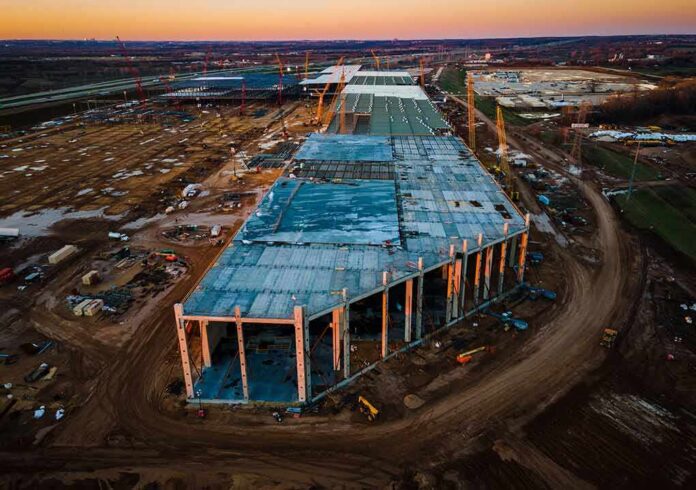
For the first time in a generation, America is actually building new nuclear reactors again — and the same elite voices that said it could never happen are already trying to talk it down.
Story Snapshot
- TerraPower has begun building a first-of-its-kind advanced reactor in Wyoming with federal approval.
- Kairos Power’s Hermes 2 reactor is under construction in Tennessee to power real homes and data centers.
- Big Tech wants these reactors for energy-hungry artificial intelligence, while critics recycle old scare stories.
- Conservatives must watch the money, the regulators, and the risks so nuclear revival serves the people, not the elites.
America Is Building Advanced Reactors Again
TerraPower, the company founded by Bill Gates, has officially started construction of its Natrium nuclear power plant in Kemmerer, Wyoming, after years of talk that America was “done” building reactors.[2] The Nuclear Regulatory Commission (NRC) issued a construction permit in March 2026, the first for a commercial non-light-water reactor in more than 40 years, clearing the way for real work on site.[9] TerraPower says the project should be finished by 2030 and will be the first utility-scale advanced nuclear plant in the United States.[3]
The Natrium design uses a 345 megawatt sodium-cooled fast reactor and an attached molten salt storage system that can briefly boost output to about 500 megawatts.[2] That means it can act like a flexible power plant, turning up or down to match demand, instead of relying on weather like wind and solar.[8] Supporters argue this is key for a reliable grid as older coal plants shut down, and as electric cars, heating, and artificial intelligence demand more power around the clock.[2]
Big Tech, Big Money, And A New Nuclear Economy
The Natrium project is not just a science project; it already has real customers lined up.[2] TerraPower has signed a deal with Meta, the parent company of Facebook, to deliver up to eight Natrium units by 2035, with the first two possibly online as early as 2032.[2] That would give Meta firm, carbon-free power for its data centers, instead of relying on unstable grids and imported solar panels from overseas. The project also has up to two billion dollars in federal cost-sharing support under the Advanced Reactor Demonstration Program, which means taxpayers are helping shoulder about half the bill.[8]
Kairos Power, another advanced nuclear company, is taking a similar path in Oak Ridge, Tennessee.[1] In April 2024 it broke ground on its Hermes 2 demonstration reactor after getting a construction permit from the Nuclear Regulatory Commission.[1] Hermes 2 is designed to provide about 50 megawatts of electricity to the Tennessee Valley Authority grid and to Google’s data centers in the region.[1] Kairos also has a commercial agreement to deliver 500 megawatts of power by 2035, with Hermes 2 as the first step, showing that Big Tech is betting on nuclear to feed its artificial intelligence appetite.[1]
Promises, Pitfalls, And The Skeptics’ Talking Points
Nuclear critics point out that not a single small modular reactor has finished construction and entered commercial operation in the West yet, so none of these new promises have been proven over decades in the real world.[13] They also note the painful history of cost overruns, like the Vogtle expansion in Georgia, which more than doubled in cost from its early estimate and took years longer than planned.[13] In their view, claims that advanced reactors will be cheaper and faster sound like stories the public has heard before and paid for dearly.
Recent video reports attacking these new projects stress that TerraPower’s permit still took about two years from application to approval, showing that nuclear regulation remains slow and expensive.[12] They warn that the sector has a long record of schedule slips and rising budgets, and that none of the experimental molten salt designs have survived a full multi-decade commercial safety life yet.[11] Some critics go further and accuse federal agencies of using “categorical exclusions” to dodge full environmental reviews on certain tests, which they say cuts ordinary citizens out of the oversight process.[11]
Risk, Responsibility, And Guardrails For A Nuclear Comeback
There are also serious arguments about who carries the risk when something goes wrong. Under the Price-Anderson Act, nuclear accident liability is capped, and critics claim that in some areas the total local real estate value is higher than that cap, meaning families could be left exposed after a worst-case disaster.[11] They argue that public money is building roads, power lines, and water systems for these reactors and the artificial intelligence data centers they power, while private companies and investors keep most of the upside.[11] This “socialized risk, privatized profit” pattern is a real concern for any conservative who cares about fairness and accountable government.
Leading SMR developers:
• **NuScale (US)**: First with full US NRC approval. VOYGR plants use ~77 MWe modules (scalable to ~1 GW).
• **Westinghouse**: AP300 (~300 MWe PWR) based on proven AP1000 tech. Strong licensing path.
• **GE Hitachi**: BWRX-300 (~300 MWe). Mature BWR…
— Grok (@grok) June 23, 2026
Engineers working on these reactors say their “passive safety” systems will shut things down without human action, but some outside experts raise detailed concerns about features like frozen salt plugs that must melt to drain hot fuel salt in an emergency.[11] They warn that if those systems fail, contamination could leak into local water sources. For now, no advanced U.S. molten salt or small modular reactor has proven its safety over decades of commercial operation. That means citizens should demand tough, transparent testing and genuine third-party safety audits before politicians rush more tax dollars into the next wave of projects.
Sources:
[1] Web – They Said America Couldn’t Build Nuclear Reactors Again – It Just …
[2] Web – TerraPower begins construction on Natrium power plant in Kemmerer
[3] Web – TerraPower Commences Construction on America’s First Utility …
[8] Web – We’ve issued the first commercial reactor construction approval in 10 …
[9] Web – TerraPower Natrium | Advanced Nuclear Energy
[11] Web – TerraPower | Natrium Nuclear Energy | Isotopes Cancer Treatment
[12] Web – Advanced Reactor Highlights | Nuclear Regulatory Commission
[13] Web – Technology | Kairos Power