

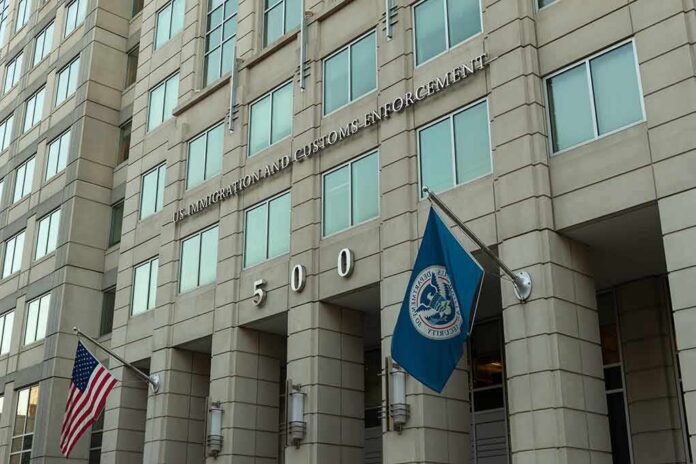
A Haitian man in Ohio collapsed in tears after ICE fitted him with an ankle monitor, turning a routine check-in into a searing image of the Trump administration’s immigration crackdown.
Quick Take
- Haitian immigrant Monsanto Maler broke down outside an Immigration and Customs Enforcement office in Blue Ash, Ohio, after receiving an ankle monitor.
- The check-ins followed the end of Temporary Protected Status for Haitians after a Supreme Court ruling let President Trump’s administration move ahead with the change.
- Reporting says some Haitians were given a choice between an ankle monitor and immediate deportation or detention.
- Supporters of enforcement say ankle monitors are a standard supervision tool, while critics call the practice humiliating and heavy-handed.
Why the Scene Hit So Hard
The video of Monsanto Maler on the ground, crying after leaving the federal office, captured the human cost of a policy fight that had already shifted into high gear. Reporting identified Maler as one of the Haitians who were summoned to check in after their temporary legal protection ended, and said the monitor was attached to his left ankle. That moment quickly became the clearest symbol of how the new enforcement wave feels on the ground.
The details matter because this was not a random arrest scene. News reports say the check-ins came after the Supreme Court allowed President Trump’s administration to end Temporary Protected Status for roughly 350,000 Haitians, and that Homeland Security then mailed out thousands of letters ordering former holders to report in person. The same reporting says people who reported to the office faced follow-up monitoring, court dates, and travel limits tied to the device.
What ICE Is Doing in Ohio
Reports from ABC News, the Washington Post, and local Ohio outlets say Haitian immigrants in the state were told to appear at Immigration and Customs Enforcement offices, where some were fitted with ankle monitors. Several reports place the processing site in Blue Ash, near Cincinnati, and say the people involved were mostly former Temporary Protected Status holders from Springfield and nearby communities. The public record shows a clear pattern: call-in letters, office check-ins, and electronic monitoring after arrival.
The reporting also says the monitor is not just symbolic. One account says recipients must stay within a 75-mile radius unless they get permission from ICE, and another says some were told they could either accept a monitor or face immediate deportation or detention. That creates a hard choice for families who had been living and working under temporary legal protection and now face a tighter federal grip on their movement.
Why Supporters Say the Practice Is Lawful
Homeland Security has defended ankle monitors as part of ordinary immigration supervision for people awaiting proceedings. A Haitian Times report quotes a Department of Homeland Security video transcript saying non-citizens may be checked in regularly and may be given ankle monitors or similar electronic devices. That is the strongest public argument for the government side: the device is being presented as a standard enforcement tool, not a special punishment built for Haitians alone.
That defense may satisfy legal bureaucrats, but it will not calm families who see the process as degrading. Local advocates quoted in the reporting say the devices felt like criminal tags and described the experience as a fresh humiliation for a community already under stress. The emotional video of Maler collapsing gave those warnings a face, and it explained why the issue spread so fast beyond immigration circles and into the wider public conversation.
Haitian immigrant Monsanto Maler broke down in tears after leaving an Ohio ICE office with an ankle monitor. The moment comes after protections for roughly 350,000 Haitians ended.
Read more #OnTheGriohttps://t.co/I5tVLMIeJ0
— theGrio.com (@theGrio) August 10, 2026
What This Means for Haitian Families in Ohio
The broader problem is that legal status changes can turn into sudden supervision, and supervision can feel like punishment. Haitian residents in Springfield and surrounding areas are now dealing with lost status, federal check-ins, possible deportation, and limits on travel. Reports also say the notices arrived by mail with little warning, which left many people confused about whether they were facing a routine appointment or the first step in removal.
For conservatives, the case shows both the reach and the bluntness of federal immigration power. The administration is enforcing the law after Temporary Protected Status ended, but the use of ankle monitors on people who have not been convicted of crimes will strike many Americans as harsh. The public debate is likely to keep centering on the same question: whether this is a fair tool for enforcement or another sign that Washington reaches too far into ordinary lives.
Sources:
twitchy.com, washingtonpost.com, youtube.com, instagram.com, theemancipator.org, inquirer.com