
As Israel drives deeper into Lebanon toward the Litani River, many warn the south is being turned into a “new Gaza” right on Israel’s northern doorstep.
Story Snapshot
- Israel has seized Beaufort Castle and high ground up to the Litani River, calling it a vital security buffer against Hezbollah rockets.
- Over a million Lebanese have been displaced by bombing and evacuation orders, fueling charges of occupation and “Gaza-style” devastation in the north.[11]
- Israeli leaders openly talk about a long-term “security zone” and even a new border at the Litani, raising fears of mission creep.[1][2]
- The fight over southern Lebanon is really a fight over where Israel’s front line will be drawn—and whether Lebanon becomes another terror launchpad like Gaza.[18]
Why Beaufort Castle And The Litani Line Matter To Israel’s Security
Israeli leaders say the push to Beaufort Castle and beyond the Litani River is about one thing: pushing Hezbollah’s rockets and anti-tank missiles farther from Israeli families in the Galilee.[1] Beaufort Castle sits on high ground that looks over large parts of southern Lebanon and even into northern Israel, giving whoever holds it a powerful view of roads, valleys, and border villages.[1] Israeli commanders argue that if Hezbollah cannot operate freely on that ridge, it is harder for them to aim guided missiles at farms and towns in the north.[18]
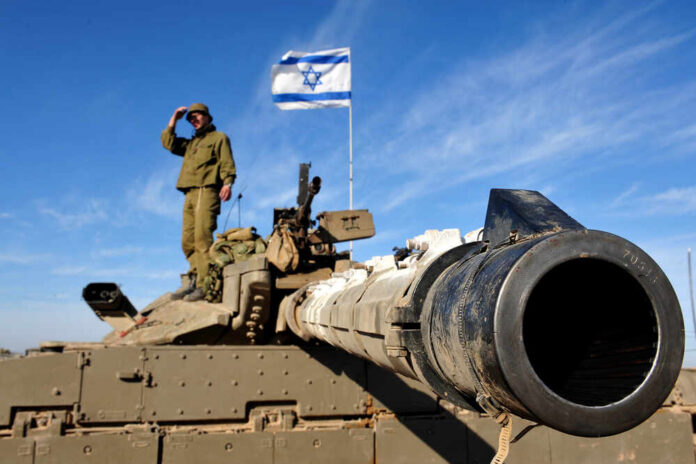
Reports say this is Israel’s deepest move into Lebanon in more than twenty-five years, not some small raid.[18] Troops fought through nearby villages under drone and rocket fire before raising the flag at the castle.[18] Defense Minister Israel Katz has said soldiers will stay as part of a larger “security zone” in southern Lebanon, meant to keep Hezbollah fighters and launch sites away from the border.[1] For many Israelis still shaken by years of rocket fire, a ten-kilometer buffer looks like basic common sense rather than expansion.[5]
From Buffer Zone To “New Gaza”? Displacement, Destruction, And Red Lines
Critics say the way this buffer is being built looks less like a narrow defensive belt and more like turning southern Lebanon into another Gaza-style wasteland ruled at gunpoint.[3] Human rights groups and legal bodies report that more than one million Lebanese have been forced from their homes as Israel pounds villages, bridges, and farmland across the south and the Bekaa Valley.[11] Mass evacuation orders cover a huge area of the country, and some rulings warn that forced transfers without clear military need can amount to war crimes.[12]
Israel Katz has been quoted saying that hundreds of thousands of Lebanese will not be allowed to return south of the Litani until Israel feels its northern border is safe.[11] That type of open-ended language alarms many who remember Israel’s last long occupation of southern Lebanon, which lasted eighteen years before a full pullout in 2000.[18] Lebanese and international critics warn that calling it a “security zone” does not change what they see on the ground: empty villages, bulldozed homes, and a foreign army digging in.[3] To them, that looks like Gaza pushed north, not a temporary shield.
Lebanon’s Long History As A Terror Launchpad And Why Americans Should Care
For American conservatives, the key question is whether Israel is finally drawing a line that keeps terror away from its citizens or sliding into another endless occupation that enemies can use for propaganda. Since the 1970s, armed groups have used southern Lebanon as a base to attack Israel, first the Palestine Liberation Organization and then Hezbollah after the Iranian Revolution.[25] Every time Israel pulled back without a real fix, rockets and raids slowly returned, and the cycle of war started again.[22]
June 17, 2026 the MOU states, “the immediate and permanent termination of military operations on all fronts, including in Lebanon” and an undertaking “not to initiate any war or any military operation against each other… and ensuring the territorial integrity and sovereignty of…
— Kick Em All Out (@tebohn1962) June 20, 2026
Think about what this means if Lebanon really does become the “new Gaza.” Hezbollah is better armed than Hamas, with more advanced missiles pointed at cities, ports, and energy sites that matter to global markets.[18] If a weak Lebanese state and an Iran-backed militia control that frontier, it invites more chaos, higher energy prices, and more chances that American troops or assets get pulled into a wider Middle East war. That is the same globalist mess many readers are tired of paying for in taxes, inflation, and deployments.
A Tough Balance: Real Security Needs Versus Open-Ended Control
Serious conservatives can see both sides of the hard trade here. On one hand, Hezbollah has fired thousands of missiles and drones at northern Israel and openly vows to destroy the Jewish state.[18] No serious country would accept that threat sitting right across a narrow border without trying to push it back. Israel’s plan to hold key ridges up to the Litani and deny Hezbollah easy firing positions has a clear military logic that many defense experts confirm.[5]
On the other hand, history shows buffer zones have a way of turning into semi-permanent occupations when goals are fuzzy and leaders talk about “new borders.”[2] International probes already accuse Israel of destroying far more civilian property in earlier phases of the Lebanon campaign than strict battlefield necessity allows, especially when homes or symbolic sites were razed simply to prevent future use.[3] If that pattern repeats up to the Litani, Israel risks trading short-term security gains for long-term diplomatic and moral costs.
What This Means For U.S. Policy And Trump-Era Priorities
Under President Trump’s second term, Washington has been far more willing to back Israel’s right to defend itself while pressing allies to carry more of their own security burden. The Lebanon fight fits that approach. Israel is taking the lead on the ground, not asking for American boots, but it does expect political cover against United Nations pressure and hostile legal campaigns.[8] Conservatives in the United States tend to support that, so long as Israel’s operations stay clearly tied to stopping terror, not grabbing land.
As the dust settles around Beaufort Castle and the Litani line, Congress and the White House will face real choices. Should America keep backing Israel’s buffer zone if displacement grows and the “temporary” zone starts to look permanent? Or should Washington push harder for a deal where Hezbollah is disarmed, Israel pulls back to its own border, and Lebanon’s government finally takes responsibility for its south? For readers who value secure borders, limited foreign entanglements, and respect for national sovereignty, Lebanon’s future is about more than maps—it is about whether the Middle East keeps exporting chaos or begins to contain it.
Sources:
[1] Web – Lebanon, the New Gaza
[2] Web – Why Israel’s Beaufort Castle seizure is historically and strategically …
[3] Web – Israel captures Beaufort Castle in Lebanon – The Times of India
[5] YouTube – Why Israel’s Capture Of Beaufort Castle Matters | Dawn News English
[8] Web – Israel Captures Strategic Beaufort Castle in Southern Lebanon …
[11] Web – What is Beaufort Castle, why does it matter strategically – Instagram
[12] Web – One Million People Displaced in Lebanon as Israel Launches … – TIME
[18] Web – Fears of an all-out Israeli invasion mount in Lebanon – NBC News
[22] Web – Israel’s extensive destruction of Southern Lebanon
[25] Web – South Lebanon faces ‘death, destruction’ as Israel deepens invasion