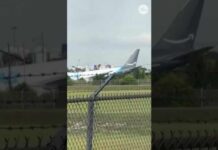

U.S. Central Command says American forces disabled the sanctioned tanker M/T Kylo in the Gulf of Oman, enforcing the blockade on Iran-linked oil shipping.
Story Highlights
- CENTCOM reported disabling an Iran-linked tanker in the Gulf of Oman as part of blockade enforcement.
- Sanctions records identify the M/T Kylo as a crude-oil tanker tied to Iranian oil networks.
- Reporting says the tanker was rendered non-operational after multiple precision strikes.
- The action fits a wider campaign against “shadow fleet” vessels that evade sanctions.
What CENTCOM Says Happened at Sea
United States Central Command (CENTCOM) stated that U.S. forces disabled a non-compliant tanker in the Gulf of Oman after it violated a blockade tied to Iranian ports. The command’s recent releases describe disabling tankers that attempted to move Iranian oil or sail to Iranian ports. Those statements match media reports that the M/T Kylo was struck and left non-operational after multiple hits, which CENTCOM described as precision action to halt a sanctioned vessel. This operation reflects continued maritime enforcement under President Trump.
BBC reporting on similar actions in the same waterway quotes CENTCOM saying a carrier-based fighter fired a precision munition into a tanker’s engineering and steering spaces, rendering it disabled. That account aligns with the pattern CENTCOM outlined in its June releases on blockade enforcement. The stated goal is simple: stop sanctioned oil movement that funds hostile regimes and undermines U.S. sanctions. Officials framed the action as targeted, limited, and focused on compliance.
Why Kylo Was on Washington’s Radar
U.S. sanctions records list the tanker “KYLO” as a crude-oil vessel linked to Kylo Shipping Inc. under Iran-related sanctions authorities, with International Maritime Organization number 9189146. A government sanctions dossier describes Kylo’s role in transporting sanctioned Iranian oil, including ship-to-ship transfers and periods of “dark” operations with its tracking turned off. These data points placed Kylo within a known network that moves restricted cargo, making it a likely target for blockade enforcement when found operating in the Gulf of Oman.
Open-source sanctions trackers connect the tanker’s current and former names, including “KYLO,” “Memphis,” and “Noxen,” which tightens the link between the ship in public footage and entries on sanctions lists. That cross-checking reduces confusion about identity, a common problem with shadow fleet practices. Together, official sanctions listings and watchlist records support the U.S. position that Kylo was part of an illicit transport web tied to Iran’s oil exports, which American policy seeks to choke off to cut funding for hostile activity.
How This Fits the Wider Shadow Fleet Crackdown
Analysts and government documents describe a “shadow fleet” of older tankers that hide movements, switch flags, and conduct mid-ocean cargo transfers to dodge rules and carry sanctioned crude for regimes like Iran, Russia, and Venezuela. The International Maritime Organization and Western authorities have flagged this risk for years. The purpose is to move oil while sidestepping insurance rules, safety standards, and sanctions enforcement. U.S. actions in the Gulf of Oman fit a broader effort to push back at sea, where these networks operate most freely.
Policy papers and watchdogs note hundreds of tankers face sanctions or scrutiny for this behavior, and that stricter enforcement has slowed, though not stopped, the fleet’s growth. Recent CENTCOM releases show a sharper use of force: instead of only seizing or diverting ships, U.S. forces have disabled vessels said to be violating the blockade. Media reports on Kylo say the tanker was “completely destroyed” and left non-operational, which signals a tougher line meant to deter future runs and raise the cost of evasion.
Security, Law, and American Interests
CENTCOM frames these actions as necessary to uphold sanctions, limit funding to hostile actors, and protect lawful shipping. Conservative readers will see the logic: enforce the line, stop illegal cargo, and protect U.S. leverage without endless diplomacy that bad actors ignore. The precision approach, including strikes on engineering and steering spaces reported by the BBC, aims to neutralize the ship without broad harm and to send a clear message to networks that test the blockade.
🇺🇸 @CENTCOM just released the footage.
M/T Kylo — IRGC shadow-fleet tanker — is now on the floor of the Gulf of Oman.
Iran fired ballistic missiles at two U.S. Navy ships.
America answered by disabling two tankers and sinking a third.Crew ordered off first.
Then precision… pic.twitter.com/1vxtlLita7— Aasheesh Tiwarii (@AasheeshTiwarii) September 6, 2026
One caution appears in the public record: while sanctions files and reporting identify Kylo and describe its role, not every incident detail sits in a single public release, and some technical steps remain described through media accounts rather than a full incident packet. Still, the core facts are firm. Sanctioned tanker. Gulf of Oman. Blockade enforcement. Disabled by U.S. forces. For Americans who value the rule of law, secure seas, and a strong posture, that is mission clarity backed by action.
Sources:
facebook.com, bbc.com, war-sanctions.gur.gov.ua, sanctionssearch.ofac.treas.gov, centcom.mil, opensanctions.org