
Israel’s confirmed killing of Hamas military chief Mohammed Deif removes a key architect of the October 7 massacre, but also exposes how terrorists hide among civilians while global elites still pressure America and Israel to “show restraint.”
Story Snapshot
- Israeli forces say they eliminated Hamas military commander Mohammed Deif in a July 13, 2024 strike near Khan Younis.
- Deif is accused of initiating and directing the October 7 massacre that killed over a thousand Israelis and saw hundreds kidnapped.
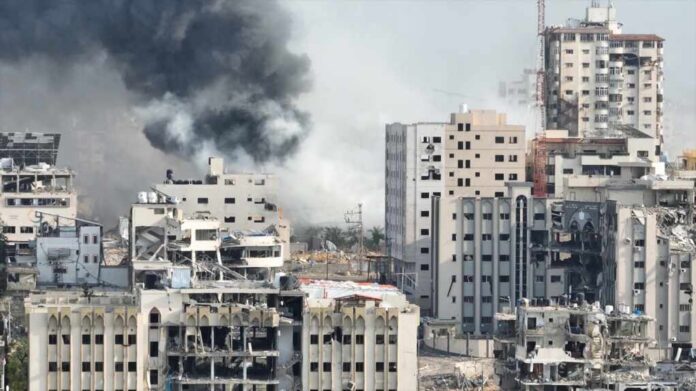
- The strike hit a Hamas compound embedded near a designated “humanitarian zone,” highlighting terrorists’ use of human shields.
- Competing casualty claims fueled another media storm over Israel’s conduct, even as Hamas quietly accepted Deif’s death.
Deif’s Elimination and Why It Matters to American Security
Israeli military officials announced on August 1, 2024 that fighter jets struck a compound near Khan Younis on July 13 and, after an intelligence review, confirmed that Mohammed Deif, commander of Hamas’s military wing, was killed in the attack. [1] Israel identifies Deif as the mastermind who initiated, planned, and executed the October 7 massacre, where about 1,200 people were slaughtered in southern Israel and 251 hostages dragged into Gaza. [1] Removing that kind of operational brain matters to anyone serious about defeating jihadist terror.
Reports describe the target as a Hamas compound on the outskirts of Khan Younis, not a random tent encampment, and say Deif was inside alongside Rafa’a Salameh, the group’s Khan Younis brigade commander, who Israeli officials say was also eliminated. [1][2] Additional Hamas operatives were reportedly present and killed in the strike. [1] In other words, this was a deliberate strike on a senior command node, not a blind attack, aimed at the leadership that sent gunmen to butcher civilians in their homes.
Hamas Hiding Behind Civilians and the Media Spin War
Accounts from the July 13 strike show the familiar pattern conservatives have watched for years: terrorists embed in civilian areas, Israel targets them, and global media quickly amplify casualty figures from Hamas-linked offices. The compound was located near the al-Mawasi area, which Israel had designated as part of a humanitarian zone, but Israeli sources say the site itself was a fenced-off Hamas facility inside a civilian environment. [1] That proximity practically guarantees propaganda outrage the moment a bomb drops.
The Hamas-run health ministry claimed at least 90 people were killed and hundreds wounded, while Israeli assessments said many of the dead were Hamas operatives. [1] United Nations human rights officials folded this strike into a broader condemnation of July air operations in Gaza, citing mass-casualty incidents without distinguishing clearly between terrorists and civilians. For Americans who remember how global institutions condemned our own war on terror, this script feels familiar: handcuff the law-abiding democracies, look the other way when jihadists violate every rule of war.
Conflicting Claims, Intelligence Fog, and Hamas’s Quiet Concession
Immediately after the strike, Hamas publicly denied that Deif had been killed or even targeted. [1] That denial fed another round of “he said, she said” coverage, with some outlets emphasizing uncertainty and suggesting Israel might be overstating its success. Yet Israel’s August 1 statement stressed that the confirmation came only after an intelligence assessment, implying signals or human-source reporting beyond what could be shown publicly. [1] In modern conflicts, such intelligence-based assessments often precede any physical recovery of a body.
Subsequent reporting indicates that Hamas itself eventually accepted that Deif was dead and even detained individuals suspected of leading Israel to him. [3] That internal reaction undercuts the early public denials and shows how terror groups run their own information campaigns, pretending strength while quietly punishing those blamed for leaks. For American readers, this is another reminder: the same media that treat Hamas casualty claims as gospel routinely question Western intelligence, even when jihadist groups privately concede the facts.
Lessons for U.S. Policy, Border Security, and Western Resolve
The Deif operation carries broader lessons for the United States as we continue facing threats from Iran-backed networks and their sympathizers. Deif was not just a field commander; Israel describes him as the second in command of Hamas in Gaza and a key organizer of mass murder against civilians. [1][2] Neutralizing figures like that is what real counterterrorism looks like. It is not done through climate conferences, “woke” training sessions, or open-borders naïveté; it requires intelligence, decisive strikes, and the political will to withstand criticism.
American conservatives watching this story unfold see several red flags at home. Our own border remains porous while Iran’s proxies probe for openings. Global institutions rush to judge Israel but stay quiet about Hamas hiding among families in so-called humanitarian zones. Media outlets spotlight unverified figures from terrorist-linked ministries while downplaying the victims of October 7. If we abandon moral clarity, we invite the same chaos here. Supporting allies who fight terrorism with determination, while defending our own borders and rejecting globalist double standards, is not optional—it is basic self-preservation.
Sources:
[1] Web – August 1, 2024 Announcement of the Elimination of Mohammed Deif
[2] Web – Israeli military confirms death of Hamas military leader Mohammed …
[3] Web – Hamas now accepts Israel killed Muhammad Deif, has arrested 2 …