
Democrats just won total control of Congress, and the first big fight on their list is a government takeover of healthcare that one study says would cost taxpayers $32.6 trillion.
Quick Take
- Democrats swept the 2026 midterms and will control both the House and Senate next year, according to CBS News projections.
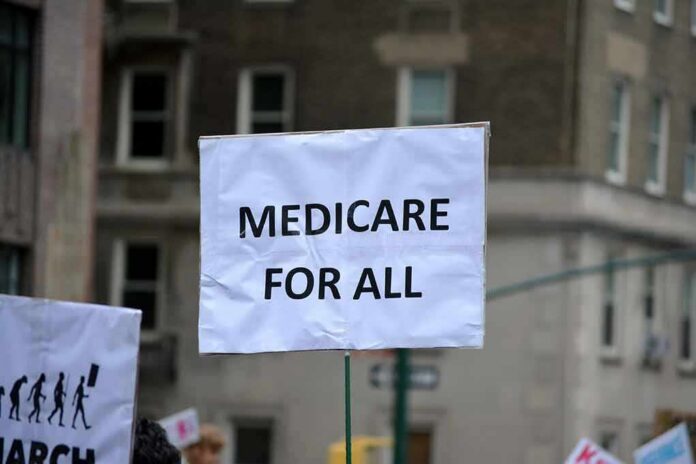
- The victories are expected to fuel a renewed push for “Medicare for All,” a government-run healthcare system covering every American.
- Michigan Senate winner Abdul El-Sayed campaigned directly on passing Medicare for All, giving the movement a high-profile new voice in Washington.
- An independent economic study found the plan would raise government healthcare spending by $32.6 trillion over ten years.
- Public support for the idea collapses once voters hear it could mean tax hikes or threaten their current Medicare coverage.
Democrats’ Sweep Opens the Door for Single-Payer
Voters handed Democrats sweeping wins across the country on Election Day, with CBS News projecting the party will control both chambers of Congress starting next year. That outcome is already reshaping the national healthcare debate. CBS News reported the new Democratic majorities are likely to embolden proposals to expand Medicare, the federal program currently serving Americans 65 and older, to cover every citizen in the country.
Republicans warn this is exactly the kind of government overreach conservatives have fought for years. Handing Washington bureaucrats control over every American’s healthcare decisions is a dramatic expansion of federal power, one that would strip choice away from families who like their current coverage and force them into a one-size-fits-all system run by politicians.
Michigan’s El-Sayed Win Signals New Momentum
Michigan’s Senate race became a national bellwether for the issue. Democrat Abdul El-Sayed won after running on “passing Medicare for All” as a central campaign promise, framing it alongside busting monopolies and other sweeping economic changes. His campaign website reportedly says Medicare for All would eventually “sunset” private insurance plans, even though El-Sayed claimed during the race his version would not touch union or employer coverage.
That contradiction matters. Voters were told one thing on the campaign trail while the fine print suggests something far more sweeping. It is the same pattern conservatives have warned about for years: promises of keeping your plan if you like it, followed by a system that eventually eliminates the choice altogether.
The Trillion-Dollar Price Tag Republicans Keep Citing
A study from a university-based policy center found that a Medicare for All plan modeled on proposals from Senator Bernie Sanders would increase government healthcare spending by $32.6 trillion over ten years. The House Budget Committee has argued the plan would eliminate competition and choice in medical care, limit access to doctors and treatments, and require massive tax increases on working Americans to fund it.
Even some Democrats are not fully on board. A moderate Democratic group called Majority Democrats pushed an alternative called “Medicare for Americans,” a public option that would compete with private insurers rather than replace them entirely. Critics on the left have dismissed that plan as a watered-down version designed to protect the insurance industry’s profits.
Polling Shows the Idea Is Weaker Than It Looks
Support for a national health plan reached 66 percent before the midterms, the highest level recorded since pollsters began tracking the question in 2016. But that number is deceiving. Support dropped to just 35 percent once people were told the plan could mean higher taxes, and fell to 24 percent when told it might delay medical treatment. Support also fell to 38 percent when people were warned it could threaten their existing Medicare benefits.
Those numbers tell the real story. Americans like the idea of universal coverage in theory, but they reject it once they learn the actual costs and trade-offs. A Cato Institute healthcare economist noted that past Medicare for All proposals required millions of people to give up coverage they already had, fueling fierce opposition from the healthcare industry itself.
Conservatives in Congress now face a new majority eager to push this fight forward. The coming months will test whether Democrats can unite behind a single plan or whether the gap between moderates protecting private insurance and progressives demanding a full government takeover splits the party before any bill reaches a vote.
Sources:
cbsnews.com, steptwopolicy.org, hfma.org, fortune.com, budget.house.gov, commondreams.org