
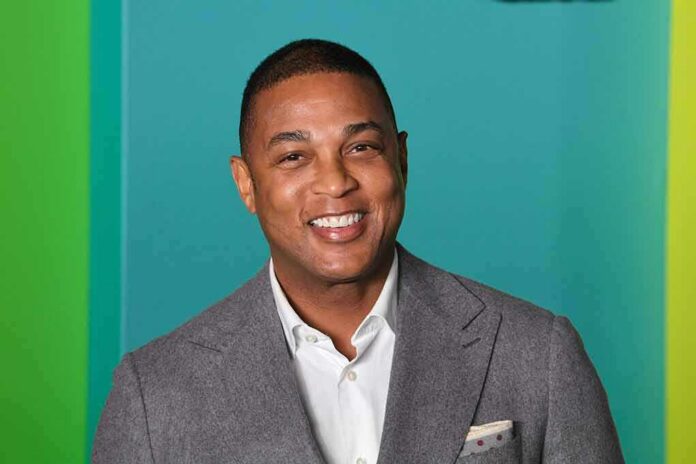
Federal prosecutors have turned Don Lemon’s Minnesota church protest case into a direct fight over press freedom, protest conduct, and worship rights.
Quick Take
- Don Lemon pleaded not guilty in a federal two-count civil rights case tied to a church protest in St. Paul.
- Prosecutors allege the protest disrupted a Cities Church service and interfered with worship rights.
- Lemon says he was there only as a journalist covering the event, not as a protester.
- The case now sits at the center of a broader dispute over protest policing and media framing.
Federal Charges Put Lemon at the Center of a Worship Disruption Case
Federal prosecutors say Don Lemon was part of a protest that disrupted a January 18 service at Cities Church in St. Paul. ABC News reported that Lemon faced a two-count indictment for conspiracy against rights of religious freedom and attempting to injure while exercising religious freedom. Reuters also described the case as a criminal matter tied to a protest opposing President Trump’s immigration policies.
The public record now confirms one basic point: this is not a rumor or social media pile-on. Lemon appeared in federal court, entered a not-guilty plea, and remains in an active criminal case. That matters because the charges were filed in court, not floated as loose accusations. The dispute now turns on what Lemon did at the church and whether he acted as a journalist or as part of the protest.
What Prosecutors Say Happened Inside Cities Church
Reporting from PBS and ABC says the protest disrupted a church service and led to federal charges under the Freedom of Access to Clinic Entrances Act, known as the FACE Act. That law bans force, threats, or physical obstruction that interferes with worship access. PBS also reported that nine people in total faced charges in the case, which supports the government’s theory that the protest involved coordinated action rather than isolated presence.
ABC News reported that Lemon was one of eight others charged in the indictment, and Patch said he told the judge he understood the charges. Those facts show a live federal case with a formal charging process in place. They do not, by themselves, prove every detail of the government’s theory. The sources provided here do not quote the full indictment text or spell out each alleged overt act.
Lemon’s Defense Leans on Journalism, Not Protest
Lemon’s defense is simple and blunt: he says he was there to document the protest as a journalist. PBS, Patch, and AP all reported that he presented himself as an independent journalist covering the scene. That claim matters because the government must prove more than presence. It must prove intent, agreement, and conduct tied to the charged interference.
AP also reported that Lemon’s lawyers have sought grand jury transcripts and argued that recent misconduct issues in other Justice Department cases justify more disclosure. That is a procedural fight, and it signals the defense is not just denying guilt. It is also pressing for more of the government’s evidence to become public. At the same time, the current reporting set does not include the full transcript, the complaint affidavit, or sworn witness statements.
Why the Case Is Drawing So Much Attention
This case has drawn attention because it blends a church protest, a former CNN anchor, and the Trump-era immigration fight. Reuters linked the protest to opposition to President Trump’s immigration policies. That political backdrop can shape public opinion fast, especially when the defendant is a well-known media figure. It also gives both sides a ready-made narrative before the full evidence comes out.
Former CNN anchor Don Lemon asked a federal judge in Minnesota on Friday to toss criminal civil rights charges against him, claiming the Trump administration targeted him for prosecution over his coverage of an anti-ICE protest. MORE: https://t.co/PDA3YjE63A pic.twitter.com/zHfTvQqeLg
— NEWSMAX (@NEWSMAX) August 7, 2026
For conservatives, the larger concern is the same one that appears in many protest cases: whether the law is being enforced evenly and whether public disruption of worship will be treated seriously. For Lemon, the key issue is whether he was reporting or participating. The available reports clearly show a charged federal case, a not-guilty plea, and a defense built on journalism. They do not yet settle the deeper factual dispute.
Sources:
redstate.com, abcnews.com, youtube.com, patch.com