
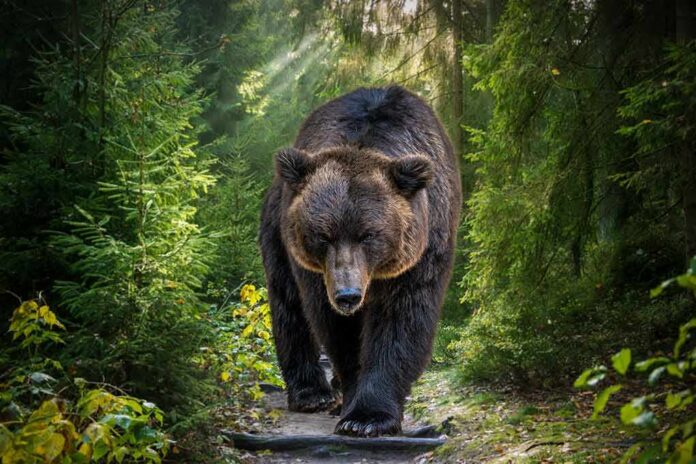
A now-viral trail video from Alaska shows how calm courage and real bear safety rules—not panic—kept three hikers alive when a famous grizzly called “Scuba Sue” stepped into their path.
Story Snapshot
- Video shows three hikers staying calm as a large grizzly, “Scuba Sue,” passes within feet on a narrow Alaska trail.
- The encounter happens at Anan Wildlife Observatory, a tightly regulated bear-viewing site run by the U.S. Forest Service.
- Experts say talking calmly, standing still, and not running are key steps that keep most bear encounters from turning deadly.
- The dramatic media headlines highlight fear, but the facts show successful, rule-following coexistence between people and bears.
Hikers Meet “Scuba Sue” On A Narrow Salmon Trail
The New York Post video shows three Alaskan hikers rounding a corner at Anan Creek and suddenly standing face-to-face with a grizzly bear nicknamed “Scuba Sue.” The bear is focused on salmon along a narrow trail used to reach the Anan Wildlife Observatory, a major bear-viewing site in southeast Alaska. The hikers do not scream or run. They keep their voices steady as the bear walks past them and continues hunting, and no one is hurt. This quiet outcome matters more than the scary headlines.
Fox News later reported that the hikers were visiting the Anan Creek wildlife observatory and followed ranger protocols as the bear approached. Those protocols tell visitors to stay calm, group together, and speak to the bear so it knows they are human and not prey. The video matches that advice, showing the group holding their ground while the animal passes. For many viewers, the scene looks terrifying. For seasoned Alaskans and rangers, it looks like a textbook example of people doing the right thing when nature gets close.
Anan Wildlife Observatory: Heavy Rules, High Stakes
Anan Wildlife Observatory is not a casual hiking spot; it is a tightly controlled bear-viewing site run by the United States Forest Service, about 30 miles from Wrangell. The area has platforms, a photo blind, and a half-mile trail built so visitors can watch bears feeding on salmon with as little impact on the animals as possible. During peak season in July and August, passes are required, hours are limited from 8 a.m. to 6 p.m., and food is banned on the trail to avoid attracting bears. These rules show how seriously federal managers take both human safety and wildlife protection.
The Forest Service and Alaska wildlife officials limit daily permits and often require visitors to come with trained guides. Groups move along a compact gravel trail from a protected beach landing up to observation platforms, where they usually spend hours watching bears rather than surprising them at close range. The main goals for Anan are clear: protect bear populations, keep the public safe, and give people an extraordinary experience of nature. When a close encounter still happens, like the “Scuba Sue” moment, everything depends on whether people follow the rules they were given.
Bear Safety Protocols: Calm Beats Panic
The Alaska Department of Fish and Game says that in most close bear encounters, “chances are good you are not in danger” if you remain calm and watch what the bear is doing. Alaska’s bear safety framework tells people to make normal noise, talk instead of scream, and avoid sudden moves that might startle or confuse the animal. The National Park Service advises hikers who are seen by a bear to stand still, stay together, talk calmly, and identify themselves as human before slowly backing away if they can. National experts stress one rule above all: do not run.
Running can trigger a chase instinct, so bear safety groups warn that you can never outrun a bear and must not treat it like a scene from a movie. They tell people to never approach a bear, give it room, and group up with others while readying tools like bear spray if needed. In the Anan Creek video, the hikers follow this advice in real time. They stand together, talk, and let “Scuba Sue” choose her path. The bear, busy with salmon, has no reason to attack, and the trail encounter ends without injury. It is a rare case where viral footage shows safety rules working exactly as designed.
Media Drama vs. Reality Of Living With Bears
Reporters called the moment “heart-stopping” and “tense,” language that pulls clicks but can feed public fear. Wildlife officials in Alaska have warned for years that routine bear encounters often look scarier on camera than they are in person when people follow protocol. Anan is promoted as one of the most reliable places in southeast Alaska to watch bears feeding on salmon from built platforms and blinds, specifically to reduce risk. The site is designed for coexistence, not conflict, which is why there are strict limits on access and strong rules about behavior.
For conservatives who care about personal responsibility and honest reporting, this story carries two lessons. First, nature is still dangerous, but clear rules and calm courage work better than panic and hype. Second, sensational media framing can twist a successful safety story into a near-disaster narrative that does not match the facts. The hikers at Anan Creek listened to experts, respected posted rules, and treated a powerful animal with steady respect. In return, “Scuba Sue” did what wild bears usually do when people act right—she minded her own business and moved on.
Sources:
redstate.com, nypost.com, kstk.org, recreation.gov, instagram.com, outdoorguide.com, bbc.com, mirror.co.uk, dfw.state.or.us, stacks.cdc.gov