
What makes the New York City ICE fire so politically explosive is not just the damage at 26 Federal Plaza; it is the argument over whether the attack belongs to a larger pattern of anti-ICE intimidation or whether it should be treated as the act of one man alone. Scott Jennings used his CNN appearance to make the broader claim forcefully, and the available reporting shows why that frame has become so central to the story.
Key Points
- The incident involved an incendiary device and a fire at the federal building that houses ICE offices in Lower Manhattan, with Andrew Arrabaca identified as the suspect.
- Jennings argued on CNN that the attack was not isolated, but part of a longer series of assaults and threats directed at ICE personnel and facilities.
- He also said elected Democrats and other public figures had used language that helped create a climate in which violence against ICE could flourish.
- The deeper dispute is not whether violent acts happened, but how much political rhetoric contributes to them; research supports a relationship, but not a simple one-to-one cause.
What Happened at 26 Federal Plaza
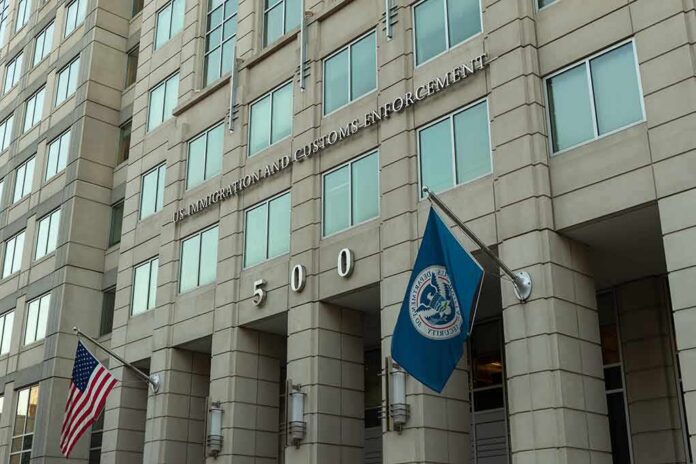
According to reporting on the arrest, authorities say a man identified as Andrew Arrabaca was taken into custody after he ignited a fire and fireworks on the steps of the building that houses ICE offices in Lower Manhattan. FBI and related accounts describe the incident as an incendiary attack at a federal building, and later summaries noted that the suspect was carrying anti-ICE materials. That basic sequence matters because it places the event in the category of targeted symbolic violence, not random criminal mischief. The location was chosen for its political meaning: a federal site associated with immigration enforcement.
Jennings seized on exactly that point. On CNN, he agreed with Tom Homan that the attack was “another in a long string of attacks” on ICE personnel and facilities, and he rejected the idea that it should be dismissed as the act of a lone, disconnected actor. In his telling, the episode fit a widening pattern in which ICE is treated not as a lawful agency carrying out policy, but as an illegitimate target. That is the interpretive frame that gives the story its force, and it is also the frame that has drawn the sharpest pushback.
Jennings’ Core Argument: Rhetoric Creates Permission
Jennings’ case was not merely that Democrats disapprove of immigration enforcement. His claim was more specific: public language from members of Congress, the mayor of New York City, governors, and allied activists has normalized hostility toward ICE and encouraged “political vigilantes.” He said that some of the worst language had been aimed at ICE for months and even years, and he linked that rhetoric to a real-world willingness to cross the line from protest into violence. The logic is straightforward even if the conclusion is contested: if a target is repeatedly described as fascist, criminal, or illegitimate, some subset of people will eventually decide it is justified to act against it.
That argument is not unique to this case; it is one of the oldest moves in American political conflict. The left says right-wing demonization produces violence against immigrants, minorities, and public officials. The right says anti-police or anti-ICE rhetoric produces attacks on officers and facilities. The point of contention is not whether speech can matter. It can. The fight is over scale, intent, and causation. Jennings chose the strongest possible formulation, but the broader proposition behind his comments is consistent with a long line of scholarship showing that incendiary rhetoric can make political violence more likely, give it direction, and complicate the response of law enforcement.
Why This Debate Keeps Returning to ICE
ICE occupies a uniquely combustible place in modern politics because it sits at the intersection of immigration, sovereignty, and street-level enforcement. For supporters, it is a necessary arm of the state; for opponents, it is a symbol of coercive immigration policy and, at times, a proxy for broader anger at deportation, detention, and federal power. That makes the agency especially vulnerable to moralized language, and it is why the rhetorical temperature around ICE tends to be so much higher than around less visible federal bodies. Once that temperature rises, every protest, confrontation, or attack becomes evidence in an argument about legitimacy itself.
Jennings has repeatedly used that structure in prior appearances, arguing that Democrats and media figures have “demonized” ICE, encouraged a “moral permission structure” for mob activism, and fueled hostility toward law enforcement. Those are not casual on-air adjectives; they are a coherent thesis about political causation. Whether one accepts that thesis depends on how one weighs the evidence. The empirical literature does not support a simplistic claim that rhetoric mechanically produces violence on command. It does, however, support the weaker and more defensible proposition that repeated elite messaging can shape what angry people think is permissible, especially in a charged environment.
Flaming Hot Message: Scott Jennings Shuts Down CNN Dems Trying to Shift Blame for Fiery NYC ICE Attack https://t.co/jU6tdzBsn5
— Tim Lewis (@TimSLewis) July 21, 2026
Where the Evidence Is Strong, and Where It Is Not
The strongest part of Jennings’ argument is descriptive: there has been a visible rise in incidents involving ICE and other federal law enforcement targets, and the New York fire belongs in that wider atmosphere of confrontation. The weakest part is the leap from “a hostile climate exists” to “Democratic rhetoric caused this specific attack.” That is a harder claim to prove, and the research package does not provide direct evidence tying Arrabaca’s own motive to any one politician’s words. What it does show is that he was accused of carrying anti-ICE material and that authorities treated the incident as ideologically charged. That is enough to justify discussion of motive, but not enough to prove a single-cause theory.
There is also a cautionary line worth preserving. Political actors often overread violence in ways that flatter their own narratives. Each side wants the other side’s language to bear maximum responsibility for the worst behavior on the field. Academic research and policy analysis are more restrained. Brookings notes that hateful rhetoric can make political violence more likely, but the relationship is probabilistic, not deterministic. Other research cited in the package likewise suggests that rhetoric can affect enforcement patterns, public behavior, and perceived legitimacy, but the effects are context-dependent and never neatly reducible to one speech clip or one television exchange.
What the CNN Moment Really Signaled
The significance of Jennings’ exchange is that it compressed a larger national argument into a few television minutes. One side sees an attack on a federal building as proof that anti-ICE rhetoric has gone too far; the other sees Republicans turning every act of violence into a pretext for political blame. The truth, as usual, is less theatrical and more structural. Rhetoric does not act alone. It interacts with grievance, polarization, institutional distrust, and the visible symbolism of the target. In a country where public language has become an organizing tool, speech is no longer mere commentary; it is part of the environment in which violence is interpreted, rationalized, and sometimes carried out.
That is why this story will outlast the clip that inspired it. The New York fire is not just about one suspect or one on-air argument. It is about the steady transformation of law-enforcement politics into a contest over legitimacy, with ICE at the center of the storm. Jennings understood that immediately, and his CNN appearance was designed to force the issue: if public officials spend years portraying federal agents as tyrants, he argued, they should not be surprised when someone decides to act like a vigilante.
Sources:
twitchy.com, nj.com, thegatewaypundit.com, reuters.com, legalinsurrection.com, noticias.foxnews.com, instagram.com, brookings.edu, sswr.confex.com, nlg.org, eprints.lse.ac.uk