

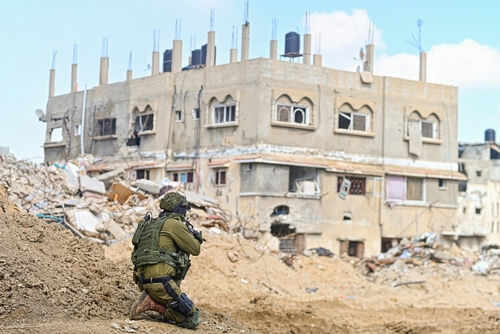
Israel has repeatedly bombed areas it told Palestinian civilians to evacuate to — and multiple independent investigations using satellite data, video evidence, and forensic analysis have confirmed it.
Story Overview
- Israel issued evacuation orders directing Gaza civilians to specific “safe zones,” then launched airstrikes in those same areas — sometimes within hours of the orders.
- Forensic Architecture, Amnesty International, and NBC News each documented specific strikes inside Israel-designated humanitarian zones, finding no evidence of military targets at several sites.
- NPR’s analysis using satellite imagery found bombardment of southern Gaza actually increased after Israel told civilians to move there.
- The United Nations Office of the High Commissioner for Human Rights labeled the evacuation orders “forcible transfer” and said “nowhere is safe” in Gaza.
Evacuation Orders Followed by Strikes in the Same Areas
Israel’s military issued dozens of evacuation orders throughout the Gaza conflict, directing civilians to move south — to areas like Khan Yunis, Deir al-Balah, and Rafah. But multiple news organizations and research groups found that strikes followed those orders into the very zones Israel called safer. In one documented case, strikes hit Khan Yunis less than one hour after an evacuation directive was issued for the area.
Israel’s military says it targets only “terror sites, including weapon storage areas and operational centers,” and that Hamas hides military assets inside civilian buildings, making those structures legitimate targets. Israel also accuses Hamas of using civilians as human shields — a charge that, if true, does place real responsibility on Hamas under international law. But those general claims have not been matched with public evidence explaining specific strikes in designated safe areas, such as a home in Deir al-Balah where eight people were killed.
What the Investigations Actually Found
Forensic Architecture — a research group that uses spatial analysis and verified video — concluded that Israel repeatedly bombed, shelled, and invaded areas it had previously labeled as safe humanitarian zones. Their May 2024 “Inhumane Zones” report showed Israeli missiles landing inside the boundaries of a humanitarian zone announced on May 6, 2024. A separate Forensic Architecture report found that evacuation orders actually moved civilians into active combat zones, resulting in deaths and displacement.
Amnesty International examined nine airstrikes and found no evidence of fighters or military objectives near the targeted sites at the time of the attacks. NBC News identified at least seven Israeli strikes between January and April that hit areas the Israel Defense Forces (IDF) had designated as safe zones. NPR’s review of Sentinel-1 satellite imagery showed that bombardment in southern Gaza — where Israel told people to go — increased immediately after evacuation orders were issued.
The Scale of Displacement and International Response
Oxfam reported that between March 18 and May 26, 2025, Israel issued 31 evacuation orders — roughly one every 2.3 days. By that point, 81 percent of the Gaza Strip was under evacuation orders or active military operations. The United Nations Office of the High Commissioner for Human Rights (OHCHR) said in April 2025 that the growing number of orders amounted to the “forcible transfer” of Palestinians and that no part of Gaza could be considered genuinely safe.
🟥 UPDATE NUMBER THREE | 16 JULY 2026
🔳 Journalists on the Ground
🟥 GAZA
🔳 “They lied to you when they told you there was a ceasefire.” Those were the words of a Palestinian from Gaza, describing a reality in which airstrikes, shelling, killings and displacement have… pic.twitter.com/9siVWD7Q8X
— shameen suleman (@shameensuleman) July 16, 2026
The core dispute here is not whether civilian casualties occurred — that is not in question. The real debate is whether the pattern of strikes in evacuation zones reflects military targeting errors in a complex urban fight, or something more deliberate. What is clear from the documented evidence is that the zones Israel told people to flee to were not safe. Civilians followed official orders and were still killed. That fact deserves honest scrutiny — regardless of where one stands on the broader conflict.
Sources:
cbc.ca, npr.org, ohchr.org, cnn.com, aljazeera.com, forensic-architecture.org, committees.parliament.uk, pmc.ncbi.nlm.nih.gov