
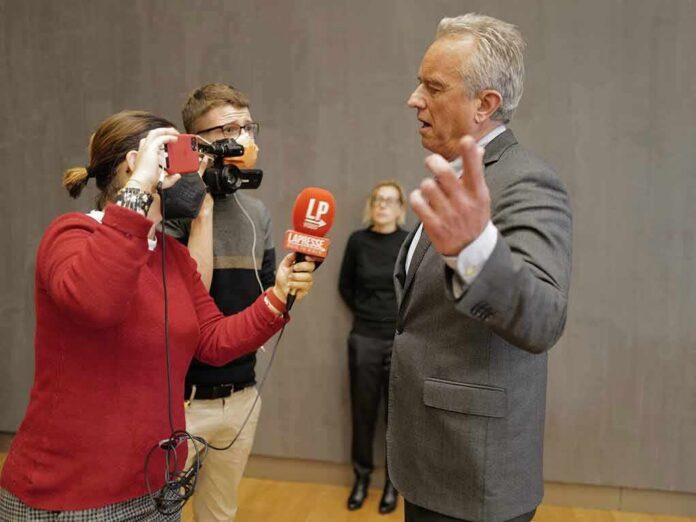
The most instructive thing about the August shouting match between Health and Human Services Secretary Robert F. Kennedy Jr. and CNN anchor Dana Bash was not who raised their voice first — it was how neatly the exchange exposed the gap between a legitimate grievance about pandemic governance and a set of specific factual claims that do not survive contact with the evidence.
Key Points
- Kennedy accused CNN of “press malpractice” during COVID-19, arguing the network amplified fear and failed to scrutinize lockdown policy and its architects.
- Bash pushed back in real time, challenging Kennedy’s claims about vaccine efficacy, U.S. death-rate comparisons, and vaccine-autism research.
- Independent fact-checks and the scientific record support Bash on the specific empirical claims Kennedy made about vaccines and autism, even as his broader critique of institutional overreach reflects a genuine and unresolved policy debate.
- The clash follows a pattern stretching back to Kennedy’s 2023 CNN interviews, in which his claims about vaccines and COVID origins have repeatedly drawn correction from scientists and journalists alike.
- The dispute matters beyond one Sunday show: it is a proxy fight over how the country should evaluate pandemic-era decisions and who gets believed the next time a crisis hits.
What happened on air, and why it escalated
On CNN’s “State of the Union,” Bash pressed Kennedy on how the administration is preparing for a future pandemic, and the conversation pivoted almost immediately into a re-litigation of 2020. Kennedy told Bash she was “scaring people” and that doing so “was the job of CNN,” accusing the network of failing to question public-health officials during the pandemic. He argued that COVID-era lockdowns “completely dismantled our constitutional rights,” closing 3.5 million businesses along with churches and schools without due process or compensation. Bash countered directly, telling Kennedy she would not let the interview become a platform for statements she considered factually false, specifically flagging his framing of vaccine efficacy. The exchange ran roughly twenty minutes and, by most accounts, never resolved.
The lockdown-and-rights argument: where Kennedy’s case has real footing
Kennedy’s central political claim — that the COVID response inflicted serious, underexamined damage on civil liberties and small business — is not a fringe position; it is shared, in varying degrees, across the political spectrum and among legal scholars who studied emergency powers during 2020 and 2021. He laid blame for extended lockdowns primarily on Dr. Anthony Fauci rather than governors responding to overwhelmed hospitals, and cited Fauci’s own diaries to argue that President Trump pushed to reopen the country while public-health officials resisted. That framing is contestable — governors, not federal officials, issued most lockdown orders, and hospital capacity was a genuine constraint in several waves — but the underlying question of whether dissenting physicians and civil-liberties concerns were marginalized during the emergency is a fair one, and it is the part of Kennedy’s argument that has the broadest resonance.
Where Kennedy’s case becomes shakier is in the specific, checkable claims layered on top of that broader argument. He asserted the United States had “the highest death rate from COVID of any nation on Earth” — a claim Bash and subsequent fact-checks dispute, noting that multiple countries recorded higher per-capita mortality and that U.S. outcomes were shaped by chronic disease burden and healthcare access gaps that predate the pandemic. He also claimed gain-of-function research caused not just COVID-19 but RSV and Lyme disease, an assertion with no support in the peer-reviewed literature and one that several outlets characterized as part of a pattern of debunked claims resurrected in the interview.
The vaccine-autism exchange: the sharpest factual dispute
The most consequential disagreement concerned vaccines and autism, because it bears directly on public health decisions parents make today. Kennedy argued that none of the eight vaccines given in a child’s first six months have been studied for a relationship to autism, citing an Institute of Medicine review, and pointed to 73 studies linking prenatal Tylenol exposure to autism as justification for further inquiry. Bash countered with more than 40 studies encompassing 5.6 million people that found no vaccine-autism link, along with statements from the American Academy of Pediatrics and the National Academy of Sciences affirming vaccine safety. This is not a case of dueling opinions with no adjudicating body — the National Academy of Sciences issued a formal statement on the question, and the epidemiological literature on the MMR vaccine specifically is unusually deep, precisely because it has been the subject of sustained scrutiny since a now-retracted 1998 study first raised the alarm. On this narrow but high-stakes claim, the weight of documented evidence sits with Bash, not Kennedy.
It is worth noting Kennedy did not reject vaccination outright in this interview; he affirmed that the measles vaccine “stops measles in about 97% of the cases” and urged parents to vaccinate against measles even while questioning the broader schedule. That distinction — endorsing one vaccine while casting doubt on the evidentiary basis for others — is characteristic of his public health messaging since well before he joined the Cabinet, and it is why doctors and public-health officials continue to describe him as fueling hesitancy even when his statements are not blanket denials.
A pattern that predates this interview
This was not Kennedy’s first fiery encounter with CNN over COVID claims. In a 2023 interview with Kasie Hunt, he repeated unfounded assertions about COVID-19 origins and vaccine safety, and separately drew condemnation from Jewish organizations for a comment suggesting Ashkenazi Jews and Chinese people were genetically “most immune” to the virus — a claim he later said was misconstrued. That history matters for context: the credibility question CNN’s hosts keep raising is not new, and it predates his appointment as HHS Secretary. It also means the current dispute cannot be read as an isolated flare-up between two people who simply had a bad Sunday; it is the latest round in a years-long argument over whether Kennedy’s specific factual claims meet the evidentiary bar his office now requires.
CNN is standing by Dana Bash following her interview with Health and Human Services Secretary Robert F. Kennedy Jr. https://t.co/56Z2A2K9fh
— TV Insider (@TVInsider) August 3, 2026
Why this keeps happening — and what it means going forward
Crisis communication research offers a useful frame here: during fast-moving public health emergencies, newsrooms lean heavily on official government sources because they are the most accessible, institutionally authoritative voices available in real time. That reliance can produce coherent, fast reporting, but it can also mean skepticism toward official guidance gets underweighted until well after the fact — which is the closest thing to a legitimate institutional critique buried inside Kennedy’s broader complaint. At the same time, an HHS Secretary is held to a different evidentiary standard than a podcast guest; when he makes specific, checkable claims about vaccine studies or death-rate rankings, those claims get tested against the scientific record, and in this interview several of them did not hold up. The durable lesson is less about who “won” a twenty-minute shouting match and more about the value of separating a fair critique of institutional failure from unfair characterizations of settled science — a distinction that will matter again the next time officials and journalists spar over the next public health emergency.
Sources:
facebook.com, cnn.com, youtube.com, politico.com, transcripts.cnn.com, instagram.com, thewrap.com, timesofindia.indiatimes.com, people.com, washingtontimes.com