

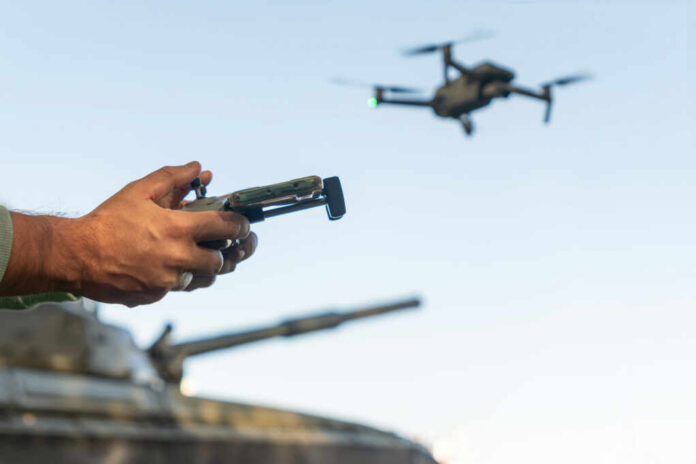
A giant Ukrainian cruise missile is now flying on the same open software that powers hobby drones — and it is reshaping how modern weapons get built.
Story Snapshot
- Ukraine’s FP-5 Flamingo cruise missile uses the open-source ArduPilot flight-control system normally found in consumer drones.
- Fire Point’s chief technologist says open software cuts costs, avoids vendor lock-in, and dodges export blocks or sanctions on foreign suppliers.
- The Flamingo still relies on hardened navigation and a French Safran guidance system, showing a mix of cheap civilian tech and advanced Western hardware.
- This “open-source warfare” model raises big questions for American taxpayers who fund far more expensive, proprietary missile programs.
Missile Runs on Free Drone Software Instead of Costly Proprietary Code
Ukraine’s FP-5 Flamingo is a heavy ground-launched cruise missile that carries a warhead of over 1,000 kilograms and can reach targets up to about 3,000 kilometers away. What turns heads is not just its size, but the brain steering it. The missile’s flight is controlled by ArduPilot, a free, open-source autopilot system best known from hobby and commercial drones. One test video frame from a live-fire launch clearly shows the ArduPilot interface running the mission, confirming its central role.
ArduPilot reads sensor data and keeps the missile flying on a set path, handling automatic route planning, course keeping, and interaction with onboard systems. Instead of a highly classified, custom-built flight computer tied to one giant contractor, Flamingo relies on software that anyone can download and improve. Reports explain that this open architecture lets engineers quickly change algorithms or add features as battlefield needs shift, without begging a foreign vendor for updates.
Fire Point Says Open Source Means Independence and Speed Under Fire
Fire Point’s leaders have faced skepticism from some defense voices who are used to expensive, closed military systems. At the Eurosatory defense exhibition, company chief technologist Iryna Terekh defended the choice. She argued that open-source autopilot avoids vendor lock-in, licensing talks, and dependence on a single company’s roadmap that could be cut off by politics, sanctions, or bankruptcy. In a later post, she added that thousands of engineers worldwide hunt bugs in ArduPilot, making it more reliable over time.
Analysts say this fits a wider pattern in Ukraine’s wartime industry, where newer firms lean on civilian technology to move fast and hold costs down. Roy Gardiner of Defense Tech for Ukraine noted that using ArduPilot matches Fire Point’s goal of delivering long-range strike at a much lower price than “exquisite” Western missile designs. The FP-5 Flamingo reportedly costs a fraction of typical Western cruise missiles, in part because it uses repurposed Soviet engines and open software instead of brand-new proprietary systems. For Americans watching federal overspending, this approach raises hard questions about why our systems must be so expensive.
Mix of Free Code, Hardened Navigation, and French Safran Guidance
The Flamingo is not just a hobby project scaled up. Reports from European outlets say the missile combines ArduPilot with more robust navigation and a French-made guidance package from defense firm Safran. Safran’s system has been integrated for over a year and is designed to improve precision against hardened or high-value targets. At the same time, Ukrainian sources describe jam-resistant satellite navigation paired with an inertial system that can bridge gaps when GPS is attacked.
Czech and Ukrainian reporting explains how the missile tries to fight through Russian signal jamming. When satellite signals are blocked, the Flamingo can switch to inertial navigation and “dead reckoning,” then correct its position once it leaves the jamming zone. The manufacturer claims about 14 meters of accuracy at the target, a figure that outside observers cannot fully verify yet but say matches confirmed strikes on specific buildings. This mix of cheap open software, Western guidance, and layered navigation shows how modern weapons blend high-end components with off-the-shelf tech.
Open-Source Warfare: What It Means for U.S. Security and Spending
New Scientist and other outlets frame Flamingo as a clear example of “open-source warfare,” where publicly available tools and code are used to build serious combat systems. Technology scholars have warned that cheap civilian innovation is outpacing traditional defense research, making advanced capabilities accessible to smaller states and even non-state actors. Open-source software lets them avoid Western export controls, cut years of procurement delays, and sidestep huge contracts with globalist defense giants.
It seems that all of the FP-5 Flamingo cruise missiles were shot down by Russian air defence and aviation.
This would mark the third Flamingo missile attack in a row that has failed, with all missiles being intercepted. https://t.co/IYU6QGqsCW
— AMK Mapping 🇳🇿 (@AMK_Mapping_) July 15, 2026
For American conservatives, this development hits several pressure points at once. Ukraine is fielding a long-range cruise missile guided partly by free software and mixed hardware, while Washington still pays top dollar for proprietary systems tied to complex licensing and political strings. Security experts argue that open tools can boost innovation but also spread advanced strike capabilities more widely. That raises serious questions about how our government manages technology, protects critical know-how, and spends taxpayer money in a world where a missile can fly on the same software your neighbor uses in a backyard drone.
Sources:
newscientist.com, independant.fr, amalantra.ru, baomoi.com, isrs.ngo, meta-defense.fr, missilematters.substack.com, instagram.com, article.nadiapub.com, spectrum.ieee.org, frontiersin.org