
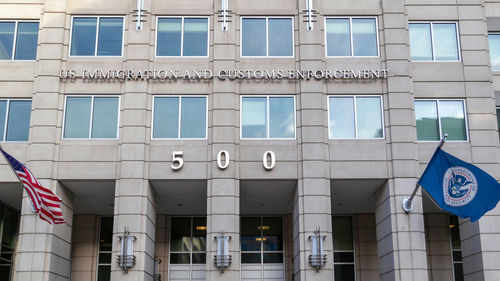
Federal agents tracked a New York father from his home to a hotel over a harsh email, and now a major free speech lawsuit says that is government intimidation, not law enforcement.
Story Snapshot
- A Rochester man says Immigration and Customs Enforcement punished him for a critical email by sending agents to his home and hotel with a legal “warning notice.”
- The lawsuit claims this was retaliation that chills free speech and turns normal political anger into something the government treats like a crime.
- Agents told his wife he “may be in violation of federal law” and later tried to reach him at a New York City hotel where he stayed with his 7-year-old daughter.
- Free speech advocates say this fits a wider pattern of immigration agents targeting critics, raising alarms for all Americans who speak out against government power.
Harsh Email, Deadly Crackdown, and a “Warning Notice”
On January 26, 2026, Rochester resident David Streever sent a short but very angry email to then acting Immigration and Customs Enforcement Director Todd Lyons after agents fatally shot two Americans during an immigration crackdown in Minneapolis. In the message, Streever called Lyons “a monstrous human being” and said he “will never know peace,” comparing him to Nazi official Reinhard Heydrich. Streever did not threaten violence or say he would harm anyone; he wrote out moral outrage at government killings.
Five months later, on June 23, two federal agents with Homeland Security Investigations went to Streever’s home in the Rochester suburb of Greece while he was traveling in Finland with his 7-year-old daughter. The agents rang the doorbell and handed his wife a document labeled “WARNING NOTICE” stating, in bold type, “YOU MAY BE IN VIOLATION OF FEDERAL LAW.” The form cited laws against threatening federal officials and told him to “remove and/or discontinue” the behavior, implying his angry email might be a crime.
Tracking a Citizen From Airport to Hotel
Two days after the home visit, Streever and his daughter landed at John F. Kennedy International Airport in New York and checked into a nearby hotel to rest before heading back to Rochester. That evening, the hotel front desk told him a federal Department of Homeland Security agent had come asking for him and left a business card. The lawsuit notes that his wife did not tell agents which hotel he would use, raising serious questions about how they tracked his travel and where he was sleeping with his child.
According to court filings and media reports, agents also left repeated voicemails and tried to get Streever to sign the same “warning notice” in person. Hotel staff declined to let agents go up to his room, but the message was clear: federal officers knew where he lived, where he traveled, and where he slept, all because of a harsh political email. Streever says this made him fear further contact and begin self-censoring his views about immigration policy and federal power.
The Lawsuit: Free Speech, Retaliation, and Trump’s DHS Response
On June 12, 2026, the Foundation for Individual Rights and Expression, a nonpartisan free speech group, filed a federal lawsuit on Streever’s behalf against Homeland Security Secretary Markwayne Mullin, current Immigration and Customs Enforcement leadership, and the agents involved. The complaint argues that sending agents to his home and hotel, and issuing a formal “warning notice” over pure political speech, violated the First Amendment by punishing and chilling protected expression.
The suit asks the court to declare the warnings unconstitutional and block similar investigations in the future, warning that if this stands, every American who emails a federal official in anger could fear a knock at the door. In public statements, the Department of Homeland Security has said it investigates “credible threats” to Immigration and Customs Enforcement staff, including the director, and does not comment on ongoing cases. The agency has not yet publicly explained why Streever’s email, which contained no promise of harm, was treated like a potential criminal threat.
A Wider Pattern of Targeting Critics
Legal scholars and civil rights groups say Streever’s case fits a longer pattern where immigration authorities go after people who speak out against them. In recent years, immigrant farmworker groups and activists have won settlements after showing Immigration and Customs Enforcement tracked, arrested, or tried to deport them following protests and public criticism. Lawsuits such as Migrant Justice v. Wolf and NWDC Resistance v. Immigration and Customs Enforcement accuse the agency of using its vast power to retaliate against dissent.
A New Yorker hits #ICE with a massive lawsuit after they sent intimidation agents to his house for sending them an upset email.
These thugs have completely lost their minds…
“I cherish our right to speak openly about issues of public concern,” said David Streever, the… pic.twitter.com/faQt58UrkS
— #Anonymous (@TheStripesGirl) July 9, 2026
Free speech experts warn that the First Amendment bars the government from punishing or targeting people for peaceful criticism, whether they are citizens or noncitizens. They argue that “warning notices” like the one used on Streever turn normal political anger into something treated as dangerous, which can scare regular Americans away from speaking their minds about immigration policy, border security, or any other federal action. For conservatives who care deeply about limited government, this case is a reminder that big agencies will push as far as courts and the Constitution allow—and that citizens must watch them closely.
Sources:
military.com, newsnationnow.com, spectrumlocalnews.com, youtube.com, thehill.com, facebook.com, fire.org, instagram.com, justfutureslaw.org, ccrjustice.org, law.georgetown.edu, law.nyu.edu, campaignlegal.org