

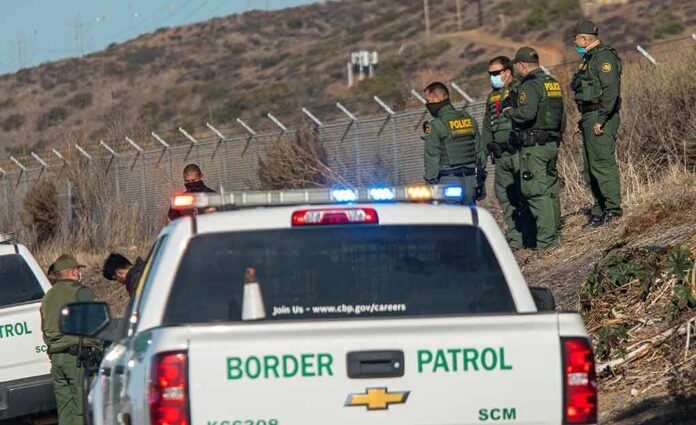
Federal prosecutors just charged 478 people in Texas and Arizona in one week, exposing how deeply illegal immigration and repeat offenders are straining border communities.
Story Snapshot
- 478 individuals charged in Texas and Arizona in a single week under Operation Take Back America, most with prior felonies.
- Felony illegal reentry and human smuggling charges dominate the cases, including offenders with violent and sex-crime histories.
- Trump-era border strategy is driving weekly mass prosecutions across southern border districts, aiming to protect American communities.
- Critics focus on transparency gaps and individual hardship cases, while the data shows a heavy tilt toward serious repeat criminals.
Mass Charges In Texas And Arizona Under Trump’s Border Crackdown
Between July 10 and July 16, the Department of Justice charged 478 individuals in Texas and Arizona for border and immigration-related crimes. In Texas, 199 people were charged in 194 cases, including 175 illegal immigrants. Arizona accounted for 279 defendants in the same enforcement window. These cases fall under President Trump’s Operation Take Back America, a nationwide push launched by a March 2025 memorandum to crack down on illegal immigration and repeat border offenders. For border communities that have lived with crime and chaos for years, this level of action marks a sharp change from the old status quo.
Officials say most of those arrested already have felony records, including violent crimes, prior immigration offenses, and narcotics cases. That means these are not first-time border crossers looking for work. Prosecutors highlight examples such as a Mexican national with three prior felony immigration convictions and a United States citizen who tried to bring 131 pounds of cocaine through a port of entry. These arrests underscore a key Trump-era argument: weak borders do not just invite illegal entry, they invite hardened criminals back into American neighborhoods.
Repeat Illegal Reentry And Human Smuggling At The Center Of The Cases
The Justice Department reports that felony illegal reentry after removal makes up a large share of the new prosecutions. In the Southern District of Texas alone, recent weekly crackdowns have included more than 180 felony reentry complaints and dozens of illegal entry charges. Separate data from one week in that district shows 180 illegal reentry charges, 304 unauthorized entry charges, and 16 human trafficking cases, with most defendants holding prior felony records for drugs, violence, sexual offenses, or immigration crimes. This pattern lines up with national trends, where illegal entry and reentry now make up about two-thirds of all federal immigration prosecutions. For many readers, this confirms long-held fears that the same people are crossing, committing crimes, getting deported, and then coming right back.
Human smuggling is also a major concern. In the Texas-Arizona enforcement week, the government reported multiple smuggling charges, though it did not publish detailed network maps or cartel links for each case. Earlier Operation Take Back America releases from Texas show similar numbers, with more than 20 human smuggling defendants in a single week and complaints referencing high-speed chases and crashes. While critics want more public detail, these filings point to organized efforts to move illegal immigrants and, in some cases, conceal criminals among them. That raises real safety questions for ranchers, drivers, and law enforcement along the border, who face risky pursuits on rural roads and highways.
Trump’s Operation Take Back America And The Bigger Prosecution Picture
Operation Take Back America builds on years of concentrated immigration enforcement in a handful of border districts. Research shows that districts like Southern Texas and Arizona have long carried most of the nation’s illegal entry and reentry cases, with immigration crimes at times making up nearly 60 percent of all federal prosecutions. In 2009, immigration prosecutions hit about 91,000 nationwide, with “illegal entry” and “illegal reentry” making up 92 percent of those cases. Under Trump, DOJ is again leaning hard into this model, using weekly case tallies to show voters that the federal government is finally taking border crime seriously after decades of half measures.
Supporters say this strategy protects American families by locking up repeat offenders and sending a clear message that the border is not open. Sentences for illegal reentry start at two years and can reach 10 or even 20 years for those with aggravated felonies. That matters when some defendants have records that include assault with a deadly weapon, sex crimes against minors, and domestic violence. At the same time, the volume of cases raises real questions about resources, due process, and whether courts can keep up without turning prosecutions into an “assembly line” process. Even many conservatives expect strong enforcement to stay within the bounds of the Constitution and basic fairness.
Transparency Gaps, Media Fights, And The Battle For Public Opinion
Not every part of the enforcement picture is clear. The Justice Department says “most” of the 478 charged individuals have prior felonies, but it has not released all of the individual case files that would let the public verify each criminal history. Some human smuggling and firearms charges are described in broad terms, without specific details about weapon types, smuggling routes, or cartel ties. For readers who believe in limited but honest government, those gaps matter. Strong enforcement should go hand in hand with clear information so good officers are protected and bad actors inside the system cannot hide behind secrecy.
478 individuals charged in major border enforcement push across Texas and Arizona.
Over one week, Texas authorities hit 199 people—including 175 illegal immigrants—with charges in 194 cases, many involving prior violent felonies, smuggling, and firearms. Arizona added 279 more,…
— The Epoch Times (@EpochTimes) July 19, 2026
The information battle is intense. Homeland security officials have blasted major networks for downplaying or ignoring Trump’s addresses on election security and immigration, warning that mainstream outlets skew coverage away from the scale of illegal crossings and crime. Immigration advocacy groups and some media voices instead highlight hardship cases and question detention policies, arguing that enforcement can sweep in nonviolent or low-risk individuals. But they have not produced broad data showing that DOJ’s “most have prior felonies” claim is false across these crackdowns. For conservative readers, that means the core story remains: a border crisis built over decades is finally being met with force, and the loudest pushback still leans more on emotion than on hard numbers.
Sources:
zerohedge.com, theepochtimes.com, justice.gov, yahoo.com, kfoxtv.com, ntd.com, youtube.com, bipartisanpolicy.org, justsecurity.org, law.georgetown.edu