
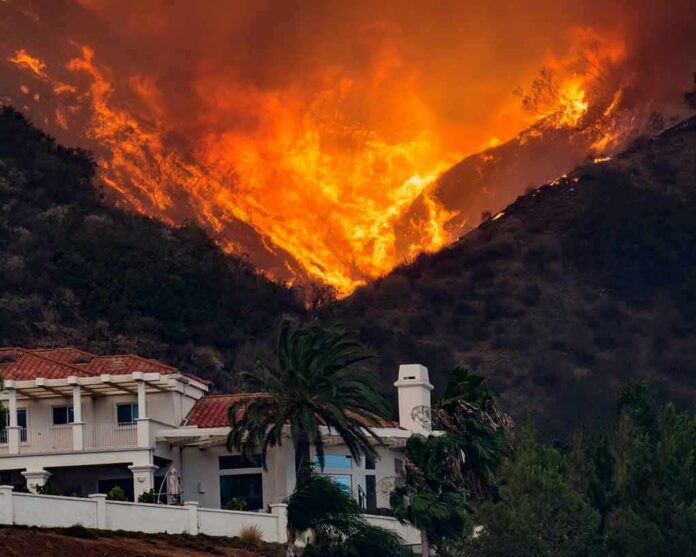
Greek authorities have placed a town mayor in pre-trial detention over a wildfire near Athens, turning an infrastructure fire into a felony case that has stirred anger and hard questions.
Quick Take
- Greek officials charged the mayor and a contractor with arson and damage to public utilities.
- Investigators say the blaze likely started from power cables near Agios Vasileios.
- Reports tie the mayor to electrical work linked to a wind farm in the area.
- The available material shows detention and accusation, but not direct proof of intent.
What investigators say happened
Greek authorities say the fire began with a spark from power cables managed by a private company near Agios Vasileios, west of Athens. Reuters-style reporting says fire experts at Greece’s Arson Crimes Directorate concluded the blaze likely started after intense electrical arcing between two conductors ignited dry vegetation beneath the line. That points to a human-linked source, not a random natural ignition.
Reporting also says Giannis Apostolou, the mayor of Stylida, owns an electrical installation company linked to a wind farm in the affected area. Other accounts say his construction company built the transmission line under scrutiny. The mayor and a contractor were placed in pre-trial detention after a long hearing before an investigating magistrate in Thebes, and the charges include arson in a forest and damage to public utilities.
Why the case matters beyond one fire
The case lands in a country already on edge over wildfire enforcement. BBC reporting said Greek authorities made 79 arson arrests amid wildfire outbreaks, showing how fast a fire probe can turn into a criminal crackdown. For readers, that matters because arrest numbers can sound like proof. In law, though, detention and charges still do not equal conviction, and the public record here does not show direct evidence of intent.
That gap is the key point. The available reports describe an electrical ignition theory, possible construction defects, and a link to private infrastructure. They do not provide witness testimony, intercepted messages, or a charging document showing deliberate fire-setting. That means the story now rests on a technical theory of cause, while the harder question of intent remains unproven in the material released so far.
What is still missing from the public record
The strongest versions of the story come from wire-service summaries and reposted local reports, not from the underlying court file. That leaves major parts of the case hidden from public view, including the magistrate’s detention order, the prosecutor’s full reasoning, and the fire service’s technical file. Without those records, the public can see the accusation clearly, but not the full evidentiary path behind it.
For conservatives, the larger lesson is plain: government power grows quickly when a fire case is framed as a criminal act before the full technical record is public. The facts reported here support a serious investigation and a harsh legal response if the evidence holds. But they also show why due process matters. A spark, a cable fault, or poor maintenance is not the same thing as proof of intentional arson.
Sources:
insiderpaper.com, facebook.com, english.aawsat.com, info-grece.com, theguardian.com, folhape.com.br, zougla.gr