

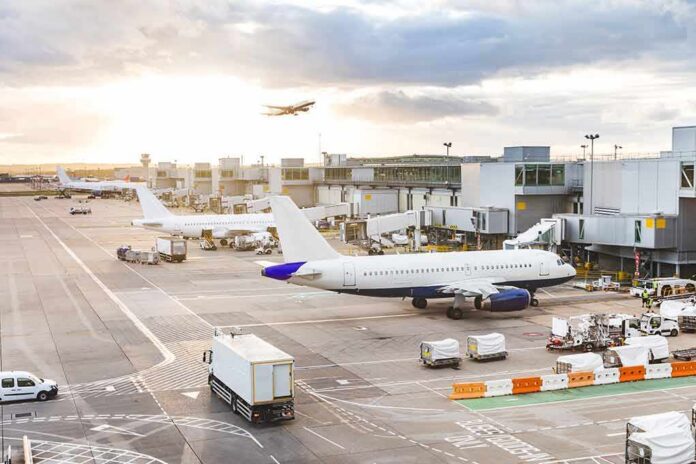
IATA now projects Middle Eastern airlines will lose $4.3 billion in 2026 as the Iran war shuts skies and drives up fuel costs.
Story Highlights
- IATA forecasts a $4.3 billion regional loss in 2026, swinging from a 2025 profit.
- War-driven airspace closures forced mass cancellations and costly rerouting.
- Fuel prices and weak demand compound the hit to the region’s hub carriers.
- The Middle East is the only region IATA expects to be unprofitable this year.
IATA Forecast: From Profit to Loss Amid War Disruptions
The International Air Transport Association (IATA) cut its outlook for Middle Eastern airlines and now expects a $4.3 billion net loss in 2026. The forecast shows a sharp turn from a $7.2 billion profit in 2025 to a negative 6.1 percent net margin and a loss of $21.40 per passenger. IATA ties the decline to the Iran war’s impact on demand, lost airspace, and higher fuel costs. It also notes the Middle East is the only region expected to post a loss this year.
Global reporting echoes the same pattern. IATA’s chief said most regions should stay profitable, but the Middle East will likely slip into the red on weaker demand and conflict pressure. The fuel shock has hit carriers that must fly longer routes to avoid danger. Longer flights burn more fuel and raise costs fast. That squeeze lands hardest on Gulf hub airlines that depend on smooth, cross-regional flows for profits.
Airspace Closures and Mass Cancellations Cripple Hubs
War-triggered airspace closures shut or restricted key corridors and hubs, including Dubai and Abu Dhabi, causing thousands of cancellations and diversions. Data from late February and March showed a deep cut in flights to, from, and within the region. One industry analysis found a 59 percent reduction in Middle East operations by March 22. That scale of disruption breaks passenger connections and shreds airline schedules, pushing costs up and revenue down.
Airport-level impacts were severe. Major hubs faced cancellation rates near half of all flights on some days, with some airports experiencing even higher disruption. When these transfer hubs seize up, the network effect multiplies the pain. Passengers miss onward legs, crews time out, and aircraft sit idle in the wrong places. Recovery takes weeks, and even then, reroutes often remain longer and more expensive than before.
Fuel Costs, Longer Routes, and Insurance Add to the Squeeze
Conflict has removed or constrained millions of square kilometers of global airspace, leaving fewer routing choices and pushing carriers onto detours that burn more fuel. As missiles and drones expand risk zones, airlines face a moving target on safety and route planning. Those changes raise direct costs and sap demand as travelers avoid unstable corridors or accept delays and connections they do not want to take.
Higher fuel prices amplify each extra mile flown. IATA’s forecast embeds those higher costs into the loss outlook for 2026. Insurers also raise war-risk premiums when threats rise, adding yet another bill to each flight plan. Put together, the math is simple and hard: fewer seats sold, longer routes flown, more fuel burned, and higher insurance paid equals losses, even for well-run carriers with modern fleets.
What It Means for Travelers, Trade, and U.S. Interests
Travelers connecting through Gulf hubs should expect higher fares, fewer choices, and tighter schedules until airspace stabilizes. Cargo also takes a hit, with slower routings and higher costs that can ripple into prices for goods. For Americans, this matters because these hubs link Asia, Africa, and Europe. When the bridge weakens, supply chains slow and costs creep up. That pressure lands back home in ticket prices and the cost of imported goods.
Policy also plays a role. Strong deterrence lowers risk and keeps trade lanes open. Clear airspace rules, firm enforcement against terror proxies, and steady energy supplies all help. Stability cuts costs and keeps routes open, which protects families’ travel plans and the price of essentials. The IATA forecast is a warning: when conflict spreads and fuel spikes, everyday people pay. Reducing risk in the region will help restore the flows that keep prices in check.
Bottom Line: Conflict Economics Do Not Stay Local
IATA’s numbers show the cost of war in plain terms: a $4.3 billion loss for Middle Eastern airlines in 2026, and the only region in the red this year. Closures, reroutes, fuel shocks, and weak demand all feed the same problem. Until the skies reopen and fuel cools, travelers and shippers should brace for higher costs and fewer options. Calm, secure airspace is not a luxury. It is the backbone of global trade and family travel alike.
Sources:
zerohedge.com, reuters.com, gulfnews.com, aljazeera.com, iata.org