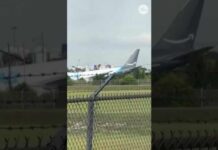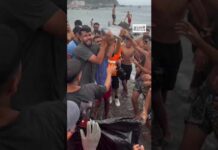

A single “mega-dinghy” carrying about 140 people landed near Portsmouth and triggered a night of street unrest and tense police stand-offs — a snapshot of a border system people no longer trust.
Story Snapshot
- About 140 people were intercepted and brought ashore near Eastney in Portsmouth after a long Channel crossing.
- Hundreds of protesters and counter-protesters gathered, leading to a police stand-off into the night.
- Officials described a rescue and routine processing operation; locals saw strain and loss of control.
- Small boats have become a major route into the United Kingdom, with totals topping 200,000 since 2018.
Rescue At Sea Turns Into A Flashpoint On Shore
Local media reported that emergency services deployed a helicopter, a plane, lifeboats, and shore teams after a small boat headed toward the Hampshire coast on Sunday. Crews brought the occupants safely to shore, and officials said they would be processed as is routine for such arrivals. The vessel reportedly launched from Baie de Seine in France and traveled an unusual route for this part of the coast. The arrival near Eastney involved around 140 people, according to multiple reports.
Hundreds of demonstrators converged on the area as coaches and processing tents appeared. Reports described a stand-off with police near the landing point and nearby roads. Crowd numbers grew as the evening went on, and chants called for an end to small-boat crossings. Police tried to keep rival groups apart and maintain access routes. The tense scene continued late into the night, reflecting deep anger and fear over border control and fairness.
Competing Frames: “Rescue And Processing” Versus “Strain And Disorder”
Officials and media described the day as a rescue, transfer, and processing effort. That is the set process when boats are detected in the Channel and brought to shore, often for safety reasons, before identity checks and next steps. To many locals and protesters, the same scene read as disorder, rising costs, and a signal to smugglers that the system is overwhelmed. Both views circulated in real time as videos and posts spread from the shoreline.
Named political voices amplified that split. A Hampshire party leader said “over 100 migrant men” came ashore in Portsmouth. A national figure reshared that post and framed the event as an “invasion,” promising a tougher line. Such statements fired up the on-the-ground crowd and drew more people to the seafront. Police presence grew as tensions rose, underscoring how fast small-boat landings now trigger wider protests and counter-protests.
The Bigger Picture: A System Under Pressure
Public data show small-boat arrivals have become a large and steady flow since 2018, with totals now above two hundred thousand. That volume strains housing, policing, and the asylum casework that should sort claims quickly. Official fact-sheets and dashboards track weekly arrivals and processing outcomes, but many communities feel those numbers have not translated into real control on the coast or faster decisions that deter risky crossings.
🇬🇧 PORTSMOUTH — THEY WERE STILL THERE AFTER MORE THAN SEVEN HOURS.
It is now after 3.15am and I have just finished watching Danny Tommo’s livestream from Eastney, Portsmouth.
A huge number of patriots turned up and stayed for more than seven hours to make their voices heard… pic.twitter.com/uGyvNIIyAG
— Cllr Maxine Fothergill (@MaxineFothergil) September 7, 2026
Reports indicate that many small-boat arrivals go on to claim asylum. Government releases explain the share of asylum claims tied to this route and publish outcomes across years and quarters. Yet case-by-case details are slow and often sealed in later stages, which fuels doubt on the ground. People see coaches and hotels, not firm timelines or removals. That gap between lived experience and official process is now driving protests like Portsmouth’s.
What Portsmouth Reveals About Policy Priorities
Sunday’s events showed three urgent needs. First, stop the boats by breaking the smuggling model and hardening the route. Second, speed asylum decisions so unmerited claims are removed fast and real refugees integrate quickly. Third, protect local order with clear communications, visible enforcement, and zero tolerance for criminal gangs. The rescue must not become a free ticket. Firm borders, safe communities, and an honest system can and must go together.
Sources:
independent.co.uk, mirror.co.uk, dailyecho.co.uk, migrantdata.uk, assets.publishing.service.gov.uk, questions-statements.parliament.uk, gov.uk, theguardian.com, bbc.com