

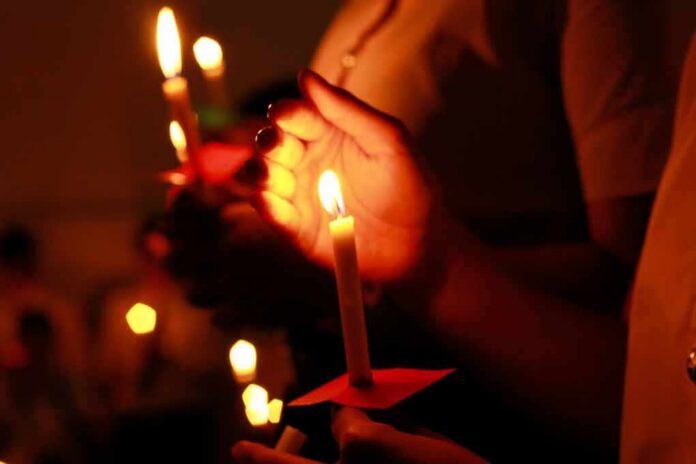
Pro-Hamas demonstrators swarmed a New York City peace vigil, shouting militant slogans and overwhelming mourners at Union Square.
Story Highlights
- More than 200 protesters disrupted an Israelis for Peace vigil at Union Square, forcing chaos and fear.
- Video and local reports show marchers left City Hall and moved to the vigil as it began.
- New York City’s mayor was booed on arrival amid the disorder, reflecting deep civic tension.
- Experts warn that hostile chants in close quarters can cross into intimidation, not free debate.
What Happened At Union Square
Witnesses and local outlets reported that a candlelight vigil to honor those murdered on October 7 was thrown into chaos when more than 200 pro-Palestinian demonstrators surged into Union Square. Protesters packed the plaza, waved flags, and shouted radical slogans as the vigil tried to proceed. The New York Daily News said the crowd “swarmed” the space and upended seating set aside for mourners, disrupting the event’s quiet tone and purpose.
Eyewitness News reported that a coalition gathered outside City Hall and then marched to Union Square as the vigil was starting. That march brought an energized group straight into the memorial. The shift from a separate protest space to the vigil area raised tensions fast. Organizers and attendees faced loud opposition at close range, which undercut the vigil’s plan for solemn remembrance and simple prayers for the dead.
How The Crowd Dynamics Shifted The Event
Gothamist described a heavy police presence as rival groups converged on the square, with officials bracing for conflict as evening approached. The physical mix of marchers and mourners shrank the buffer that usually keeps peace. When a protest moves into a memorial, the message and the setting collide. That is the line where free speech can become pressure, and where remembrance can feel threatened. The Union Square scene showed how fast that line can be crossed.
Local coverage also captured the political fallout. The mayor of New York City, Zohran Mamdani, was booed as he arrived at the vigil, a sign that the night had slipped from reflection into public turmoil. That reaction showed how little room remained for civic voices to calm the crowd or reset the event’s purpose. The boos became another marker of disorder, not unity or safety for families who came to mourn.
Why This Matters For Safety, Speech, And Respect
Legal scholars have warned that surrounding people at close range and disrupting reserved spaces is not the same as holding a protest nearby. A leading analysis on protest discipline found that targeting individuals or occupying spaces in ways that block their use can justify firm limits to protect safety and rights. The principle is simple: time, place, and manner rules exist so speech does not silence or menace others.
Mamdani was booed as he arrived at a candlelight vigil in Union Square marking three years since October 7. pic.twitter.com/mNiYJPszov
— YJA🇺🇸🥎 (@Yzo57) October 8, 2026
National watchdogs report that hostile rhetoric at demonstrations can heighten fear for Jewish communities, especially when slogans imply removal or violence. That risk grows when protests enter memorial spaces that honor victims of terror. The Union Square disruption fits a broader pattern where harsh chants and crowding can turn a vigil into a standoff, leaving grieving families to fend for themselves against noise, insults, and pressure in a space meant for memory, not mayhem.
Balancing Protest Rights With The Right To Mourn
The First Amendment protects peaceful protest. It also protects the community’s right to assemble for remembrance without intimidation. Local reports indicate the Union Square vigil was coordinated by Israelis for Peace, a group that has marked the date for years. The New York Times live report noted coordinated memorials across the city the same day. The goal was clear: mourn the dead and stand against terror. That goal was not met when disorder overtook the square.
City leaders and police must set bright lines. Protesters can rally nearby without storming reserved chairs or drowning out prayers. Vigils deserve a perimeter that keeps mourners safe and lets them speak and sing without fear. New York can do both—protect speech and protect the grieving—by enforcing clear space, time windows, and noise limits that apply to everyone, without favor or bias. Order is not censorship. It is equal protection under the law.
What Comes Next
Officials should review permits, crowd flows, and barriers at Union Square and similar sites. Organizers need a direct line to police to keep memorial zones secure, with visible entry points, signage, and posted rules. When agitators push into reserved space, officers must move fast and firm to restore the event’s purpose. That is how a free city works: strong rights, fair rules, and respect for the dead so families can mourn in peace, without fear of being shouted down.
Sources:
redstate.com, nydailynews.com, nytimes.com, abc7ny.com, columbianewsservice.com