

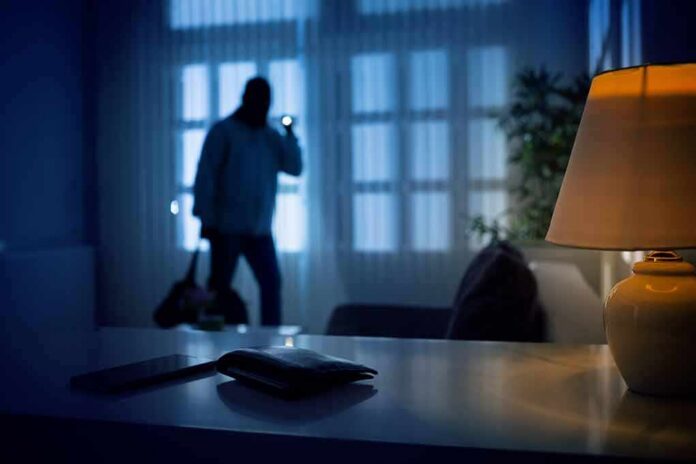
Two masked suspects tried to smash into an occupied Florida home with a handgun—but the hurricane-impact window did not break, stopping the break-in cold.
Story Snapshot
- Fort Lauderdale Police say two masked suspects attempted an armed break-in on October 19, 2026.
- Home surveillance video reportedly shows one suspect striking an impact window with a handgun without breaking it.
- The house was occupied during the attempt, raising the stakes and danger for the residents.
- Federal data counts attempted unlawful entries as serious household burglaries, even when no theft occurs.
Police: Armed Attempt Thwarted By Impact Window
Fort Lauderdale Police reported that two masked suspects targeted an occupied residence shortly after 6 p.m. on October 19, 2026. According to reporting that cites the department, home surveillance video shows one suspect in a black hoodie and red pants striking a hurricane-impact window with a handgun. The glass did not fail, and the pair fled. Police are seeking the suspects. The report underscores how a strong barrier can stop a crime before entry occurs.
The account matches what many homeowners fear: a fast, forceful attempt while people are inside. Federal definitions treat this as an attempted household burglary. That category includes cases where offenders try to enter a home, whether or not they steal anything. The legal stakes are serious because the intent and the use of force matter, not only the final result. The absence of a broken window does not reduce the gravity of the event.
Why Impact Windows Held Up Under Repeated Blows
Impact windows use laminated glass that holds together even when cracked. Manufacturers describe a “glass sandwich” that resists shattering and delays entry long enough to foil quick attacks. The design forces an intruder to keep pounding, making noise and losing time. That time is often enough for residents to call 911 or for suspects to give up and run. This construction explains why the Fort Lauderdale suspects could not break through quickly with blunt strikes.
Industry guidance notes that standard windows can fail in seconds under tools or heavy strikes. Laminated impact glass stays in the frame after impacts from hammers, crowbars, or thrown objects. That helps homeowners in storm zones and during crime attempts. The same sealed barrier that protects against debris in a hurricane can also slow or stop forced entry. In this case, the window bought the residents safety and time when it mattered most.
Armed Attempts While Residents Are Home Raise Risks
National Bureau of Justice Statistics reports show household burglary includes unlawful or attempted entry of a residence, garage, or similar structure. That category covers attempts where offenders steal, try to steal, or do not try to steal at all. When people are home, the risk of harm can rise, especially if the intruder is armed. Federal data also show many burglary incidents occur without violence, but the presence of a firearm changes the danger calculus for families.
Earlier research on burglaries with residents present found most offenders in those violent cases were unarmed, and a smaller share involved firearms. Even so, the threat when a gun appears is obvious. Homeowners want layers that work: strong doors, impact windows, cameras, lighting, alarms, and quick calls to police. This Florida case shows how one strong layer can disrupt the crime chain before a door opens or a room is breached.
What This Means For Homeowners And Communities
Homeowners in coastal states already invest in impact glass for storms. This event shows the added payoff for security. Simple steps matter: well-lit yards, visible cameras, reinforced locks, and clear lines of sight from the street. Technology helps, but strong physical barriers stop the first hit, not the cloud. Police in Florida and nationwide stress that attempted entries are crimes, and reporting details helps them spot patterns and suspects.
This case also speaks to personal responsibility and the right to protect one’s home. Families should harden the target and work with local police on prevention plans. Communities that invest in deterrence—better lighting, neighborhood watch, and quick reporting—tend to see fewer successful break-ins. In Fort Lauderdale, the suspects met a barrier they could not beat. The take-home lesson is clear: build strong, call fast, and do not rely on luck when safety is on the line.
Sources:
nypost.com, publicapps.troopers.ny.gov, poncacitynow.com, wsvn.com