
Anti-Israel bikers tried to shut down six Jewish-owned restaurants in Philadelphia, but thousands of supporters showed up instead and overwhelmed them.
Quick Take
- A group calling itself Philly Bike On Your Left organized a “boycott ride” targeting six Jewish-owned restaurants near Rittenhouse Square.
- Organizers said the boycott was about businesses’ alleged support for Israel, but every named target was Jewish-owned.
- Governor Josh Shapiro, Mayor Cherelle Parker, and other officials publicly condemned the action as antisemitic.
- Huge crowds of counterprotesters showed up with Israeli flags, creating long lines at the targeted restaurants instead of empty ones.
- Police arrested three people and reported minor injuries to two officers during the confrontation.
Bike Protest Names Six Restaurants as Targets
A flyer circulating since late October called for a bicycle ride through Philadelphia’s Rittenhouse Square area. It named six restaurants: Mac Mart, K’Far Cafe, Huda, Goldie, Dizengoff, and Schlesinger’s Deli. The group behind the effort, Philly Bike On Your Left, described itself as anti-Zionist and said the businesses supported Israel. Every single business named happened to be Jewish-owned.
Organizers insisted their target wasn’t Judaism. “The reason we are calling for a boycott of these businesses is because of their support for Israel,” the group said in a statement. A separate group, Boycott CookNSolo, claimed some owners had raised money for the Israeli military or hosted Israeli soldiers. Available reporting does not independently verify those specific claims for each business.
Business Owners Push Back Hard
Schlesinger’s Deli owner Allan Domb said he was blindsided by the listing. “I’m not sure why this group is targeting me over owning a delicatessen,” he said. Mac Mart owner Marti Lieberman rejected the premise entirely, saying hate has no place aimed at small businesses just trying to feed families and bring people joy. These are real people running real shops, not political targets picked for documented conduct.
Huda owner Yehuda Sichel said the moment forced him to confront history he never expected to relive. He said he felt empowered by community support but also deeply saddened that, in 2026, he had to face what his grandparents and great-grandparents endured. That’s not rhetoric from a politician. That’s a small business owner describing what it feels like to be singled out because of who he is.
Officials From Both Parties Condemn the Boycott
Pennsylvania Governor Josh Shapiro and Philadelphia Mayor Cherelle Parker both spoke out against the planned action before it even happened. Parker said singling out businesses because their owners are Jewish is unacceptable and has no place in Philadelphia. That’s a Democrat mayor saying it, which tells you how far outside the mainstream this stunt landed. When leaders across the political spectrum agree something crossed a line, conservatives should take notice too.
The timing made things worse. The protest happened right before the anniversary of Kristallnacht, the 1938 Nazi attacks on Jewish-owned businesses across Germany. Whether organizers intended that comparison or not, the historical echo was impossible to ignore, and it shaped how the whole country saw this event.
Counterprotesters Flood the Streets
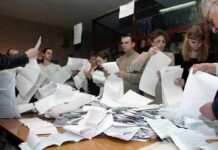
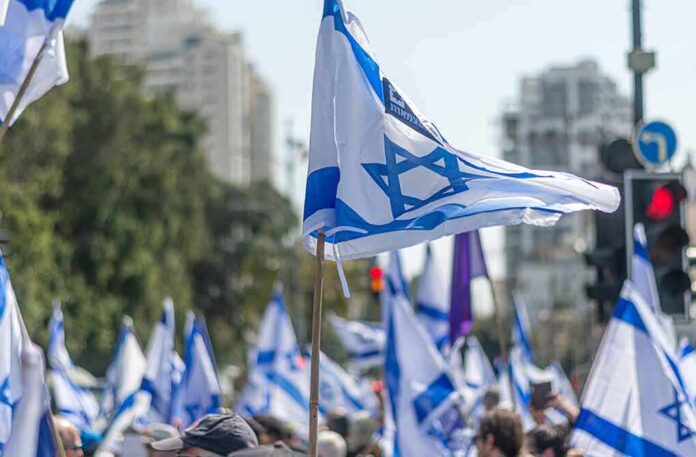
Instead of empty tables, the targeted restaurants saw the opposite. Hundreds of counterprotesters carrying Israeli flags and antisemitism signs showed up to support the businesses. Long lines formed outside the restaurants named in the boycott, turning what organizers hoped would be a economic squeeze into a show of community strength. Jewish Federation of Greater Philadelphia president Michael Balaban said the only way to push back against hate is to show love, pointing to the massive turnout.
The Jewish Federation of Greater Philadelphia condemned a boycott ride targeting Jewish-owned restaurants as antisemitism.
Police estimated about 500 people took part, and a female counterprotester reported being assaulted by an unknown person. pic.twitter.com/m7bjCINI2D
— kaitlan collins (@kaitlancollinsh) November 9, 2026
The scene did not stay entirely peaceful. Philadelphia police formed lines separating the two sides, and three people were arrested while two officers suffered minor injuries. The protest’s organizers have no clearly identified leaders or public spokesperson, according to reporting from WHYY, which makes it harder to hold anyone accountable for how the event unfolded on the ground.
A Political Boycott, or Something Else
Supreme Court precedent, going back to the 1982 case NAACP v. Claiborne Hardware, protects political boycotts as free speech when they aim to influence political or social change rather than personal profit. That ruling gives real legal cover to peaceful, politically motivated boycotts. But this case raises a harder question: every single targeted business was Jewish-owned, and organizers never released specific evidence tying each restaurant to Israel policy. That gap is exactly why officials from both parties called it antisemitism instead of politics.
Sources:
abc7news.com, kmbc.com, usatoday.com, today.com