
President Trump’s confrontation with Iran has devolved into a dangerous standoff where internal chaos in Tehran and fears of another hostage crisis are dictating American strategy, raising serious questions about who truly controls the trajectory of this conflict.
Story Snapshot
- Iran shot down a U.S. F-15 over its territory, triggering a reported hours-long eruption from Trump and his removal from key military discussions
- Trump rejected a proposed seizure of Iran’s Kharg Island oil hub, citing fears of troops becoming hostages in a repeat of Carter’s 1979 crisis
- Planned peace talks in Pakistan collapsed after Iran’s IRGC reportedly seized control from the Ayatollah, leaving no credible negotiating partner
- U.S. naval blockades continue choking Iran’s economy while Trump issues aggressive public threats but privately resists ground operations
F-15 Downing Exposes Deep Presidential Fears
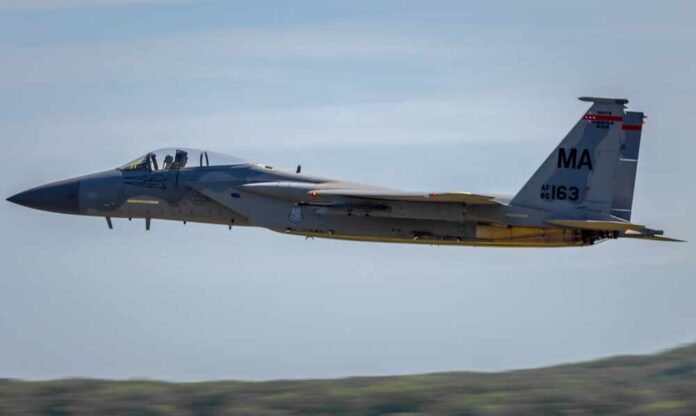
Iran’s downing of a U.S. F-15 fighter jet over Iranian territory left two American airmen missing and exposed the administration’s worst nightmare. One airman was rescued relatively quickly, but the second remained in hostile territory for hours before a high-risk extraction operation brought him home. During the uncertainty, Trump reportedly screamed at advisers for hours, blamed European allies for insufficient support, and was ultimately sidelined from key rescue discussions. The incident revived haunting memories of the 1979 Iran hostage crisis, when 52 Americans were held for 444 days, destroying Jimmy Carter’s presidency and cementing a political lesson Trump clearly has not forgotten.
Kharg Island Invasion Scrapped Over Hostage Scenario
Military planners presented Trump with a proposal to seize Kharg Island, Iran’s critical oil export hub, with briefings indicating high odds of success. Trump rejected the operation outright, according to reports, fearing American troops would become “sitting ducks” vulnerable to capture in a scenario mirroring the Carter-era debacle. His decision underscores a fundamental tension in the administration’s approach: aggressive naval blockades and public threats to strike Iranian infrastructure contrast sharply with extreme caution about committing ground forces. This hesitation reflects legitimate concerns about Iran’s asymmetric warfare capabilities, but it also hands Tehran leverage by signaling clear limits to U.S. willingness to escalate.
Iranian Regime Chaos Derails Diplomacy
Planned peace negotiations in Islamabad collapsed before they began when Iranian delegates failed to appear, leaving the U.S. team of Vice President JD Vance, Jared Kushner, and Steve Witkoff grounded. Reports suggest Iran’s Islamic Revolutionary Guard Corps has effectively seized control from the Ayatollah amid internal power struggles, leaving no clear decision-maker authorized to negotiate. Trump had publicly claimed the Ayatollah approved talks and downplayed the closure of the Strait of Hormuz, only to be contradicted the next day by IRGC media denials of any ceasefire requests. This internal Iranian turmoil creates a bizarre situation where the U.S. faces an enemy that appears to have taken itself hostage through factional infighting.
Blockade Strategy Tightens Economic Noose
The United States seized an Iranian cargo ship in the Gulf of Oman just before the planned peace talks, damaging its engine room after warnings went unheeded. Trump has issued “shoot and kill” orders to the Navy against Iranian mine-laying boats and continues naval blockades of Iranian ports, choking off the regime’s oil export revenue. Iran’s economy faces mounting pressure as the blockade prevents access to its primary revenue source, potentially forcing Tehran into negotiations or regime collapse. The Strait of Hormuz, through which roughly 20 percent of global oil flows, remains contested despite Trump’s claims of progress. This economic warfare strategy carries significant risks for global energy markets and everyday Americans already frustrated by high costs at the pump.
The broader implications reveal a troubling pattern many Americans recognize regardless of political affiliation: another Middle East conflict where unclear objectives, unreliable partners, and the threat of mission creep threaten to drain American blood and treasure. Trump’s invocation of Carter’s hostage crisis reflects justified caution about repeating past disasters, but his simultaneous aggressive rhetoric creates whiplash that undermines credibility. Meanwhile, Iran’s internal dysfunction means the administration cannot even identify a legitimate counterpart for negotiations, trapping both nations in a dangerous limbo where miscalculation could trigger wider war. For voters who supported Trump precisely to avoid endless foreign entanglements, this escalating confrontation raises uncomfortable questions about whether any president can resist the gravitational pull of Washington’s interventionist establishment.
Sources:
Ynetnews – Trump Reaction to F-15 Downing
Times of India – Trump Removed From War Room