
President Trump’s latest Supreme Court clash is exposing a political reality many Americans already feel in their gut: even when one party “wins” Washington, the system still fights itself.
Story Snapshot
- Trump blasted Supreme Court justices as “stupid” and “dumb” after oral arguments in a birthright-citizenship case tied to his Day 1 executive order.
- He singled out the idea that Republican-appointed justices try to prove “independence,” contrasting it with what he described as Democrats’ voting unity.
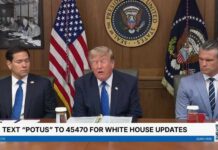
- Trump became the first sitting president to attend Supreme Court oral arguments in person, raising the political temperature around a pending ruling.
- A recent 6-3 tariff loss—where Trump appointees joined liberals—helped set the stage for his public frustration with the Court.
Trump’s Fight With the Court Moves From Policy to Personal
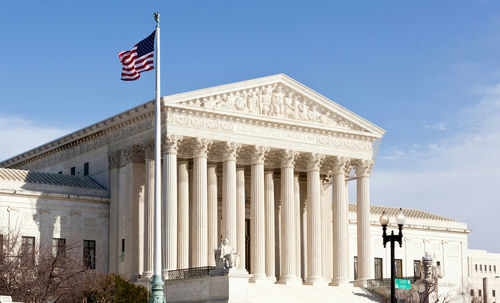
President Trump escalated his criticism of the Supreme Court in the wake of oral arguments in Trump v. Barbara, the case testing his executive order aimed at ending birthright citizenship for children of non-citizens or non-permanent residents. Trump used public remarks and social media to call judges and justices “stupid” and “dumb,” signaling he expects resistance from the bench. The rhetoric matters because the case touches the 14th Amendment and immigration policy—two issues already driving national division.
Trump’s comments also leaned into a broader argument about judicial behavior: he suggested Republican-aligned justices are more likely to rule against him to demonstrate “independence,” while Democratic-appointed justices, in his telling, tend to vote together. That framing is politically potent because it implies Democrats do not need to “pack” the Court to get outcomes they want. What is clear from the reporting is not a direct “already packed” quote, but a repeated complaint that defections from GOP appointees effectively tilt results.
A Presidential First at Oral Arguments Raises the Stakes
Trump’s decision to attend the birthright-citizenship arguments in person—reported as a first for a sitting president—made the moment bigger than a routine court appearance. Presidents typically avoid actions that could look like pressure on the judiciary, even when they strongly disagree with a line of rulings. The White House setting added to the visibility: Trump later spoke at an Easter lunch where his criticism sharpened, and a video of the remarks was briefly posted and then removed, though the comments were captured in news reporting.
The substance of the dispute is significant, not just the spectacle. Trump’s Day 1 order reinterprets the 14th Amendment’s citizenship language to require parental legal status, a legal theory that faces skepticism in mainstream constitutional interpretation. Reporting also noted at least one factual dispute in Trump’s messaging—his claim that the United States is uniquely burdened by birthright citizenship debates. With the Court’s ruling pending, both supporters and opponents are bracing for a decision that could reshape immigration policy and citizenship rules for years.
The Tariff Loss That Put Trump at Odds With His Own Appointees
Trump’s frustration did not start with birthright citizenship. A separate Supreme Court loss on tariffs—decided 6-3—became a key backdrop because two Trump appointees, Neil Gorsuch and Amy Coney Barrett, sided with Chief Justice John Roberts and the Court’s liberals. Trump referenced that outcome while predicting he might not get the ruling he wants in the birthright-citizenship case. For conservative voters who fought for decades to reshape the judiciary, that split reinforces a hard truth: justices do not operate as party-line legislators.
That independence can be a feature, not a bug—at least for Americans who want law to be something more than politics by other means. At the same time, the political backlash is real because elections come with policy expectations, especially on border enforcement and the constitutional meaning of citizenship. Trump’s critique channels a wider, bipartisan frustration: people on left and right increasingly believe elite institutions—including courts, agencies, and political leadership—protect themselves first, while ordinary families face higher costs, weaker security, and constant cultural conflict.
Why This Matters Beyond One Case: Trust, Court “Reform,” and the Deep-State Mood
Democrats have periodically floated court-expansion or “reform” ideas, and Trump’s argument that the Court is effectively “packed” against him is likely to pour fuel on that debate from an unexpected direction. If Republican appointees regularly break with Republican presidents, Democrats can argue the Court is not partisan; if voters interpret those breaks as ideological drift or institutional self-preservation, pressure builds for structural changes. Either way, public confidence becomes collateral damage when leaders talk about judges as political actors rather than constitutional referees.
Trump Rips SCOTUS a New One: Dems Don’t Need to Add Justices Because the Court Is ‘Already Packed’ for Them https://t.co/3q1mOO5D0K
— Truth2Freedom (@Truth2Freedom) April 23, 2026
The immediate reality is straightforward: oral arguments are over, the ruling is pending, and Trump is already framing the decision as a test of whether America can control citizenship and immigration policy through elected government. Conservatives will see the case as part of restoring sovereignty and rule of law at the border; liberals will see it as an attack on longstanding interpretations of constitutional rights. The more both sides believe the system is rigged, the harder it becomes to govern—no matter who holds the White House or Congress.
Sources:
Donald Trump’s tariff Supreme Court reaction
Trump makes historic visit to Supreme Court arguments on birthright citizenship
Supreme Court of the United States opinion PDF (23-939)