

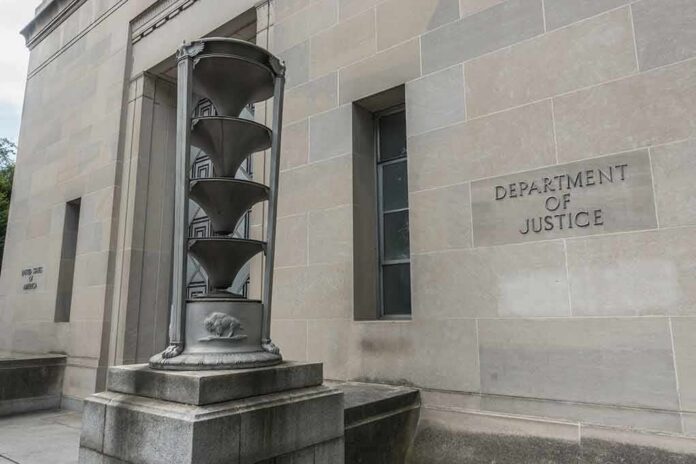
Federal courts have repeatedly blocked the Justice Department’s push for states’ unredacted voter databases, handing privacy advocates a major edge and forcing a reset of strategy.
Story Highlights
- Judges in multiple cases rejected demands for states’ full, unredacted voter files, including Michigan’s Sixth Circuit loss for the Department of Justice (DOJ).
- States from both parties resisted turning over driver’s-license and partial Social Security numbers, citing law and privacy risks.
- DOJ based suits on federal statutes governing voter lists but lacks a clear appellate ruling that authorizes wholesale data grabs.
- NBC News tracked a sweeping, multi-state litigation drive that stirred public concern over scope and necessity.
What DOJ Demanded and Why States Said No
Justice Department complaints argued that federal laws on elections require states to keep centralized voter lists and allow federal oversight. The filings cited the Help America Vote Act and the National Voter Registration Act as grounds to inspect statewide databases for maintenance issues. State officials responded that the requests swept in sensitive fields like driver’s-license and partial Social Security numbers, which state law protects. Many offered public or redacted files instead, and some allowed in-person inspection without mass transfers.
Courts weighed the balance between federal oversight and state privacy rules. Several decisions concluded that federal law does not clearly force states to hand over every unredacted field. Those rulings stressed that oversight can proceed without exposing millions of identifiers to new risk. The Sixth Circuit’s rejection of the Michigan demand underscored that point and became the most visible setback for the department’s approach.
The Legal Hooks DOJ Cited — And Their Limits
Justice Department pleadings said the Civil Rights Act of 1960, the National Voter Registration Act, and the Help America Vote Act authorize federal review of voter lists and compliance checks. The complaints emphasized the need to analyze unique identifiers and other fields to test the health of list maintenance programs. But courts have not embraced a reading that compels states to disclose full, unredacted databases. The record shows no definitive appellate green light for bulk access to confidential identifiers.
National coverage noted how broad the program became. NBC News reported dozens of states facing demands or litigation and highlighted the department’s references to “anomalies or concerns,” which did not always tie to specific, proven problems in each state. That frame fueled skepticism. Voters and officials asked why the government needed mass downloads of protected data, instead of targeted requests with tight safeguards. The result was a wave of pushback and courtroom defeats for the federal effort.
Why Privacy and Election Confidence Both Matter
Election integrity requires accurate rolls and strong privacy. States argued that handing over driver’s-license and Social Security data could create hacking targets or accidental leaks. They warned that such exposure could chill participation among law-abiding citizens and undermine trust. The Associated Press reported that both Democratic and Republican officials refused the large-scale requests, citing state and federal privacy laws as the basis for their stance.
TODAY, Trump’s DOJ is trying to bully California to PURGE names from the voter rolls, based on unreliable data, less than three weeks before the election.
The threat? Comply, or face a federal lawsuit, and ballots from those on the list could be withheld from being counted.
But…
— Senator Alex Padilla (@SenAlexPadilla) October 14, 2026
Conservatives want clean lists, transparent rules, and limited government. These rulings do not stop list maintenance. They do set guardrails against bulk federal grabs of personal data without clear authority. The path forward is simple: define narrow needs, use specific, documented irregularities, and apply strict security. That approach targets real problems, respects federalism, and protects families from needless data risk. It also keeps pressure on states to follow the law while defending citizens’ privacy.
What To Watch Next
Appeals in other circuits could still shape the boundaries. Congress could also clarify what fields the federal government may access and how data must be protected. Until then, states retain leverage to insist on redactions, audits on site, and limited extracts tied to concrete questions. Voters should expect clear explanations of how list checks work, what gets shared, and how data are secured. That is common sense accountability that respects both election integrity and personal privacy.
Sources:
justice.gov, theconversation.com, statedemocracy.law.wisc.edu