
After a New York City socialist candidate said a violent suspect’s rap sheet “doesn’t even matter,” federal officials detailed why agents fired when he allegedly moved his car toward officers during an arrest attempt.
Story Highlights
- A New York City socialist candidate said the suspect’s criminal record “doesn’t even matter.”
- Homeland Security said agents were arresting a man with a grand-larceny conviction and multiple prior arrests.
- Officials said the suspect refused orders and moved his vehicle forward before shots were fired.
- The child in the car was not known to agents at the time, according to the Department of Homeland Security.
What Sparked The Backlash: The “Doesn’t Even Matter” Remark
New York City congressional hopeful Darializa Avila Chevalier told a popular online host that the suspect’s prior crimes “doesn’t even matter” when judging the shooting itself, drawing swift pushback. Fox News captured the exchange and reported that both Chevalier and the host argued past crimes do not justify deadly force in the moment. The remark ignored the government’s account of an active vehicle threat and framed the case as character talk versus force standards.
The comment landed amid protests and noisy coverage, where left-wing voices focused on immigration status and police power. Conservative readers know this script: activists dismiss criminal history while agents deal with split-second danger. The legal standard centers on what officers reasonably perceived when shots were fired, not Twitter slogans. Still, Chevalier’s line signals a political push to delegitimize immigration enforcement and to paint federal arrests as abuse, regardless of the operational facts presented.
What Officials Say Happened During The Arrest Attempt
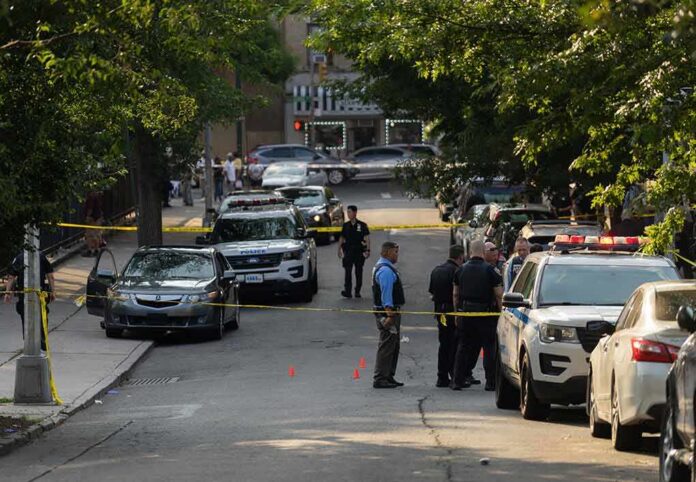
The Department of Homeland Security said agents conducted a targeted operation to arrest Oscar Belgal, citing a prior conviction for grand larceny and multiple prior arrests for assault, robbery, drug possession, and weapons possession. Officials said Belgal refused lawful orders to exit his vehicle. New York City’s police commissioner said he began pulling the car forward before an officer fired seven rounds, striking him below the left ear. These details anchor the case in reported facts.
Department leadership said agents fired because they believed lives were in danger when the vehicle moved toward officers. A senior official described the car as “weaponized” once Belgal accelerated, reinforcing the life-safety rationale. Officials also said agents did not know a five-year-old child was inside the vehicle when they fired, a fact that complicates the scene but does not, by itself, decide the legal question of imminent threat. Those points track the government’s public account.
The Force Standard: What Matters Under The Constitution
Supreme Court cases say deadly force hinges on whether a suspect posed a significant threat of death or serious injury at that moment. The standard turns on objective reasonableness under the totality of the circumstances, not on political labels. Prior crimes can explain why agents moved to arrest, but the key test is the immediate danger they faced when the car moved. Courts have also upheld force to stop dangerous vehicle threats in certain conditions. That is the legal frame, not a campaign sound bite.
That framework cuts both ways and demands facts, not slogans. If the car moved toward officers, that supports the claim of imminent danger. If evidence showed no such threat, that would point the other direction. Current reports describe forward movement and seven shots, consistent with an urgent stop of a perceived threat. Until video and full forensics release, the debate should track the constitutional test, not activist talking points that erase criminal history or official safety concerns.
Why This Matters For Border And Public Safety Policy
Immigration enforcement depends on the rule of law. Agents must arrest criminal suspects, including noncitizens with convictions or open cases, without getting paralyzed by politics. When city figures dismiss a rap sheet as irrelevant, they undermine the case for targeted operations that keep neighborhoods safe. That posture invites more sanctuary-style defiance and signals to gangs that ideology can outrun order. Voters who want secure borders and safe streets should demand facts-first reviews, not reflexive anti-enforcement spin.
President Trump’s team faces a hard job: stop dangerous actors fast and stay inside the law. The right way forward is clear. Release available video when lawful, complete a formal review, and show how training and policy guide split-second calls. But do not let activists write the rules from the street. The Constitution sets the standard. Federal duty sets the mission. Public safety requires both, even when politics tries to drown out the facts.