
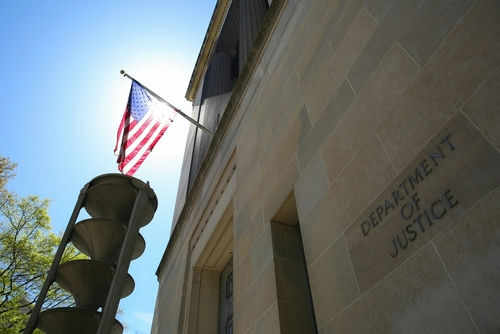
The Justice Department has uncovered at least 350,000 deceased individuals still registered to vote across just 16 states, exposing a stunning breakdown in election integrity that raises serious questions about who’s been minding America’s voter rolls while officials claim everything is fine.
Story Snapshot
- DOJ found 350,000+ dead people and tens of thousands of noncitizens on voter rolls in only 16 cooperative states
- Federal government is suing 29 states and DC for refusing to provide complete voter registration data
- Assistant Attorney General Harmeet Dhillon says states would “rather fight us in court than show their work”
- Only partial audit results available, with majority of states still refusing transparency
Nationwide Voter Roll Audit Reveals Alarming Findings
Assistant Attorney General for Civil Rights Harmeet Dhillon revealed shocking preliminary findings during a March 11, 2026 interview, stating that audits of just 16 states uncovered hundreds of thousands of ineligible voters. The DOJ identified at least 350,000 deceased individuals, tens of thousands of registered noncitizens, and countless duplicate registrations on voter rolls from cooperative states like Florida and Texas. These findings represent only a fraction of the national picture, as 29 states plus the District of Columbia have refused to provide their complete voter registration data to federal investigators.
Federal Lawsuits Target State Resistance
The Department of Justice launched an unprecedented nationwide campaign to enforce voter roll compliance, filing lawsuits against states across the political spectrum. Attorney General Pamela Bondi authorized initial suits against five states on February 26, 2026, including Utah, Oklahoma, Kentucky, West Virginia, and New Jersey. Additional legal action followed against Delaware, Maryland, New Mexico, Rhode Island, Vermont, and Washington. The lawsuits invoke the National Voter Registration Act of 1993, the Help America Vote Act of 2002, and the Civil Rights Act of 1960, which mandate states maintain clean voter rolls and provide records to federal authorities upon request.
States Choose Courtrooms Over Compliance
Dhillon emphasized the frustrating reality facing federal investigators: recalcitrant states prefer expensive litigation over basic transparency. The 16 states that voluntarily cooperated were predominantly Republican-leaning jurisdictions, while resistance has concentrated among blue states like California and New York, though some red states also refused compliance. This pattern raises uncomfortable questions for Americans across the political divide who wonder whether their elected officials have something to hide. The Civil Rights Act gives the Attorney General clear authority to demand these records, yet states continue fighting federal oversight while taxpayers foot the bill for both sides of costly court battles.
The Real Numbers Behind Registration Versus Voting
While the discovery of 350,000 dead people on voter rolls sounds catastrophic, critics note an important distinction that deserves scrutiny. Dhillon acknowledged that actual documented cases of noncitizens voting numbered only in the dozens, though tens of thousands of noncitizens appeared on registration lists. This gap between registration and actual voting doesn’t eliminate concerns about election integrity—it simply highlights that the full scope remains unknown without complete data from all states. The distinction matters because it separates potential vulnerabilities in the system from proven fraud, though both undermine public confidence when officials refuse to address obvious problems like keeping deceased voters registered.
Broader Implications for Election Integrity
This federal push represents something unprecedented in American election administration: a systematic, bipartisan enforcement effort targeting states of all political stripes for noncompliance with longstanding federal law. Unlike previous voter roll challenges focused on specific elections or isolated jurisdictions, the Trump administration’s DOJ is demanding nationwide accountability. The short-term impact includes costly litigation and potential voter roll cleanups before the 2026 midterm elections. Long-term consequences could include standardized technology for cross-state verification and tighter federal oversight of state election administration. For ordinary Americans who simply want elections they can trust, the resistance from state officials suggests a bureaucratic class more concerned with protecting turf than ensuring every legitimate vote counts and every illegitimate registration gets removed.
What States Are Hiding
The question haunting this entire controversy is simple: if voter rolls are properly maintained as state officials claim, why fight transparency? Federal law requires states to remove deceased voters, relocating voters, and duplicate registrations. These aren’t controversial requirements—they’re basic housekeeping that protects election credibility. Yet 29 states plus DC would rather spend millions on lawyers than hand over data showing they’ve followed the law. This stonewalling feeds suspicions among voters on both left and right that government institutions serve themselves rather than the people. Whether the issue is preventing fraud or protecting voting access, Americans deserve clean voter rolls and officials willing to prove they’re doing their jobs.
Sources:
Trump DOJ’s Voter Rolls Grab Has Unearthed a Tiny Number of Illegitimate Votes – Democracy Docket