

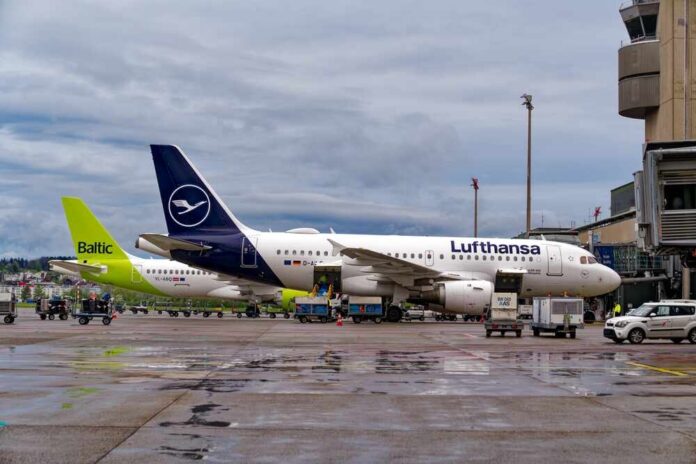
A single chokepoint half a world away is now grounding flights by the thousands—exposing just how brittle “global connectivity” becomes when energy security collapses.
Quick Take
- A jet fuel shortage tied to Middle East disruptions is forcing widespread flight cancellations, with about 2 million seats removed from schedules in roughly two weeks.
- Europe is absorbing the worst of the shock, including 13,000+ canceled flights in May and warnings that supplies could reach critically low levels by early June.
- Lufthansa alone is cutting 20,000 flights from May through October as airlines shift from trimming schedules to preparing for physical shortages.
- Spirit Airlines has entered bankruptcy, highlighting how thin airline margins and high fuel exposure can turn a geopolitical crisis into corporate failure.
Strait of Hormuz Shock Turns Into a Jet Fuel Problem
Geopolitical turmoil in the Middle East has turned into a direct hit on ordinary travelers because the Strait of Hormuz remains a critical artery for world energy flows. Research cited in aviation and energy briefings describes the crisis as linked to Hormuz disruptions affecting crude supply and, downstream, jet fuel availability. Because airlines typically operate on 1–3% margins and fuel can run 20–30% of operating costs, even short-lived supply shocks can quickly force cancellations rather than absorb losses.
Industry warnings now emphasize that this is not only a price spike but a potential “physical shortage” scenario. Commercial inventories and alternative supply channels that previously buffered disruptions appear to be tightening, while strategic reserves are being drawn down. The practical result is that airlines are removing capacity first—cutting routes and frequencies—because that is faster than securing new fuel logistics. For passengers, the impact shows up as abrupt schedule changes, rebooking chaos, and fewer seats available at higher prices.
Europe’s Supply Vulnerability Is Driving the Biggest Cancellations
Europe is the epicenter in May 2026, with 13,000+ flights reportedly canceled across the region as the shortage intensifies. The International Energy Agency warned on April 16 that Europe had roughly six weeks of jet fuel remaining, a timeline that points to early June as a critical pressure point if resupply fails. Analysts have also flagged the UK as especially exposed due to import dependence, limited refining capacity, and low reserves.
Those constraints matter because refining capacity is not an abstract statistic—it determines whether a region can quickly convert crude into the specific products aviation needs. Over the past decade, Europe’s refining footprint has shrunk, leaving less slack in the system during a supply shock. When refinery output and imports can’t keep up, rationing becomes a realistic concern, and airlines start protecting core routes at the expense of marginal service. That tradeoff tends to hit smaller airports, leisure travel, and price-sensitive flyers first.
Airlines Cut Schedules as Financial Stress Spreads
The cancellations are not isolated to one carrier or one country. Cirium data indicates 19 of the world’s 20 largest airlines cut May schedules, with roughly 2 million seats removed in about two weeks as conditions deteriorated. Lufthansa, Europe’s biggest airline group, has announced cuts totaling 20,000 flights from May to October. Other carriers, including Air France-KLM and Aer Lingus, have also reduced service, reflecting a broad, defensive posture.
Spirit Airlines’ bankruptcy has become the starkest illustration of how quickly a fuel-driven disruption can turn into a solvency event. Low-cost carriers are structurally vulnerable because they rely on high aircraft utilization and thin margins to keep fares down. When fuel becomes scarce or too expensive, the business model has fewer cushions. From a governance standpoint, this is a reminder that “market resilience” often depends on stable energy supply and realistic contingency planning, not slogans.
What This Means for Travelers—and for Policy Debates at Home
For families planning summer trips, the immediate reality is fewer seats, higher fares, and greater uncertainty around connections and refunds. Research summaries also note that insurers may adjust coverage terms around fuel-crisis disruptions, which could leave travelers exposed to cascading losses like hotels and tours. As cancellations accelerate, the entire tourism supply chain takes a hit—seasonal workers, small businesses, and local tax bases—while consumers pay more for less reliability.
Tomorrow's front page: Millions face flight cancellations as jet fuel shortage deepens and Iran ceasefire falters#TomorrowsPapersToday
Latest from Cahal Milmo, Richard Vaughanhttps://t.co/8GkkwEvr9X pic.twitter.com/HLIgsggLvs— The i Paper (@theipaper) May 5, 2026
In the U.S., the episode is likely to sharpen an already-familiar argument: energy security is national security, and dependence on fragile global supply chains carries costs ordinary citizens end up paying. Conservatives will see another case where the basics—fuel, transport, and logistics—matter more than elite rhetoric about a frictionless global economy. Liberals will point to consumer harms and call for protections, but the hard constraint remains physical supply. The shared lesson is uncomfortable: when government and industry fail to plan for chokepoints, Americans inherit the mess.
Sources:
Millions of passengers left stranded as flight cancellations mount and airlines face bankruptcy
Europe faces travel nightmare: 13,000 flights canceled, ticket prices soar as fuel costs skyrocket
Flight delays reveal $34 billion crisis in global aviation
Flight delays now cost global aviation $34 billion a year