

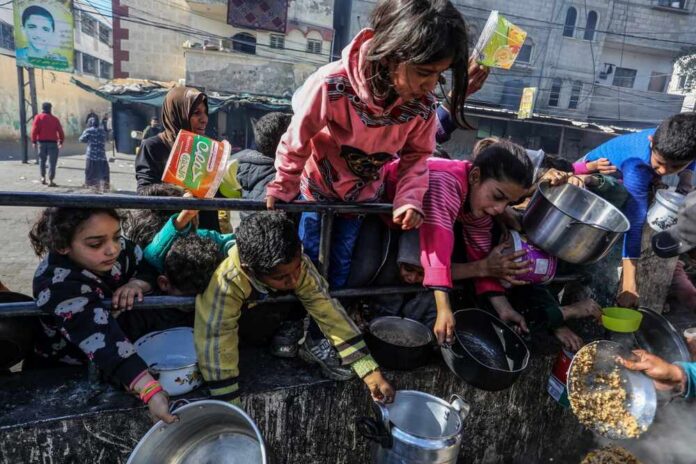
Global hunger has doubled since 2016, with 363 million people now facing acute food insecurity as funding collapses and Middle East conflicts intensify—a crisis that demands immediate action from world leaders.
Quick Take
- The World Food Programme projects 363 million people at acute hunger risk in 2026, driven by entrenched conflicts in 10 countries and a devastating 83% cut to U.S. USAID funding.
- Funding has reversed to 2017 levels while donor nations prioritize domestic concerns, leaving NGOs and UN agencies unable to scale aid as crises deepen across Sudan, Nigeria, Somalia, and Gaza.
- Middle East escalation threatens global fertilizer supplies through the Strait of Hormuz, risking 50% price increases that would cripple food production in import-dependent nations.
- Preventable deaths could reach 14 million by 2030, with 4.5 million children at risk, as funding shortfalls force aid organizations to close facilities and reduce recipient support.
A Crisis Built on Compounding Failures
The global food crisis did not emerge overnight. Since 2016, acute food insecurity has doubled from 130 million to 266 million people, driven by conflicts accounting for 65 percent of hunger cases. Sudan’s 2023 civil war, Nigeria’s 2024 floods destroying 1.1 million hectares of farmland, and the Democratic Republic of Congo’s ongoing M23 offensive have created entrenched humanitarian emergencies. Unlike episodic crises, these ten conflict zones now account for two-thirds of global hunger, locking populations into cycles of displacement, malnutrition, and desperation.
What distinguishes 2026 from previous humanitarian emergencies is the simultaneous collapse of international funding. The United States has cut USAID by 83 percent—a program historically responsible for saving 90 million lives. Germany and other traditional donors have similarly reduced commitments, reverting funding to 2017 levels. This timing could not be worse. Somalia’s experience illustrates the consequences: drought combined with funding cuts forced aid organizations to reduce recipients from 1.1 million to 350,000 people, closing over 200 facilities and mirroring conditions that preceded the 2011 famine.
The Middle East Wildcard and Supply Chain Vulnerability
Middle East escalation has introduced a new threat to global food security. The Strait of Hormuz handles 44 percent of global fertilizer exports, making it a critical chokepoint. Conflict in the region risks disrupting these supplies, potentially increasing fertilizer costs by 50 percent—mirroring the 2022 Ukraine crisis. Nations dependent on fertilizer imports, including Egypt, Sudan, East Africa, and Brazil, face catastrophic agricultural collapse if supply chains break. This economic shock would ripple globally, driving food prices upward and deepening hunger in vulnerable populations already stretched to breaking point.
The World Food Programme warns that 45 million additional people face acute hunger risk from Middle East conflicts alone. Combined with entrenched crises, this brings total at-risk populations to 363 million—a staggering figure that demands immediate political intervention. Yet funding constraints mean aid organizations cannot respond adequately even to current emergencies, let alone prepare for escalation.
The Human Cost of Political Indifference
Numbers mask the human reality. Nigeria faces 31.8 million hungry people amid 35 percent inflation and gang violence. Sudan confronts famine in five regions with 25.6 million people at acute risk. Gaza has reached 100 percent acute food insecurity with famine officially declared. Women and children suffer disproportionately: 5.4 million Nigerian children face malnutrition. Over 85 million displaced persons in crisis zones experience twice the hunger rates of host populations, straining communities already fragile from conflict and poverty.
A Lancet-backed analysis warns that USAID cuts alone could cause 14 million preventable deaths by 2030, including 4.5 million children. These are not abstract projections. They represent families forced to choose between meals, children suffering stunted development, and communities destabilized by desperation. Gang violence in Haiti, eroded trust in aid systems, and political unrest across hotspots are direct consequences of hunger-driven instability.
Why Donor Nations Are Abandoning Responsibility
The funding collapse reflects a troubling shift in donor nation priorities. The United States, Germany, and other traditional supporters have redirected resources toward domestic concerns, treating international humanitarian aid as expendable. This decision contradicts decades of evidence showing early intervention prevents far costlier crises. The FAO estimates hunger generates $1 trillion in annual economic losses globally, yet donors choose short-term fiscal restraint over long-term stability and economic health.
UN Secretary-General António Guterres has called for “political will” to end conflicts and restore funding. The FAO emphasizes shifting toward protecting local food production. Yet without donor commitment, these recommendations remain aspirational. Aid organizations operate with decade-low funding while populations swell. The World Food Programme, Action Against Hunger, and UN agencies face impossible choices: triage assistance to the most desperate or scale back operations entirely.
Data Gaps Hide the True Scale
A troubling reality compounds the crisis: data gaps mean the true scale of hunger remains undercounted. Fewest reliable assessments exist in a decade, particularly in conflict zones where monitoring is dangerous or impossible. Experts estimate actual hunger figures could be 20 to 30 percent higher than reported. This means 363 million represents a floor, not a ceiling. The world may face far greater hunger than acknowledged, with policy responses calibrated to incomplete information.
What Comes Next
Without intervention, hunger will become “a persistent feature of global instability,” according to the World Food Programme. Displacement will double. Economic drag will intensify. Political unrest will spread. Yet solutions exist: restored funding, conflict resolution, and investment in local food production can reverse trajectory. The question is whether world leaders possess the political will to act before preventable catastrophe becomes inevitable reality.
Sources:
World Food Programme: Global Hunger Crisis
UN News: Global Food Crisis Update