

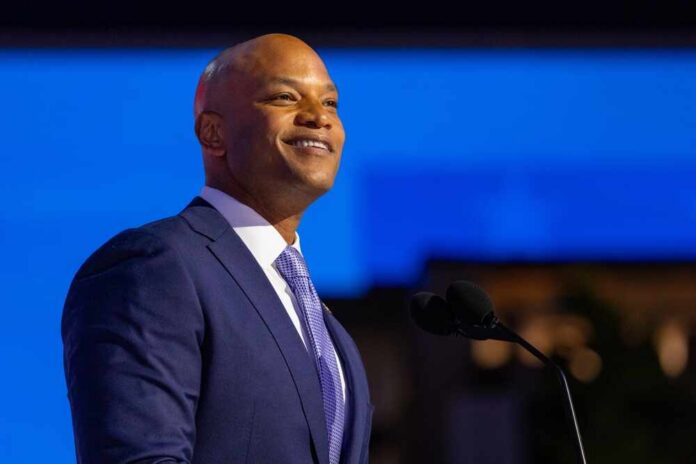
Maryland Governor Wes Moore’s declaration that he would support his 14-year-old son’s gender transition has ignited a firestorm, exposing a deepening divide over parental authority and the welfare of vulnerable children caught in the culture wars.
Story Snapshot
- Gov. Wes Moore told a podcast he would not stop his 14-year-old son from transitioning genders, prioritizing “unconditional love” over waiting until adulthood.
- Moore drew the line at puberty blockers, calling them a decision children cannot make alone, yet refused to recommend waiting until age 18 for other transition steps.
- The hypothetical scenario has become political ammunition for conservatives who view it as abandoning parental responsibility to protect minors from irreversible choices.
- Moore’s stance reflects a growing conflict between those who believe families should navigate these decisions privately and those demanding legal safeguards for children.
Governor’s Conditional Support for Minor Transition
Gov. Wes Moore addressed a hypothetical question during a May 2026 appearance on the PBD Podcast, hosted by Patrick Bet-David. Asked if he would permit his 14-year-old son to transition genders, Moore responded he would not prevent the process if it represented a journey his child wanted to pursue. The Maryland Democrat emphasized unconditional love and ensuring his son feels safe in his own skin, while insisting on active parental involvement throughout any transition process. Moore clarified he would not advise waiting until 18, positioning himself as a supportive partner rather than an obstacle in such a scenario.
This position distinguishes Moore from both extremes in the national debate. Unlike progressives who advocate minimal parental interference in youth transitions, Moore insists on family involvement. Yet unlike conservative states enacting blanket bans on medical interventions for minors, he frames transition decisions as personal family matters outside government control. His nuanced stance reflects Maryland’s blue-state politics while attempting to maintain centrist credibility on an issue that has become a litmus test for both parties heading into the 2028 election cycle.
Drawing Lines on Medical Interventions
Moore established clear boundaries regarding medical procedures, specifically rejecting puberty blockers for minors. He stated such pharmaceutical interventions represent decisions children cannot make independently, expressing heartbreak over how the issue has become politicized. This position aligns with emerging medical caution exemplified by the 2024 Cass Review in the United Kingdom, which questioned the evidence base for medical interventions in youth gender transitions. Moore’s rejection of puberty blockers contradicts progressive orthodoxy that views such treatments as essential healthcare, potentially alienating left-wing activists who monitor elected officials for perceived anti-trans positions.
The governor’s distinction between social transition steps and medical interventions reveals the complexity activists often obscure in public discourse. By opposing puberty blockers while supporting unspecified transition journeys, Moore navigates treacherous political terrain. Critics argue this halfway position fails children by permitting social and psychological steps that create momentum toward irreversible medical procedures. The research shows Moore provided no specifics about which transition elements he would support for a 14-year-old, leaving substantial uncertainty about where parental involvement ends and parental authority to protect a child begins.
Political Fallout and Parental Rights Debate
Conservative media outlets seized on Moore’s comments as evidence of Democratic permissiveness on child welfare issues. The Washington Examiner and Fox Baltimore highlighted his refusal to block a minor’s transition, framing it within broader battles over parental rights versus progressive gender ideology in schools and healthcare. For parents frustrated by institutions that marginalize their authority over children’s medical and psychological development, Moore’s position represents another elite abandonment of common-sense protections. Twenty-five states have enacted restrictions on minor transitions between 2024 and 2026, reflecting widespread concern that children lack capacity for such life-altering decisions.
Moore’s interview occurred as Republicans control Congress and the White House under President Trump’s second term, with parental rights emerging as a winning issue for conservatives. The governor’s stance provides ammunition for GOP candidates in purple districts, illustrating how cultural issues transcend typical party warfare. Both left-leaning and right-leaning parents increasingly question whether government officials and medical establishments prioritize ideology over children’s long-term wellbeing. Moore’s emphasis on family autonomy might resonate with libertarian-minded voters, but many see it as abdicating the protective role parents must play when children cannot foresee consequences of irreversible choices.
Sources:
Wes Moore says he wouldn’t stop underage son from transitioning – Washington Examiner
Gov. Moore on if his son wanted to transition to a girl – Fox Baltimore