

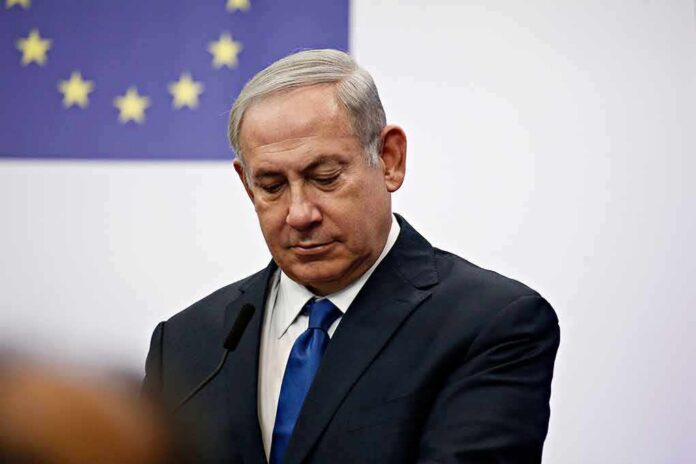
Netanyahu’s rejection of President Trump’s Gaza plan has put a hard line on the table: Israel will not pull out until Hamas is fully disarmed.
Quick Take
- Netanyahu said Israel rejects the 15-point Gaza document.
- He said the Israeli Defense Forces will not withdraw until Hamas is disarmed.
- He defined disarmament as all weapons, from heavy arms to lighter weapons.
- The dispute centers on sequencing, not on whether disarmament matters.
Netanyahu Draws a Clear Red Line
Israeli Prime Minister Benjamin Netanyahu told his cabinet that Israel rejects the 15-point Gaza document proposed by Trump’s Board of Peace. He said the Israeli Defense Forces will not make any withdrawal until Hamas is “truly disarmed.” He also said disarmament must include “heavy weapons, the less heavy weapons, all the weapons.” Reuters reported the same central position in its account of the cabinet remarks.
That statement matters because it leaves little room for a quick troop pullback. Netanyahu framed the issue as one of real disarmament, not what he called “fictitious disarmament.” In plain terms, Israel is demanding verified surrender of Hamas weapons before any retreat from Gaza. That stance aligns with a long conservative view that security comes before paper promises, especially after repeated terror attacks and failed deals.
A Sequencing Fight, Not a Simple Yes-or-No
The public fight is less about the words in the plan and more about what comes first. Reporting from multiple outlets said the Trump-backed proposal called for Hamas to disarm and for Israeli forces to withdraw in stages. Netanyahu said Israel did not agree to that draft and would not accept a pullback before disarmament. That leaves the core dispute over timing, verification, and enforcement.
That kind of disagreement is common in Gaza diplomacy. One side often says the other “rejected” a plan when the real break is over conditions and sequencing. Here, the record shows Netanyahu rejecting the draft and insisting on full disarmament before withdrawal, while U.S. and allied reporting described the plan as one that tied withdrawal to Hamas compliance. The gap is real, but it is specific.
Why the Definition of Disarmament Matters
Netanyahu did not leave disarmament vague. ABC News quoted him as saying it means “the heavy weapons, the less heavy weapons, all the weapons.” That language goes beyond a symbolic gesture or a partial handover. It points to a complete end to Hamas’s armed capacity. For supporters of strong borders, strong defense, and clear rules, that is the part of the story that stands out most.
🚨 U.S. NOT BOTHERED BY NETANYAHU’S REJECTION
Axios reports the U.S. is “not bothered” by Netanyahu rejecting the Gaza peace plan while insisting Hamas disarm first.
Washington appears willing to keep pushing its own path toward a deal. 🇺🇸🇮🇱
— Warwatch (@warwatchh) August 10, 2026
The Trump team’s framework remains tied to the same basic problem that has plagued past ceasefire talks: trust. The United States has tried to build a plan around staged steps, while Israel is insisting on a deeper and more final result before it yields ground. Until that gap closes, the plan stays stuck between diplomacy and hard realities on the ground.
Sources:
youtube.com, bbc.com, english.news.cn, facebook.com, timesofisrael.com