
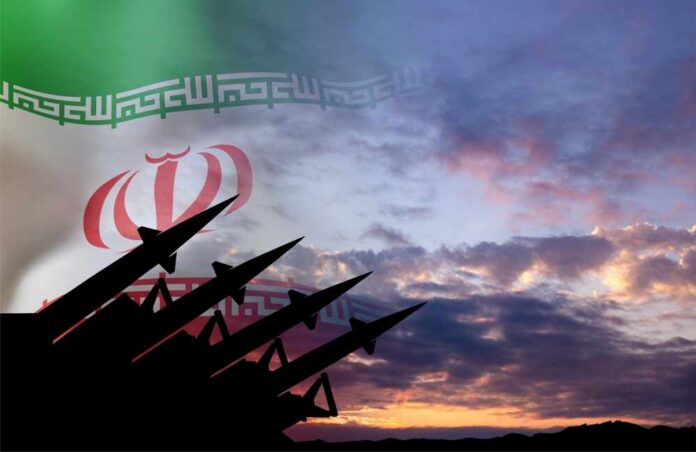
Iran’s first-day missile-and-drone barrage against U.S. Navy escorts in the Strait of Hormuz put a simple question back on the table: will America tolerate “taxation by intimidation” on one of the world’s most critical trade routes?
Quick Take
- President Trump ordered “Project Freedom” to escort commercial shipping after Iran effectively shut the Strait of Hormuz following late-February U.S.-Israeli strikes.
- During the first escorted transits, U.S. destroyers USS Truxtun and USS Mason faced missiles, drones, and swarming small boats; U.S. forces reported destroying 7–8 Iranian boats and said no U.S. ship was hit.
- U.S. officials framed the mission as temporary and defensive, even as Iranian actions risk collapsing an April ceasefire.
- Spillover reached U.S. partners, with reports of missile interceptions and disruptions tied to UAE infrastructure and air traffic.
Project Freedom begins with live fire in the world’s oil chokepoint
U.S. Central Command initiated “Project Freedom” on May 4–5 to escort commercial vessels through the Strait of Hormuz, a narrow passage critical to global energy flows. The first convoy transits quickly turned into a fight, with Iran using missiles, drones, and small-boat tactics against two U.S. Navy destroyers assigned to protect U.S.-flagged merchant ships. U.S. officials said their ships were not struck and reported multiple Iranian boats destroyed.
Defense Secretary Pete Hegseth described the operation as “temporary” and “defensive,” separating it from broader war aims while emphasizing freedom of navigation. Secretary of State Marco Rubio highlighted the human impact of stalled shipping and crew distress as vessels sat trapped by the closure and heightened threat environment. Iran’s Revolutionary Guard, meanwhile, portrayed U.S. action as unlawful and claimed at least one U.S. patrol craft was hit—an assertion U.S. reporting disputed.
Why this fight matters: trade security, energy prices, and national credibility
The Strait of Hormuz is a strategic choke point, and disruptions there routinely push markets toward higher insurance costs, rerouted shipping, and price volatility. With a significant share of the world’s oil moving through the corridor, even short interruptions can cascade into higher transportation and consumer costs at home. For Americans already frustrated by inflation and energy instability, the practical issue is whether Washington can keep trade lanes open without sliding into another prolonged conflict.
Project Freedom also tests deterrence in a post-ceasefire environment. An April 8 ceasefire was supposed to reduce immediate escalation, yet the first escorted movements drew attacks serious enough to involve missile defenses and naval gunfire. U.S. reporting emphasized that the convoy mission is designed to prevent “extortion” of global commerce rather than seek a new war. Iran’s asymmetric playbook—drones, missiles, and swarming boats—aims to impose costs without matching U.S. naval power ship-for-ship.
Competing claims, limited independent verification, and what’s known so far
Public accounts generally align on core facts: the mission began under Trump’s direction, the first transits were challenged, and U.S. forces reported destroying 7–8 Iranian boats while denying damage to U.S. warships. The main uncertainty is Iran’s claim of hitting a U.S. craft, which U.S. sources rejected and which is not clearly corroborated in the provided research. In fast-moving combat, such discrepancies are common until imagery and logs are reviewed.
The bigger political reality: Americans want security, but not endless drift
Trump publicly vowed retaliation if attacks continue, a posture that resonates with voters who see prior administrations as hesitant when U.S. interests and allies are threatened. At the same time, many on both the right and left increasingly believe Washington’s national-security machinery too often drifts into open-ended commitments without clear endpoints. The administration’s “defensive” framing appears aimed at balancing strength with limits: protect commerce, avoid mission creep, and keep the ceasefire from collapsing.
What to watch next: convoy tempo, partner burden-sharing, and escalation triggers
The next indicators are operational and political. Operationally, the number of successful escorted transits—and whether insurers and shipping firms regain confidence—will show whether Project Freedom changes behavior or just shifts risk. Politically, allied participation and regional defenses, including reported interceptions tied to the UAE, will shape how widely the conflict spreads. Any verified hit on a U.S. vessel, major civilian casualties, or a sustained campaign against Gulf infrastructure could quickly overwhelm “temporary” intentions.
Sources:
First Ships Transit Strait Of Hormuz Under New U.S. Protection Plan
Trump, Iran, Project Freedom, Strait of Hormuz (Fox News live updates, May 5)
Iran war live updates: Trump, Strait of Hormuz ships, UAE attacked
Iran Attacked Two U.S. Navy Destroyers During First Day of Project Freedom
U.S. strikes 7 Iranian boats, Trump says, amid operation to move ships through Strait of Hormuz