
A new Trump executive order is turning the nation’s banks into a powerful tool against illegal immigration by warning that loans and credit for undocumented migrants are a serious risk.
Story Snapshot
- President Trump signed an order telling regulators to treat illegal immigration as a financial risk in the banking system.
- Federal bank regulators now warn that people without legal work authorization carry “elevated credit risk.”
- Treasury is urging banks to watch for “red flags” tied to illegal workers and suspicious wage and tax schemes.
- The policy aims to cut off easy credit and banking access, making life in the U.S. harder for illegal aliens and encouraging self-deportation.
Trump Order Targets Banking Access for Illegal Aliens
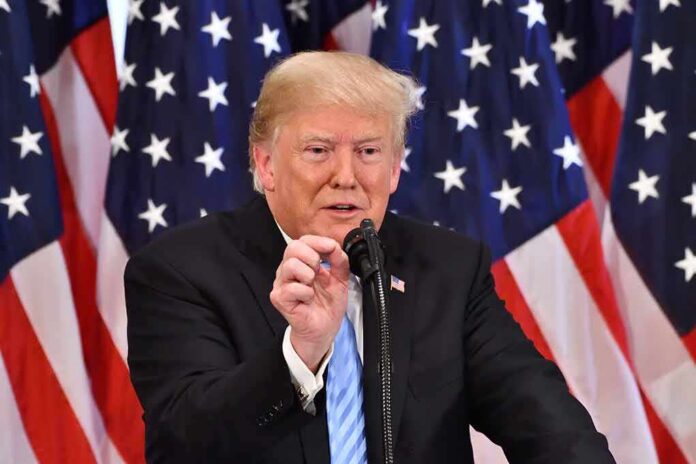
President Donald Trump signed an executive order called “Restoring Integrity to America’s Financial System,” directing federal agencies to treat immigration status as a key risk factor in banking and credit decisions. The White House fact sheet says the order is meant to protect the financial system from illicit activity and address the credit risks of extending services to “non-work authorized illegal aliens.” In simple terms, the administration is officially linking illegal presence and off-the-books work to higher danger for banks and taxpayers.
The executive order tells the Secretary of the Treasury and other financial regulators to strengthen customer identification rules under the Bank Secrecy Act, a core anti-money laundering law. Regulators are instructed to consider the risks posed by foreign consular ID cards and by people using Individual Taxpayer Identification Numbers to open accounts or obtain credit without proof of legal status. By tightening “know your customer” checks, the order pushes banks to look deeper at who is using their services and whether they are in the country legally.
Regulators Warn Banks About “Elevated Credit Risk”
Following Trump’s order, three major regulators — the Office of the Comptroller of the Currency, the Federal Deposit Insurance Corporation, and the National Credit Union Administration — issued joint guidance on lending to undocumented workers. The guidance says borrowers who are not authorized to work in the United States may pose “elevated credit risk” because their ability to earn income and stay financially stable is more uncertain. Banks are reminded to assess both willingness and capacity to repay, including the risk of deportation cutting off wages.
Experts cited in mainstream financial reporting note that this guidance could reduce lending to unauthorized immigrants, even though it does not create brand-new rules. Instead of ordering banks to shut accounts, regulators are “reminding” institutions of their duty to manage risk when dealing with borrowers who lack legal work status. For many citizens, this sounds like common sense: if someone can be deported at any time, a long-term mortgage or auto loan backed by that person’s future income is clearly more risky.
Treasury Outlines Red Flags Tied to Illegal Workers
The Treasury Department’s Financial Crimes Enforcement Network followed up by warning banks about specific “red flags” tied to customers in the United States illegally. Its advisory urges financial institutions to watch for theft, tax fraud, shell companies, funnel accounts, and off-the-books wage payments connected to unauthorized workers. The notice lists more than a dozen patterns that might signal someone is residing in the country illegally and using the banking system to hide or move questionable funds.
The executive order instructs regulators to monitor signs that people without legal status are opening bank accounts, securing mortgages, auto loans, or credit cards, and using these tools while working unlawfully. According to the National Consumer Law Center, the order seeks to rewrite rules for loans and deposit accounts in ways that could exclude people based on immigration status. Consumer advocates warn that millions of immigrants may struggle to access basic checking and savings accounts if these changes are fully implemented.
Using the Financial System to Encourage Self-Deportation
The Wall Street Journal reports that Trump officials have discussed how to leverage the banking system to support broader deportation efforts. Those conversations led to this May executive order, which tells regulators to apply existing rules in a way that advances immigration enforcement. The Consumer Financial Protection Bureau has already issued guidance saying creditors may need to consider immigration status when judging a borrower’s ability to repay mortgages and credit cards. Taken together, these moves use normal risk tools to make it harder for illegal aliens to build stable lives in the shadows.
Trump Administration Cracks Down on Banks Lending To Illegal Aliens.
The Trump administration on Monday announced sweeping new banking rules aimed at cracking down on lending to illegal immigrants, requiring lenders to consider that borrowers without legal work authorization may…
— CombsJC (@RedState66) July 13, 2026
Supporters argue this strategy protects American workers and taxpayers from subsidizing high-risk borrowers who should not be in the country at all. Critics claim it “weaponizes” the financial system and could destabilize banking for non-citizens more broadly. What is clear from the text of the order and the follow-up guidance is that banks are now being pushed to treat illegal status itself as a warning sign. While the order stops short of ordering mass account closures, it is designed to chill access to loans and credit for undocumented migrants and encourage them to self-deport rather than remain here in legal and financial limbo.
Sources:
thegatewaypundit.com, cnbc.com, bloomberg.com, wsj.com, english.elpais.com, time.com, blog.demineimmigration.com