

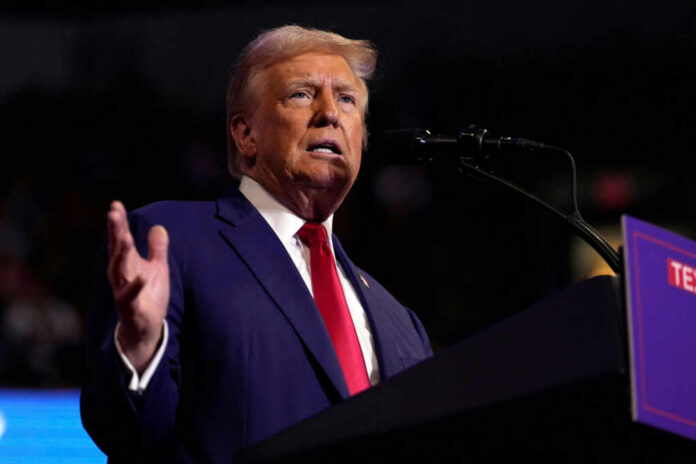
Iran’s desperate plea for negotiations comes only after President Trump’s overwhelming military offensive obliterated the regime’s war-making capacity, demonstrating what decisive American leadership achieves when unshackled from Biden-era appeasement.
Story Snapshot
- Trump revealed Iran reached out seeking a deal after U.S.-Israeli strikes destroyed 60% of missile launchers, 24 naval ships, and virtually all air defenses
- President dismissed Iran’s overture as “a bit late” while offering immunity to defecting Revolutionary Guard members and diplomats
- Operation Midnight Hammer in June 2025 crippled Iran’s nuclear facilities, preventing the regime from obtaining weapons of mass destruction
- New executive order authorizes tariffs against nations trading with Iran, economically isolating the terrorist-sponsoring regime
Iran’s Military Collapse Under Maximum Pressure
President Trump announced on March 5, 2026, that Iran contacted the United States seeking negotiations after devastating U.S.-Israeli strikes dismantled the regime’s military infrastructure. Speaking at a White House event, Trump disclosed that Iranian officials asked “How do we make a deal?” but he rejected the overture as premature. U.S. forces destroyed approximately 60-64% of Iran’s missile launchers, obliterated its navy by sinking 24 ships in three days, and eliminated most drone capabilities, anti-aircraft systems, and communication networks. These operations proceeded “far ahead of schedule,” leaving Tehran militarily crippled and diplomatically isolated.
Trump Offers Defection Pathway to IRGC Members
Trump extended immunity offers to Iranian Revolutionary Guard Corps personnel and diplomats willing to defect, framing this as an opportunity to build a “new Iran” free from theocratic oppression. The President contrasted America’s military readiness with Iran’s desperation, noting U.S. forces eagerly await further engagement while Tehran scrambles for survival. This defection strategy exploits internal fractures within Iran’s security apparatus, where decades of brutality against protesters and resource mismanagement for proxy wars have bred resentment. Trump pledged no post-regime threats to ordinary Iranians, positioning the U.S. as liberators rather than occupiers—a critical distinction resonating with conservatives who value freedom over globalist nation-building.
Nuclear Threat Neutralized Through Decisive Action
The current offensive builds on Operation Midnight Hammer from June 2025, which destroyed Iranian nuclear facilities and set back Tehran’s atomic weapons ambitions indefinitely. Trump’s restoration of “maximum pressure” sanctions after his 2024 reelection reversed the disastrous Obama-Biden JCPOA nuclear deal, which conservatives rightly criticized for enriching a regime sponsoring terrorism across the Middle East. The combination of kinetic strikes and economic strangulation represents the antithesis of Biden’s failed diplomacy. Iran’s targeting of Israel, Qatar, Saudi Arabia, and the UAE with missiles underscored the regime’s existential threat to regional stability, justifying overwhelming American-Israeli retaliation that intercepted threats within four minutes.
Economic Isolation Complements Military Dominance
Trump signed an executive order in February 2026 authorizing tariffs on countries maintaining trade relations with Iran, tightening the economic noose around the ayatollahs. This measure complements military operations by starving the regime of resources needed to rebuild its shattered forces or fund Hezbollah, Hamas, and other terrorist proxies. The strategy mirrors Trump’s first-term designation of the IRGC as a terrorist organization and his withdrawal from the flawed nuclear agreement. Conservatives frustrated by decades of Iranian aggression—from the 1979 hostage crisis to proxy attacks killing American servicemembers—see this comprehensive approach as long-overdue accountability for a rogue state that prioritizes nuclear weapons over its own citizens’ welfare.
The strikes degraded Iran’s ability to threaten U.S. allies or project power regionally, fundamentally reshaping Middle East security dynamics. With Iran’s navy eliminated and air defenses demolished, the regime faces an existential choice between internal collapse through defections or prolonged isolation. Trump’s refusal to negotiate prematurely prevents repeating past mistakes where Tehran exploited talks to buy time for nuclear development. This principled stance protects American interests, Israeli security, and the broader principle that terrorist regimes cannot dictate terms after decades of aggression against constitutional values and regional allies.