
A stunt at the Hollywood Sign strapped a near-naked “mummified” man to the landmark and ended with the artist detained for trespassing.
Story Snapshot
- Artist Sabine Tautou staged a 25-minute stunt at the Hollywood Sign and was cited for trespassing.
- The act bound a man to the landmark to push an art message about fame and identity.
- Past Hollywood Sign pranks have also led to arrests or citations for trespass.
- The incident renews debate over free speech versus property rights and public safety.
Police Cite Trespass After Unpermitted Hollywood Sign Intervention
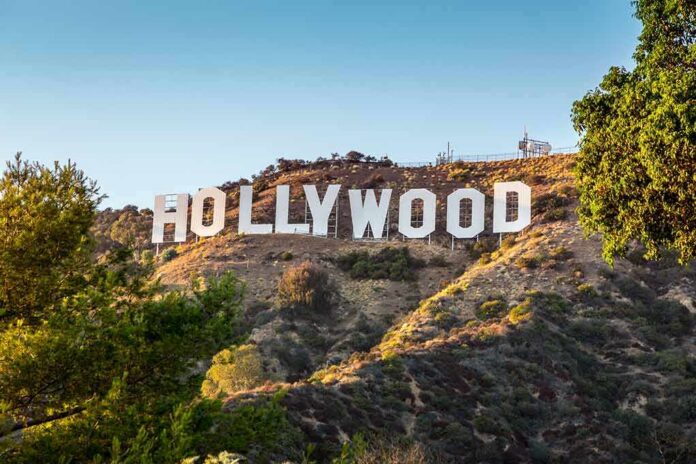
Los Angeles saw another headline-grabbing stunt at the Hollywood Sign on Friday morning, when artist Sabine Tautou staged a performance she titled “Public Figure, 2026.” The act ran for about 25 minutes starting around 10 a.m. and featured a nearly naked man wrapped and strapped to the landmark. Police detained Tautou and cited her for trespassing after the setup drew attention and alarm. Coverage described the scene as a hijacking of the sign rather than a permitted show.
Tautou’s release framed the act as art, not vandalism. It said the sign is a symbol of “aspiration and fame,” while the man’s mummification “restricts movement and erases identity.” The artist called this tension “a compelling physical and ideological juxtaposition.” The message tried to question celebrity culture and what people give up to chase it. But the method used the city’s most protected icon and required entering a restricted area without permission, which triggered a law enforcement response.
Free Expression Meets Property Lines and Safety Rules
This clash is not new. Los Angeles police have arrested or cited others who touched the sign without approval. A 2017 “HOLLYWeeD” gag led to an arrest on suspicion of trespass, even though no damage was reported. Police have treated similar cases as misdemeanor trespassing because the sign sits behind marked limits and security measures. Authorities focus on access rules, safety risks, and the chance that a copycat could get hurt on the steep terrain and structures.
That approach aligns with basic law. Property and access rules do not vanish because someone claims expressive purpose. Courts and legal guides explain that speech does not include a right to enter restricted government or private property. Going beyond permitted use can still be trespass, even if the person has a message to share. Cities often protect public art that is placed with permission, yet treat unpermitted interventions as property or safety violations, not protected speech.
Why This Matters to Public Order and Community Standards
Los Angeles depends on a clear line around high-risk sites. The Hollywood Sign stands on rugged ground with fences, cameras, and patrols. First responders must treat any breach as a potential rescue or safety call. If activists or performers can scale a landmark and strap in a person to make a point, the city faces rising danger and higher costs. Consistent enforcement tells would-be copycats that stunts are not a free pass just because they claim art value.
Many conservatives see a broader pattern here. For years, elite culture has excused rule-breaking when it fits a preferred message. That double standard wears down respect for the law. The answer is simple and fair: protect free speech in the right places, at the right times, and with the same rules for everyone. Do not excuse trespass at a landmark so famous that even minor missteps can bring big safety risks and public expense. Equal rules build trust.
What Comes Next: Clear Rules, Safe Platforms, Real Consequences
City leaders and property stewards can lower risk by tightening perimeter security, adding more remote sensors, and improving patrol schedules. Past incidents spurred calls for better surveillance around the sign, and the debate will surface again. Stronger posts, tamper alerts, and clear trail signage help. But rules only work if consequences are real. When citations and arrests follow swiftly, the message is plain: art does not cancel safety rules or property lines.
There are also better ways to make a point. Artists can apply for permitted displays, use public forums, or create works that spark debate without risking lives or public assets. That approach still drives a message, but it honors the law and respects neighbors. The Hollywood Sign will always attract attention seekers. Firm, even-handed enforcement, along with open legal channels for expression, keeps order while protecting speech. That balance is how a free society stays free and safe.
Sources:
nypost.com, tmz.com, news.artnet.com, dw.com